Work performed under Jay Braymiller Architect
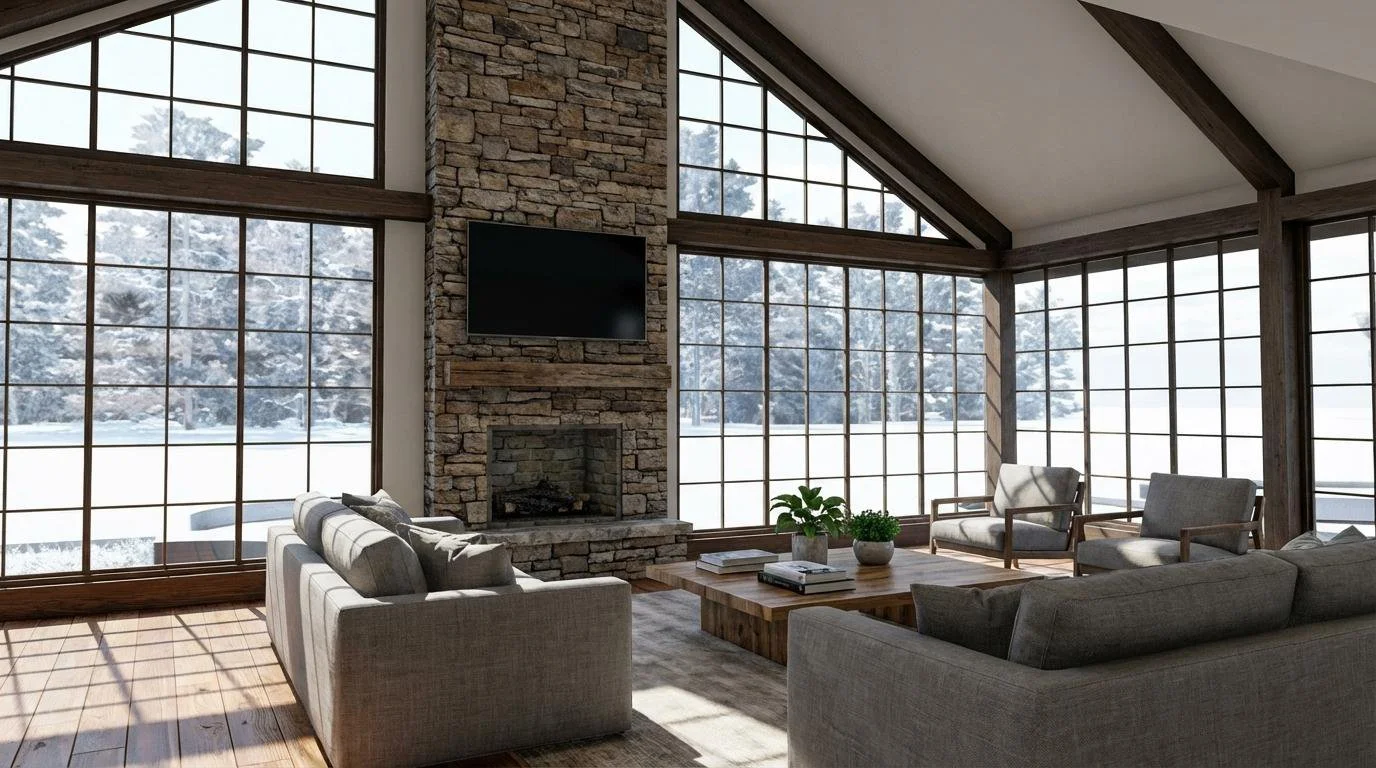
Willardshire Residence is a residential renovation and addition that reconfigures an existing single-family home to improve spatial clarity, daylight access, and connections between interior living spaces and the surrounding landscape. The project focuses on transforming the home’s primary gathering areas while respecting the scale, structure, and character of the original house.
A new double-height family room addition anchors the design, introducing a vaulted ceiling, large-format glazing, and a central stone fireplace that acts as both a structural and visual focal point. This space creates a clear hierarchy within the home, supporting daily living, gathering, and seasonal use while drawing natural light deep into the interior. The addition is carefully integrated into the existing rooflines and framing systems to minimize disruption and maintain continuity with the original structure.
Interior renovations reorganize circulation and adjacencies to improve flow between the kitchen, family room, and adjacent spaces, while targeted structural interventions allow for larger openings and expanded sightlines. Material selections emphasize durability and warmth, pairing natural wood finishes with stone, glazing, and restrained detailing to create a cohesive interior environment.
The project balances new construction with selective preservation, using detailed drawings and coordinated construction documentation to guide structural modifications, envelope upgrades, and interior finishes. The result is a renovated residence that enhances spatial experience, improves functionality, and supports long-term use while remaining grounded in the logic of the existing home.
Eroded Earthen Mass [E.E.M.]
Team: Christopher Romano, Nicholas Bruscia, Daniel Vrana, Michael Hoover, Randy Fernando
Fabrication Support: Julia Hunt, Wade Georgi, John Archilla, and Caterina Gnecco
Affiliation: University at Buffalo | Canadian Clay and Glass Gallery
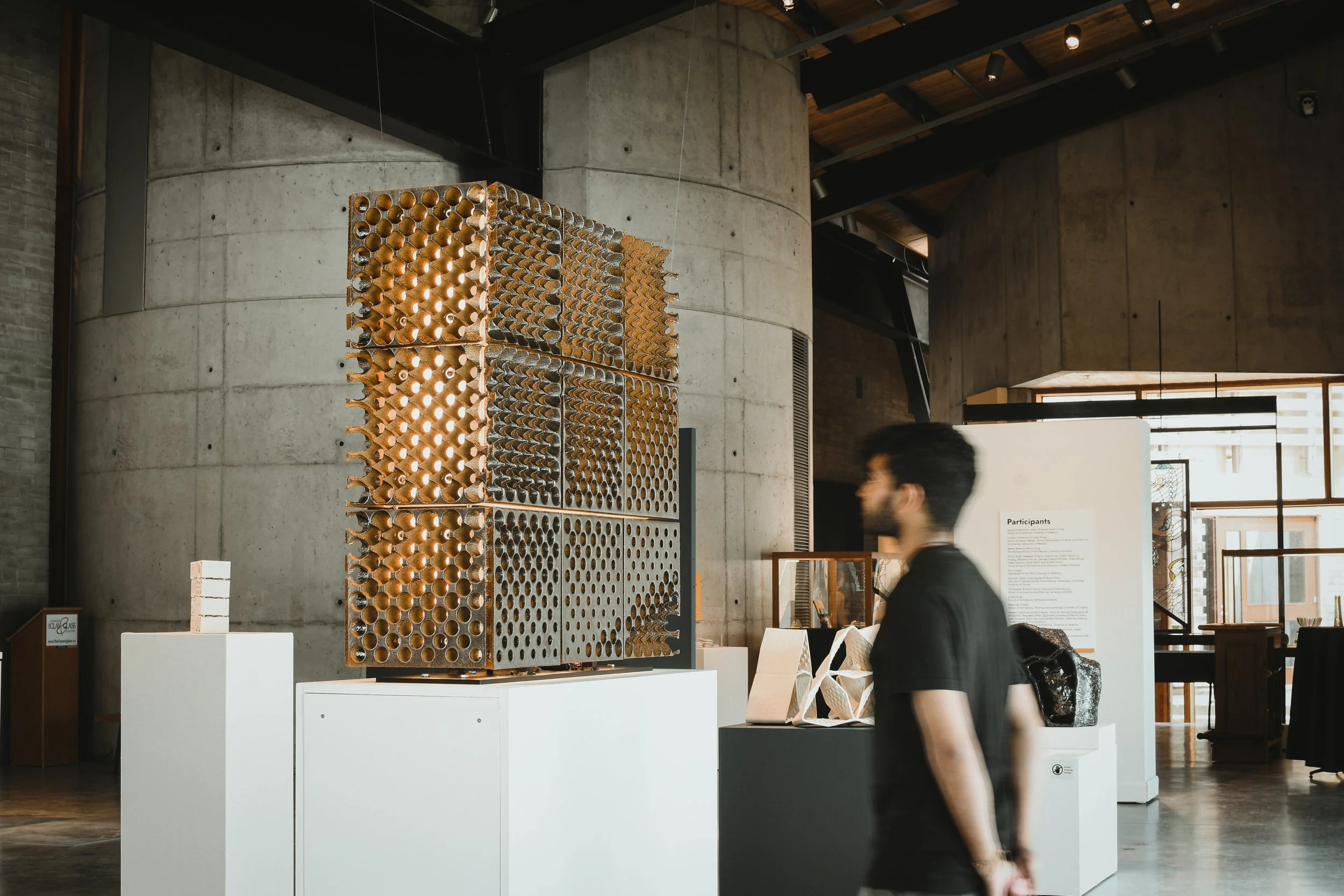
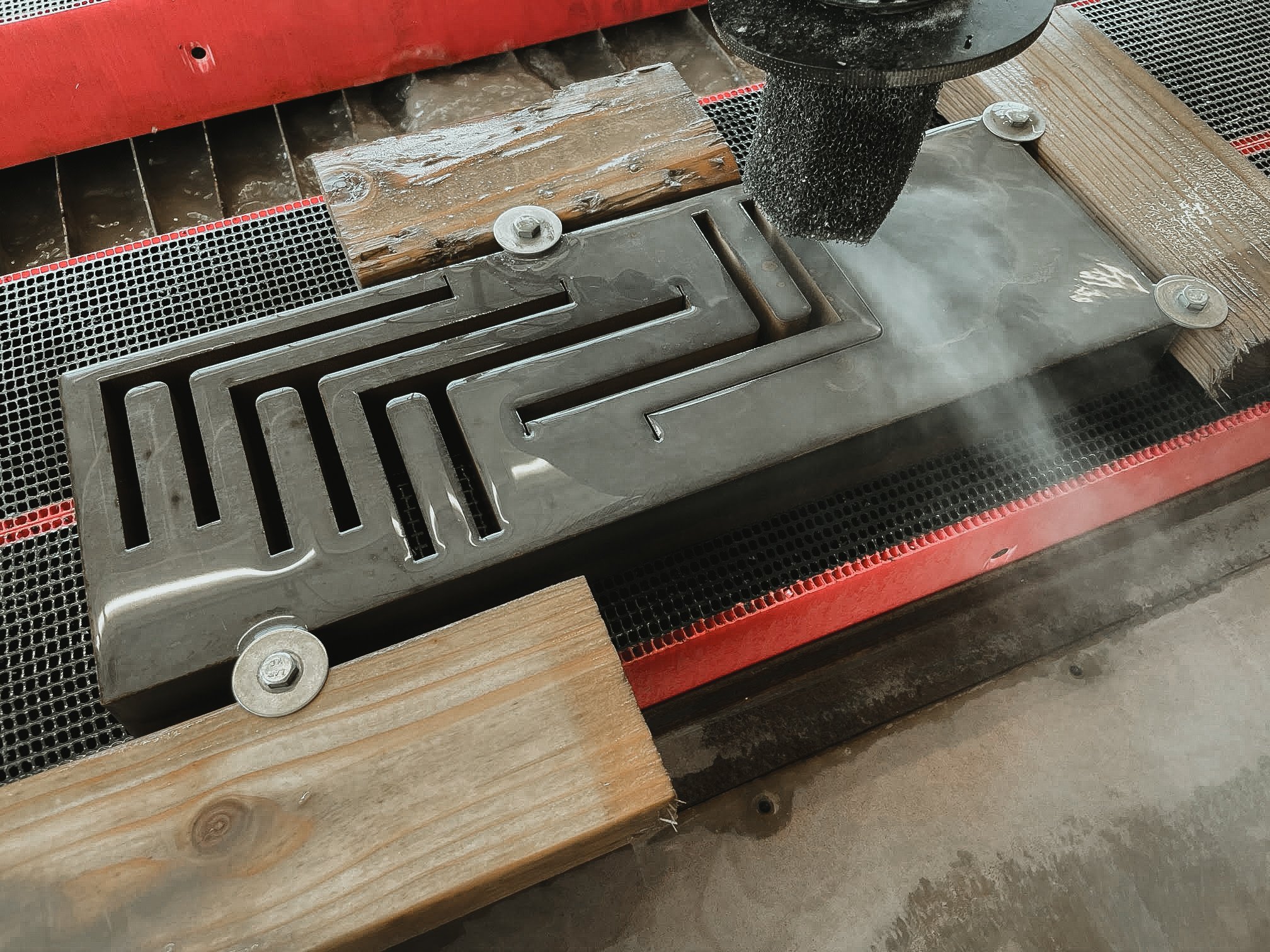
This project explores the innovative use of a 5-axis waterjet to carve a solid mass tile for a clay facade prototype. A significant aspect from our end was the development of a custom glaze mix, along with precise monitoring of thermal conditions for optimal drying. Accommodating the 7% shrinkage of the clay was a key challenge, with the glazing technique notably enhancing the tile edges as it dripped. Additionally, the project involved designing a custom lighting rig to highlight the unique features of the prototype.
Work performed under Jay Braymiller Architect
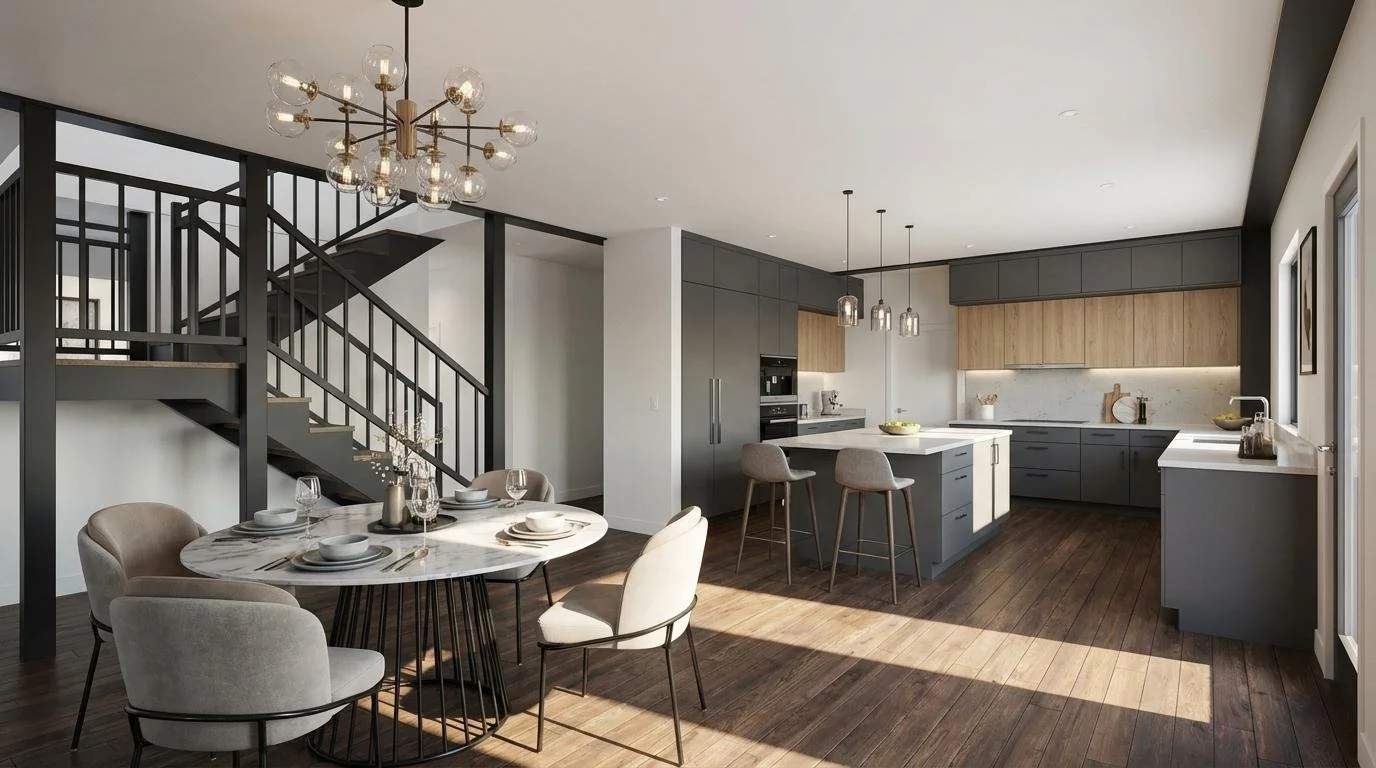
North Collins House is a full interior renovation of a single-family residence, stripped back to its structural framework and reconfigured to support contemporary living. The project focused on spatial clarity, improved circulation, and updated building systems while maintaining the original building footprint.
The interior layout was reworked to create an open, connected first floor that integrates the kitchen, dining, and living spaces. Structural elements were selectively exposed and reinforced to accommodate new openings, improved daylight access, and modern code requirements. The stair and vertical circulation were redesigned to better organize private and public zones within the home.
Material selections emphasize durability, simplicity, and cohesion, combining modern finishes with restrained detailing. Updated mechanical, electrical, and plumbing systems were integrated throughout the house to improve performance, comfort, and long-term efficiency.
The project includes architectural drawings, interior planning, coordination of building systems, and visualization to support design decision-making and construction execution.
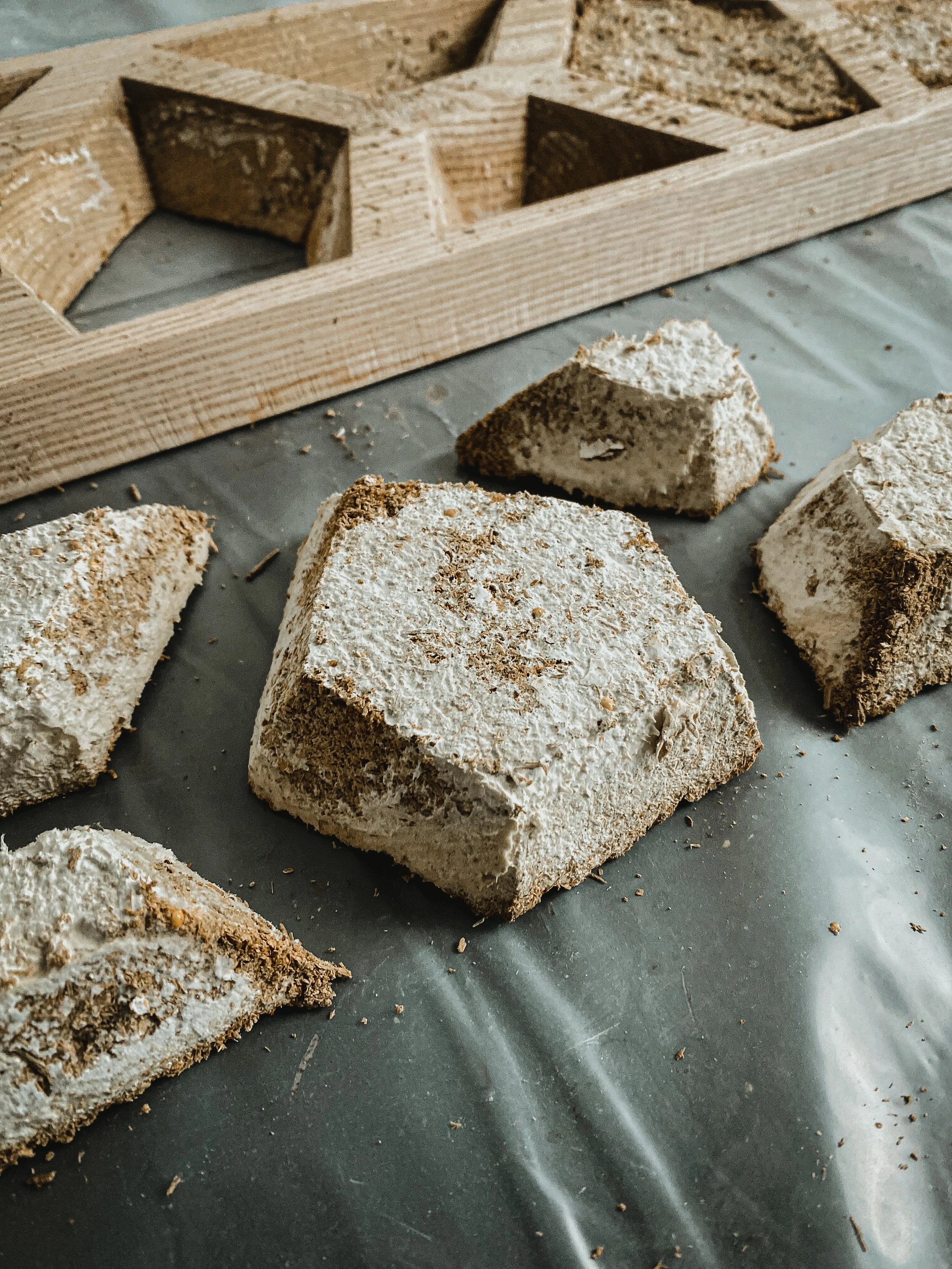
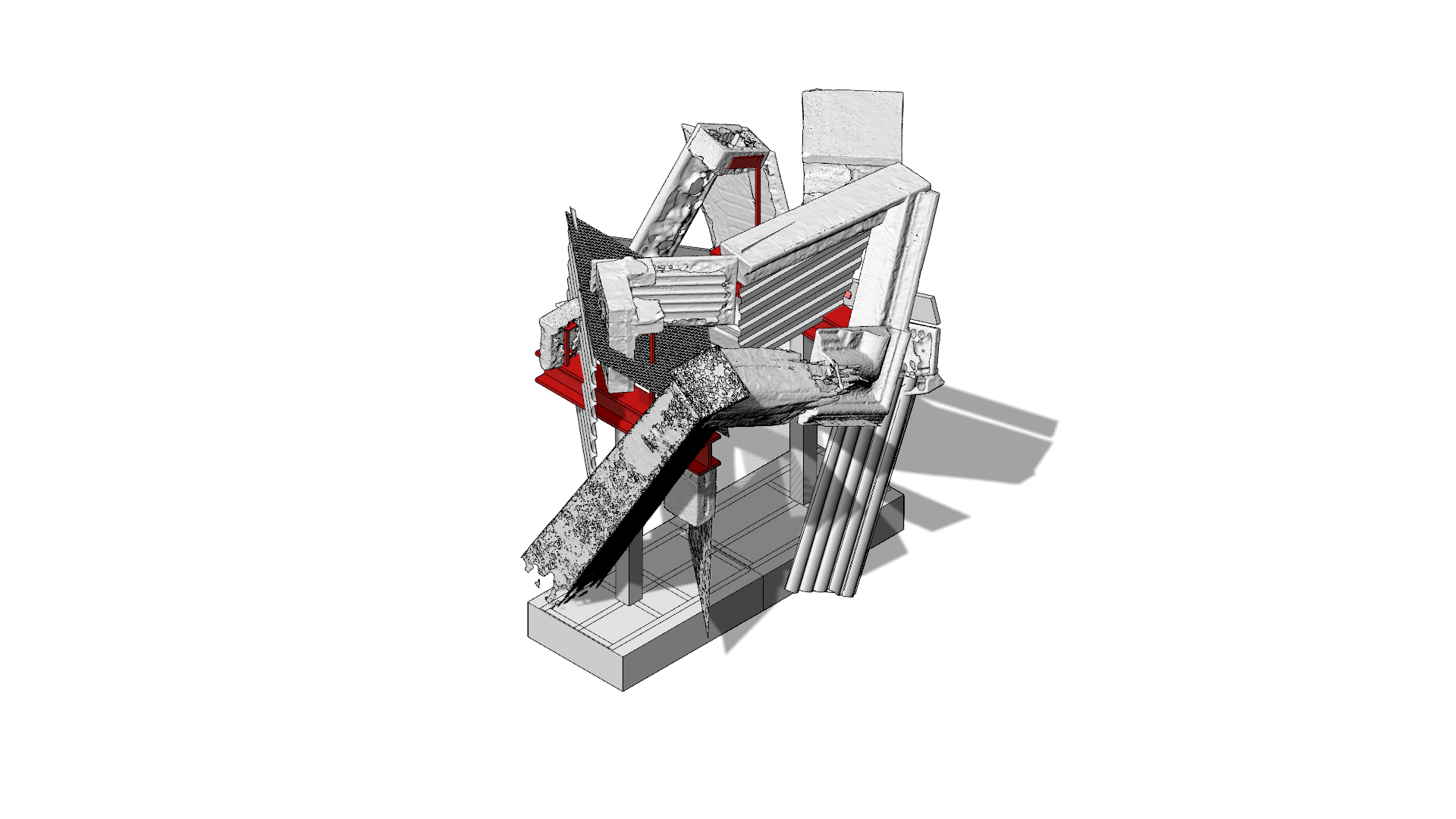
MycoPanel V1.0 is a material research and fabrication prototype exploring bio-based façade systems that combine digital manufacturing with regenerative construction methods. The project investigates the use of sustainably harvested white ash—salvaged from trees affected by the emerald ash borer—as a structural scaffold for mycelium-based thermal infill.
Using parametric modeling and 5-axis waterjet cutting, solid wood slabs were precision-machined to create internal geometric cavities designed to receive and support mycelium growth. These cavities function as both a structural framework and a controlled growth environment for the fungal material, allowing the panel to act as a lightweight, insulating composite system.
The prototype evaluates fabrication tolerances, growth behavior, material bonding, and thermal performance, while testing how computational design and digital fabrication can enable repeatable, scalable bio-material assemblies. MycoPanel V1.0 serves as an early-stage study for a modular bio-facade panel system, demonstrating the potential for waste-based timber reuse, low-carbon insulation, and hybrid construction techniques that integrate natural growth processes into architectural material systems.
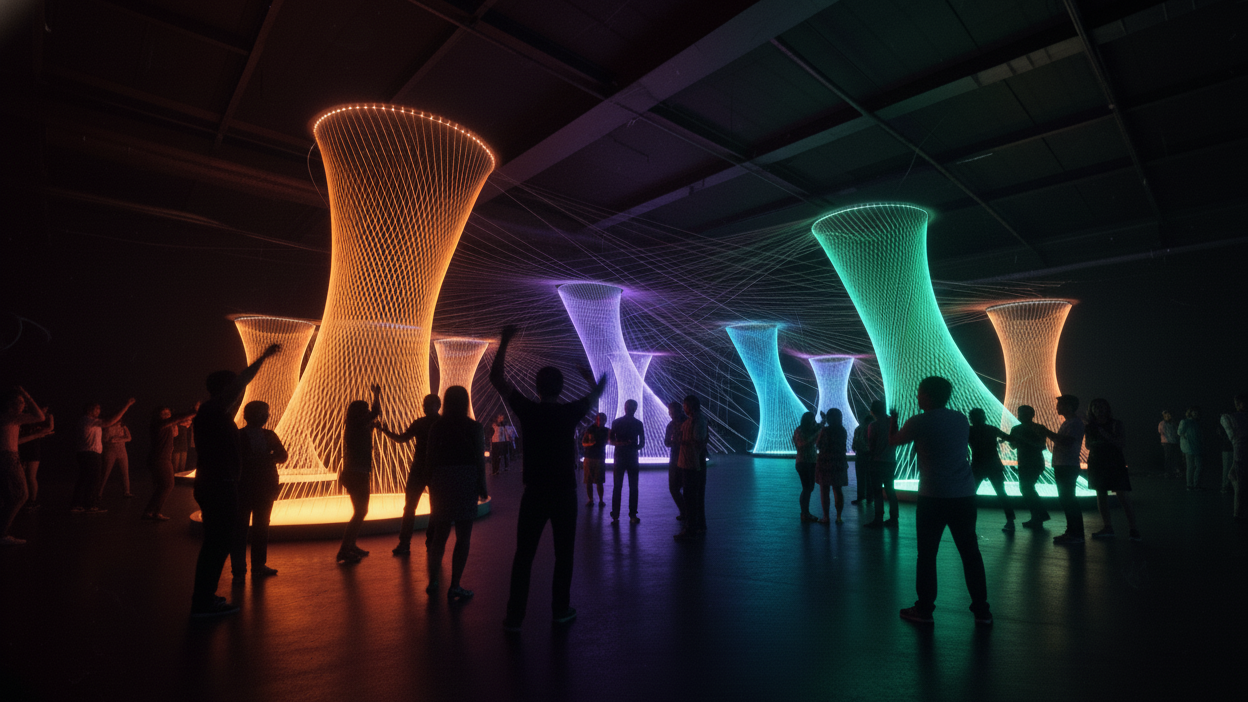
Phasefield is an immersive light installation composed of tensioned luminous filaments woven into a series of suspended volumes that occupy space as both structure and atmosphere. Anchored between floor and ceiling, the filaments form a permeable field through which visitors move, producing shifting visual conditions that register sound, rhythm, and proximity. Rather than reacting with abrupt pulses, light within the field behaves as a continuous material—its brightness, density, and drift modulated by phase relationships within the ambient soundscape. Low frequencies gently expand and contract the field, while mid-range textures introduce subtle gradients and interference patterns across the strands. As bodies gather, pass through, or linger, the installation reveals a slow choreography of light that reflects collective presence. Phasefield frames sound not as spectacle but as spatial influence, transforming frequency into a calm, architectural environment that invites pause, movement, and shared awareness within the festival context.
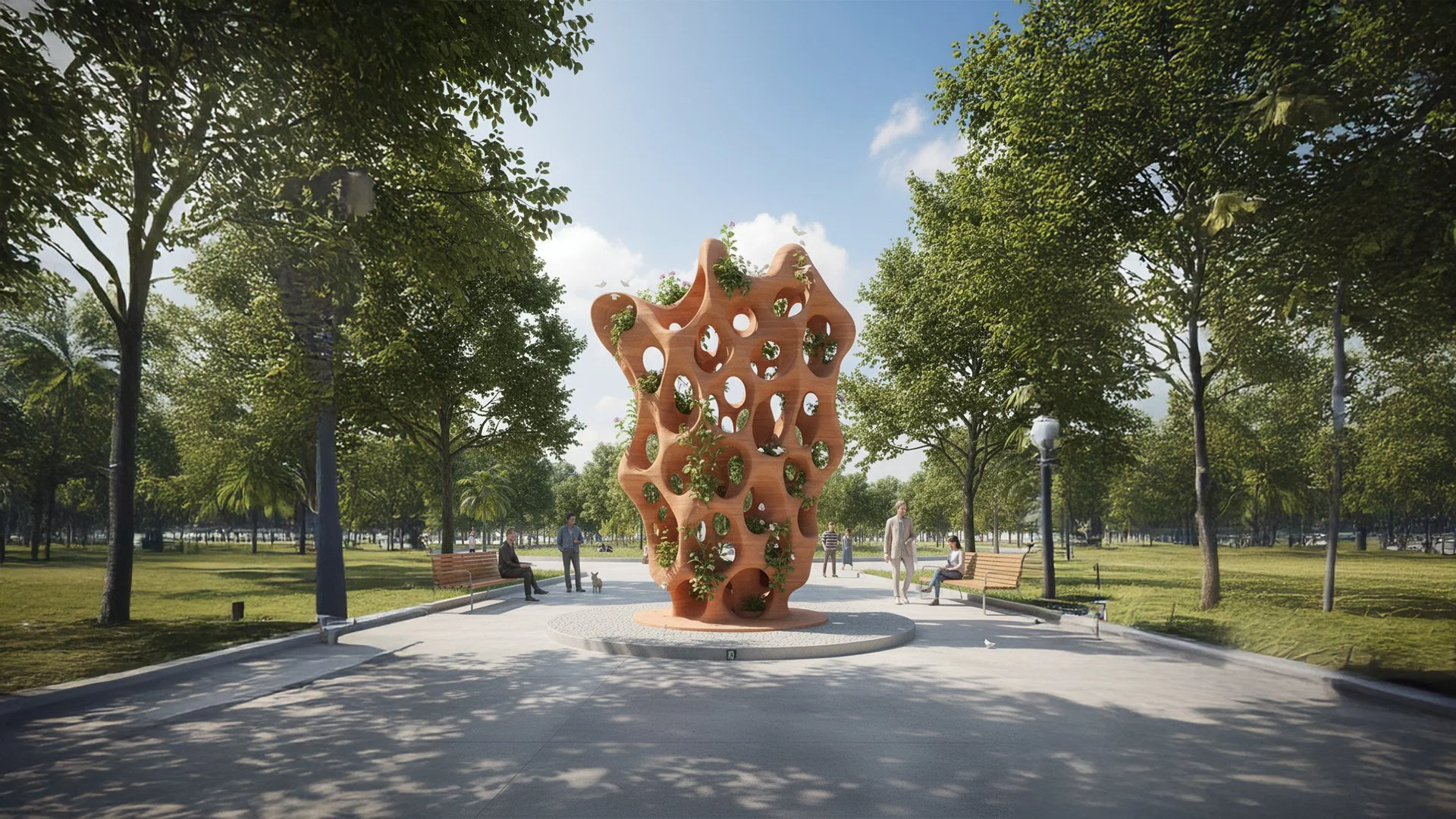
The Urban EcoForms is a hybrid of natural forms and advanced technology, designed to act as a bridge between the built environment and the natural world. Situated in a dense urban area, the sculpture serves as a habitat for birds, butterflies, and insects, inviting them into the city and promoting biodiversity in an unexpected way.
The design draws inspiration from the intricate patterns and structures found in nature. Each clay module will mimic organic shapes, such as tree branches, leaves, or rock formations, creating a visually striking piece that also offers functional alcoves and shelters for wildlife. These forms will not only attract birds and insects but also engage human audiences in a conversation about how urban spaces can be transformed into environments that support both human and non-human life.
By using 3D-printed clay, the sculpture combines the ancient materiality of clay with the precision of digital fabrication. This blend of tradition and innovation reflects my commitment to exploring how advanced technology can be used to reconnect us with nature. The modular nature of the piece allows for scalability and adaptability, ensuring that the sculpture can be customized to fit various urban landscapes without losing its impact.
Through its organic form and functional purpose, the Urban EcoForms Sculpture will create a dialogue between the city and the natural world, sparking conversations about how we design spaces that foster ecological balance. It challenges the conventional role of public art in urban settings by inviting interaction from both people and wildlife, fostering a sense of shared space and ecological awareness.
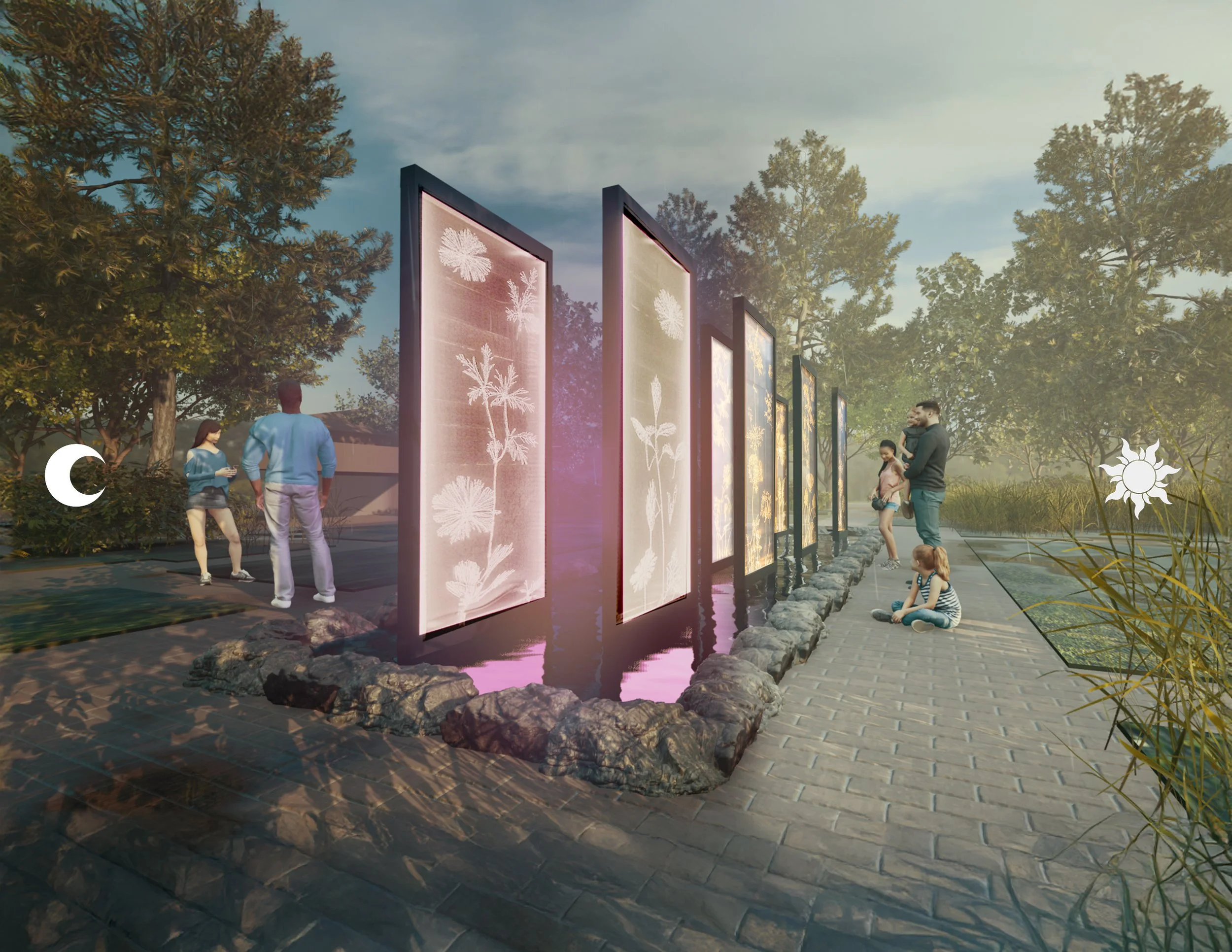
"Echoes of Light" transforms the gardens into an ethereal nighttime experience, blending light, reflection, and interactivity to celebrate the 10th anniversary of GLEAM. The installation features a series of etched mirror panels, suspended elegantly above shallow water pools to amplify their dynamic reflections. Each panel is adorned with botanical patterns inspired by Midwest flora, subtly lit with embedded LEDs to enhance their intricate designs.
Motion sensors embedded within the installation allow the panels to respond to visitor movement, creating a playful choreography of light and color that evolves as guests interact with the artwork. Additionally, ten signature light elements (9 central and 1 entry piece), representing GLEAM's decade-long journey, are strategically placed throughout the installation, symbolizing milestones of growth, community, and creativity.
Visitors can further engage with the installation through discreetly placed QR codes, offering an augmented reality (AR) experience. Scanning these codes reveals an overlay of light animations and interpretive narratives that explore the concept of reflection, providing an immersive, layered interaction.
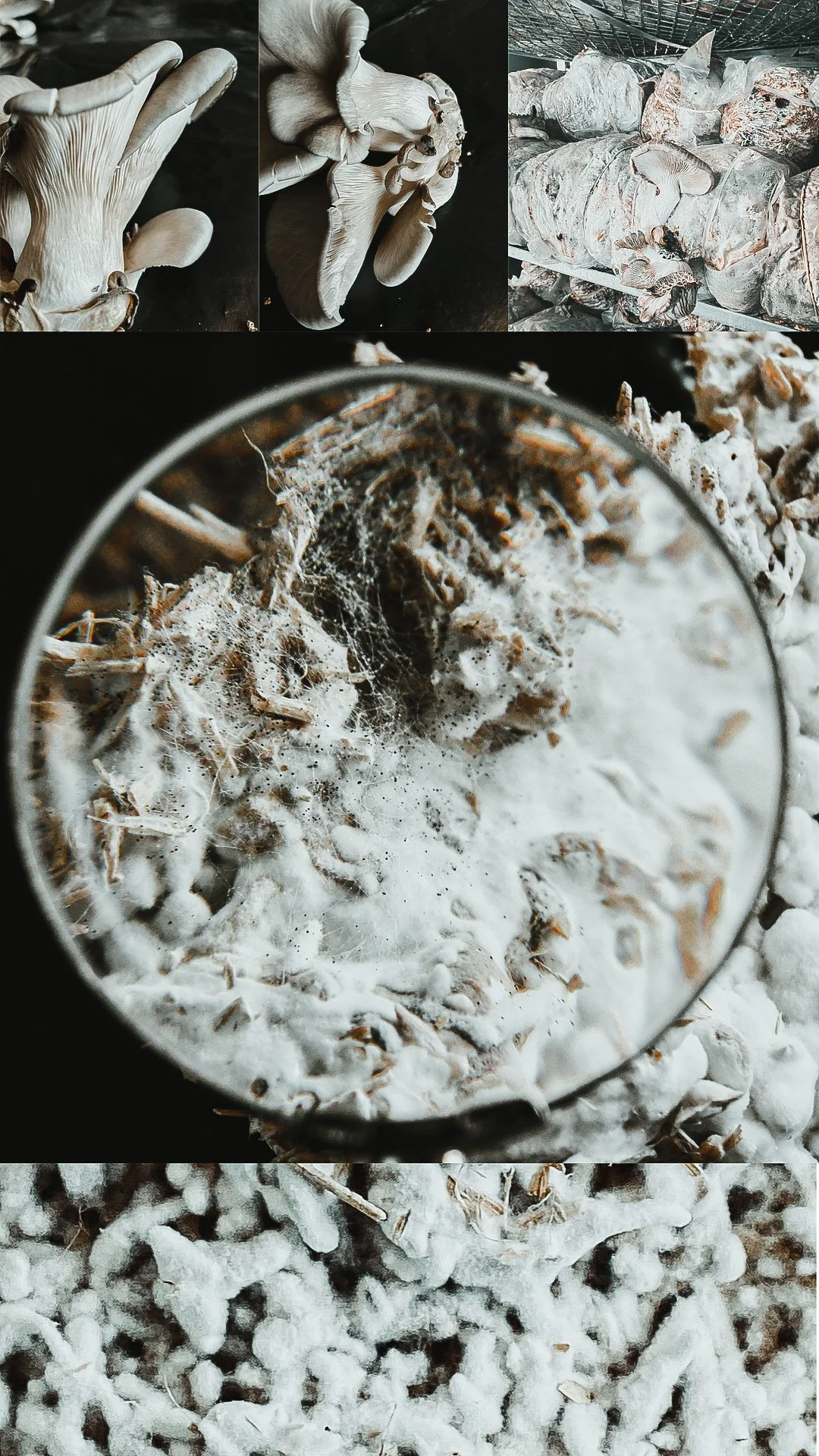
Mycelium Experiments is an ongoing material research series investigating the structural, thermal, and fabrication potential of mycelium-based composites for architectural applications. The project explores multiple growth conditions, substrate compositions, mold geometries, and curing techniques to evaluate strength, density, surface texture, and dimensional stability.
Through hands-on testing, the research examines how variables such as compression, moisture content, growth duration, and formwork material influence performance and consistency. Prototypes range from small test tiles to compressed blocks and custom-molded components, serving as a physical library of outcomes to inform future construction-scale systems.
This work functions as a foundational study supporting the development of bio-based building elements, including insulation panels, façade components, and lightweight structural infill. By combining digital fabrication workflows with biological material processes, the project aims to establish repeatable methods for integrating living materials into contemporary architectural design and sustainable construction practices.
Team: Christopher Romano (project lead), Randy Fernando, Michael Hoover, Lukas Fetzko, Steph Cramer, Julia Hunt, Wade Georgi, Erica Fredes
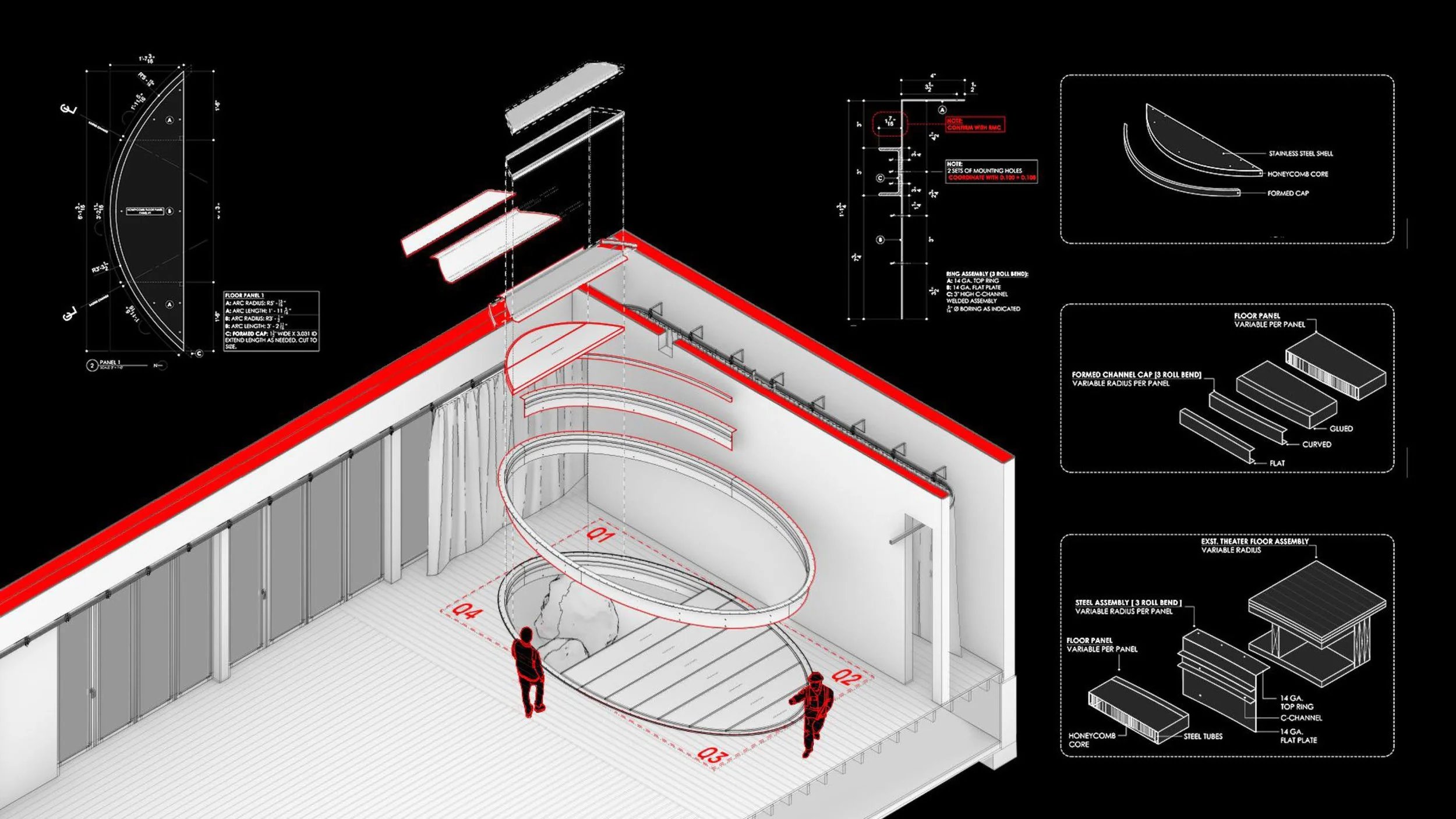
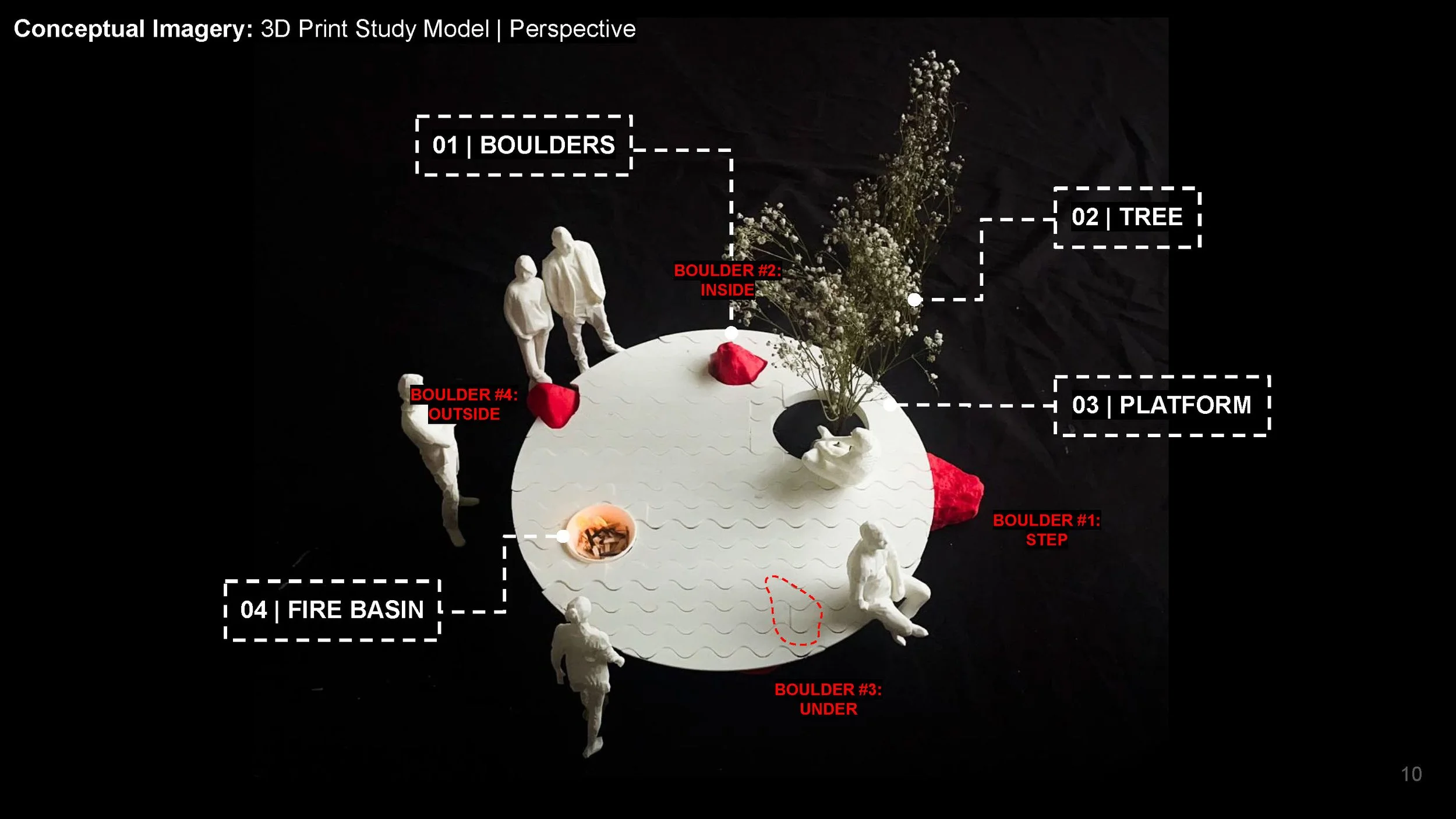
HEM ● LOCK is a 120 SF (12.36 ft diameter) circular mass-timber platform designed as a lightweight, elevated public structure integrated directly into the landscape at Bethel Woods, New York. The project investigates the architectural role of the platform as both an infrastructural element and a social surface for gathering, rest, and performance.
The structure is fabricated from locally sourced Eastern Hemlock logs harvested within four miles of the site and repurposed from forestry waste. Logs are horizontally aggregated into a solid timber disk and joined using a custom self-locking conical “HEM joint,” a robotic reinterpretation of traditional dovetail joinery. This system minimizes the need for adhesives and mechanical fasteners while enabling precise, repeatable assembly through digital fabrication.
Two circular voids are carved through the platform to accommodate an existing tree and a central fire feature, integrating ecological and cultural programmatic elements directly into the structure.
The platform is supported by three limestone boulders native to the site. These stones were 3D scanned using LiDAR, digitally modeled, and milled with robotic fabrication to create matching bearing surfaces that precisely receive the timber structure. This process allowed the platform to be mechanically locked into place through geometry rather than conventional foundations, reducing site disturbance and material consumption.
HEM ● LOCK demonstrates an approach to sustainable construction that combines local material sourcing, robotic fabrication, computational design, and reversible assembly. The project proposes a model for circular construction systems that integrate structural performance, cultural use, and environmental context.
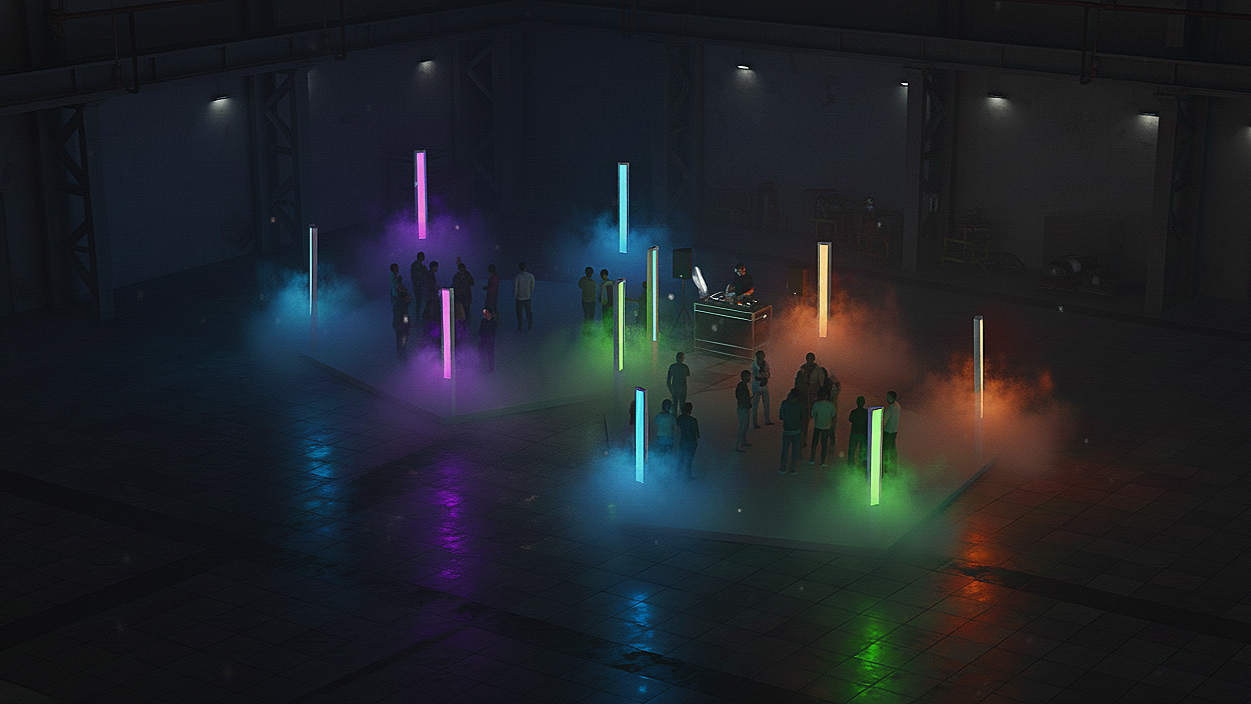
This series of installations explores light as a medium for public interaction, play, and spatial transformation. Designed for festivals and community art events, the pieces activate through movement, gesture, and touch—responding in real time with light sequences that pulse, shift, or ripple across sculptural surfaces.
Each iteration combines architectural modeling with physical computing, using custom-built electronics and microcontroller systems to control addressable LED strips embedded in fabricated forms. Materials include translucent pillars, suspended LED strips, and CNC-cut frames, each tailored to reflect and refract light in unique ways.
Inspired by phenomena like bioluminescence, electrical storms, and data flow, these works demonstrate how light can become a social interface, encouraging spontaneous interaction.
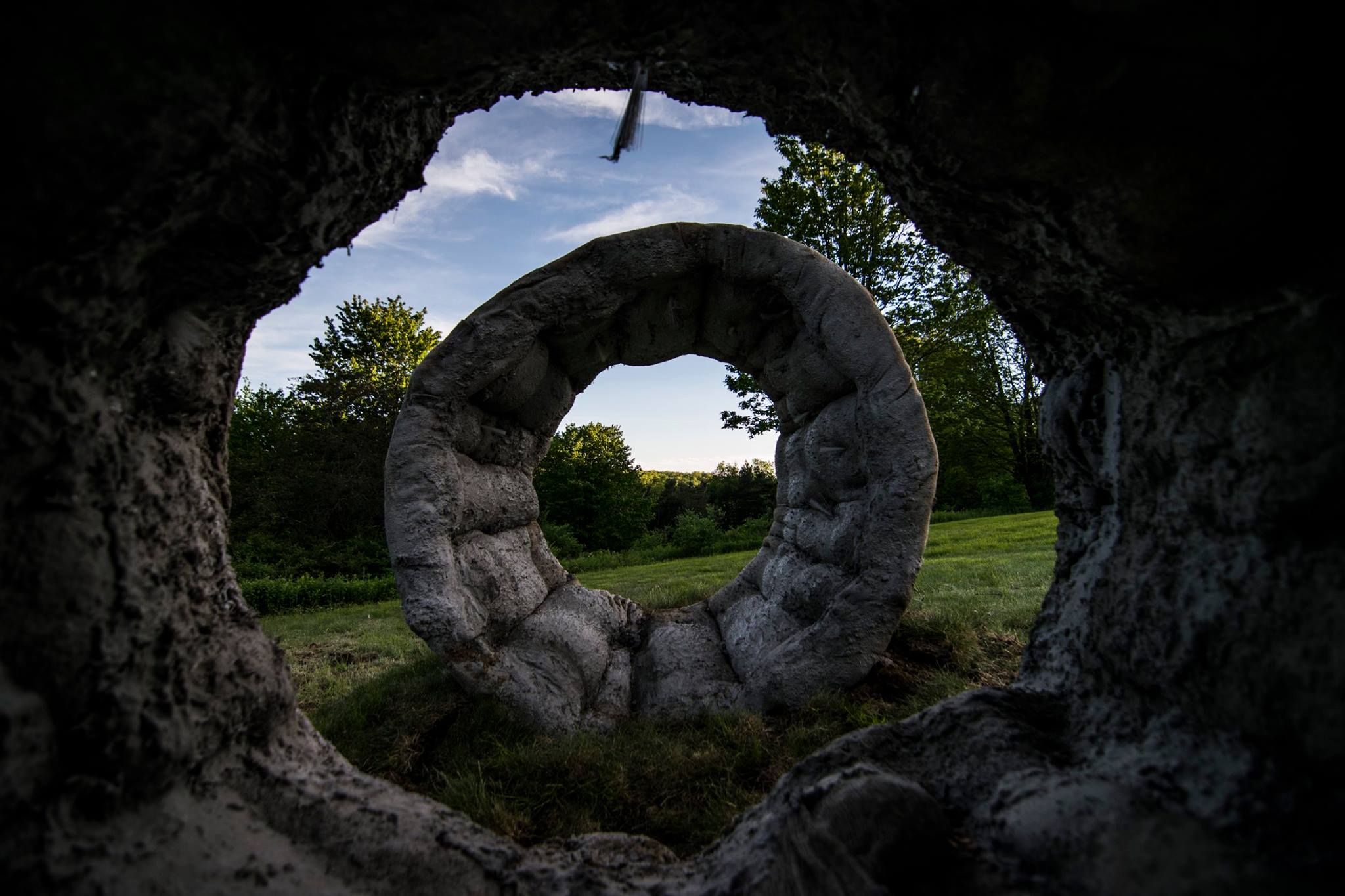
This project at Griffis Sculpture Park features three large concrete rings, each with openings ranging from 6 to 8 feet wide, allowing people to inhabit them. The rings are arranged in a linear sequence, creating a tunnel-like effect. Ingeniously aligned with the winter setting sun, this installation offers a mesmerizing visual experience. Crafted using burlap fabric formwork, the concrete is aerated for a lighter composition. The interior surfaces are coated with photoluminescent powder, absorbing sunlight to emit a captivating glow at night.
Project Team: Randy Fernando, Evan Glickman, Cody Wilson
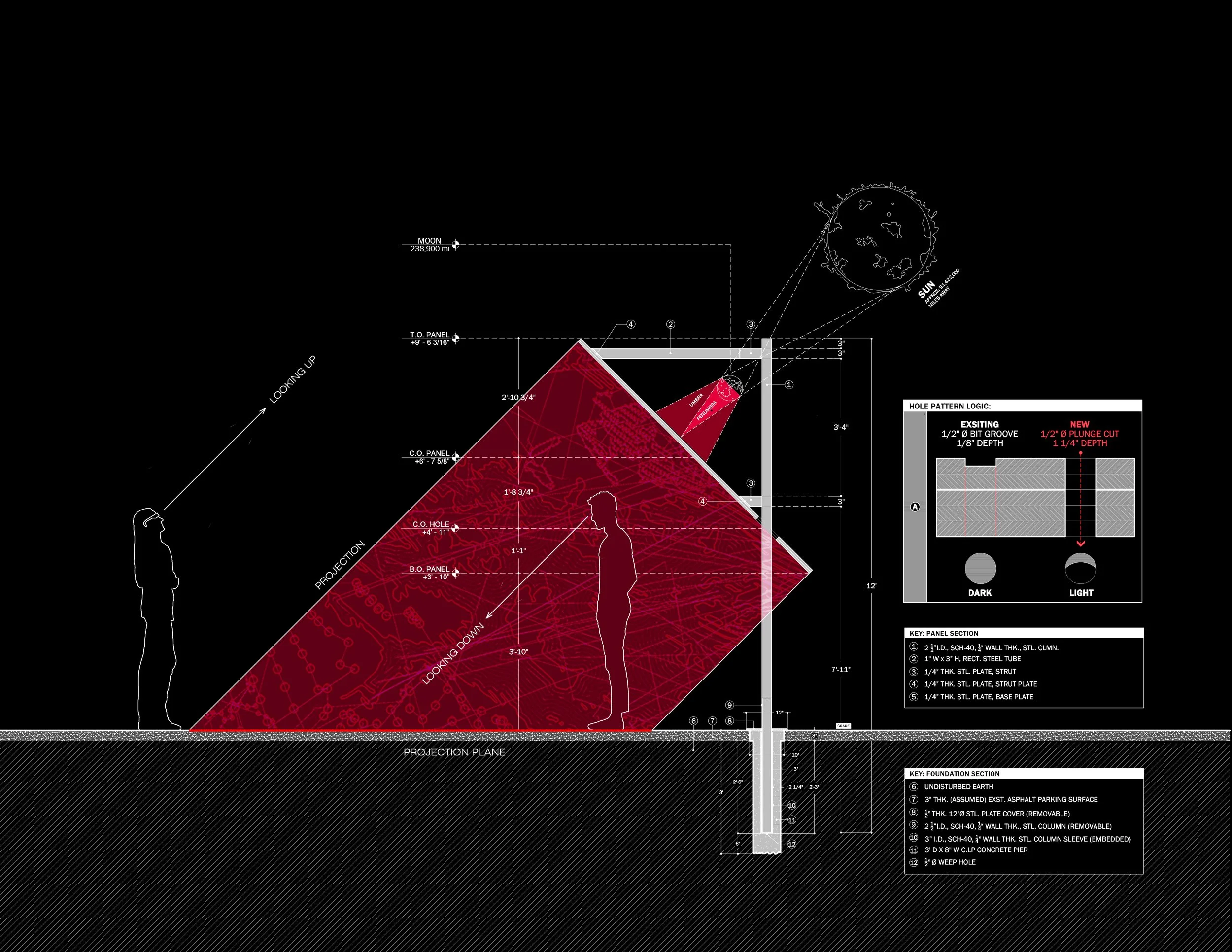
In collaboration with UB School of Architecture faculty Christopher Romano, Michael Hoover, and Randy Fernando; New York City–based printmakers and artists Zorawar Sidhu and Rob Swainston; and the UB Art Galleries staff, LookingUp/Looking Down is a temporary installation designed for the safe, collective, and interactive observation of the total solar eclipse on April 8, remaining on view through July 26.
Inspired by the intricate carving, layering, and registration techniques evident in Sidhu and Swainston’s woodcut prints—presented concurrently in their exhibition at the UB Anderson Gallery—the installation is constructed from plywood panels salvaged from boarded-up windows across New York City during 2020 and 2021. These materials, once part of the artists’ printmaking process, are reconfigured into suspended panels punctuated by constellations of precisely scaled apertures.
As the moon passes in front of the sun during the eclipse, these openings activate the installation, transforming the panels into optical instruments that project shifting patterns of light onto the ground below. The ground plane becomes both a projection surface and a shared field of observation, allowing viewers to experience the celestial event together while safely redirecting their gaze away from the sun.
By merging printmaking residue, architectural construction, and astronomical phenomena, Looking Down reframes eclipse viewing as a communal and material experience—one that collapses distinctions between artifact and instrument, past and present, and looking up versus looking down.
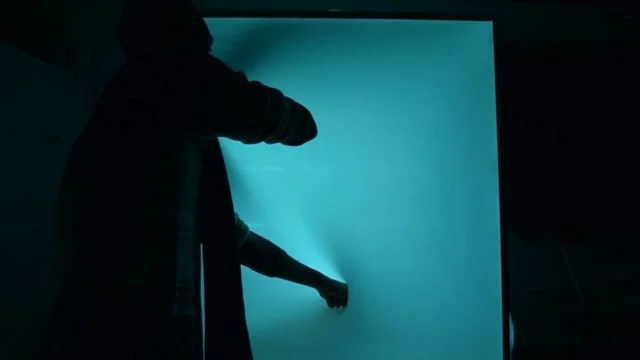
"Light Membrane" is an innovative prototype combining technology and interactive art. Utilizing a Kinect depth sensor, this project captures the dynamic movements of a fabric activated by human interaction. The sensor gathers data as the fabric's form changes, driving the control of RGB LED strips behind the fabric skin. This integration allows users to manipulate the color output, creating a vivid, ever-changing façade design. The project stands as a testament to the fusion of technology, design, and user engagement in creating responsive environments.
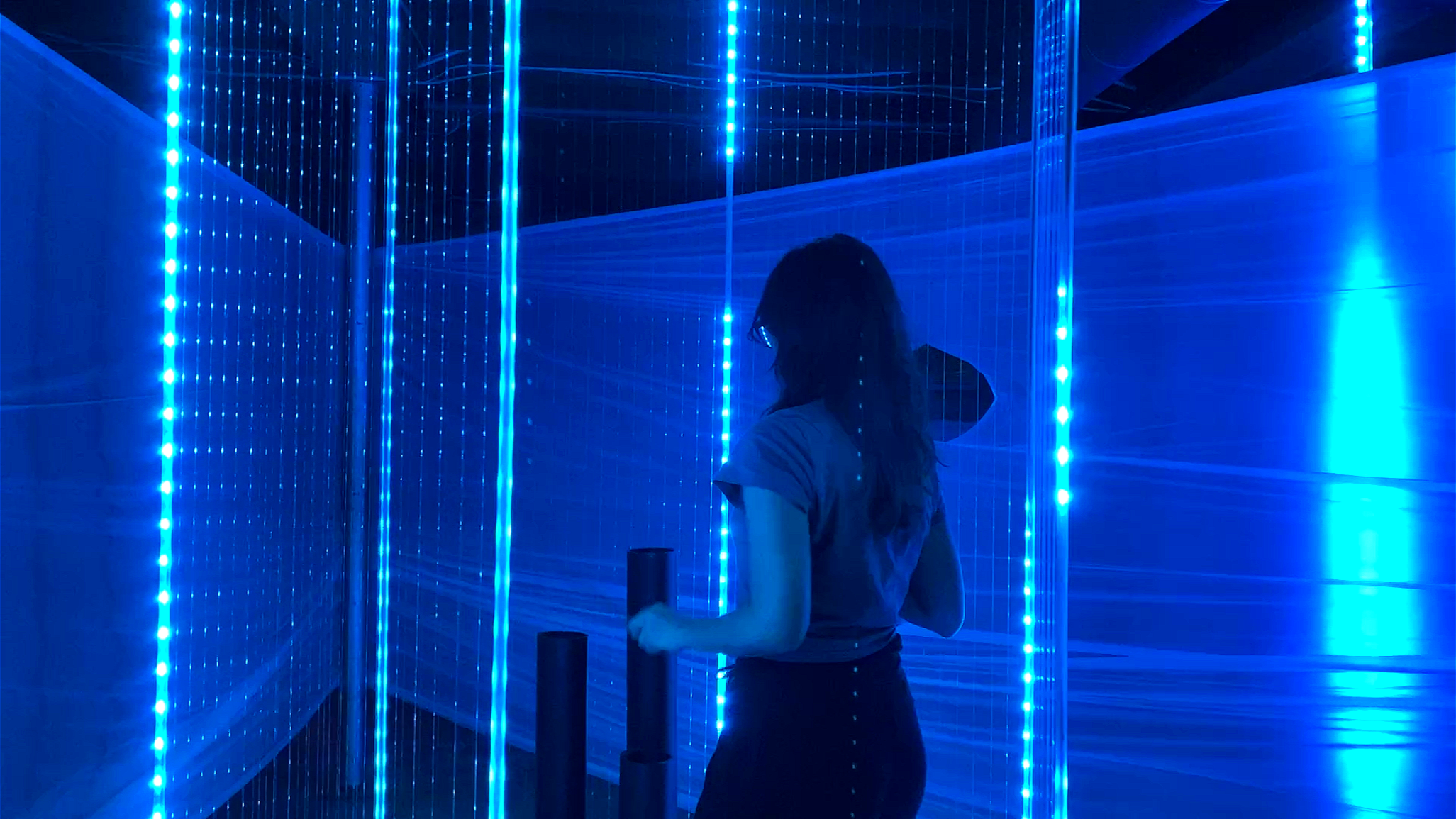
"D.6" is an interactive, audio-reactive light art installation that invites participation. Users can engage with the installation by using their voices, stomping their feet, or playing on fabricated pipes. This interaction activates the installation, creating a unique experience where the rhythm of the participants is mirrored in the piece. Designed to be site-specific, "D.6" aims to create a connection between the rhythm of the soul and the installation's responsive environment.
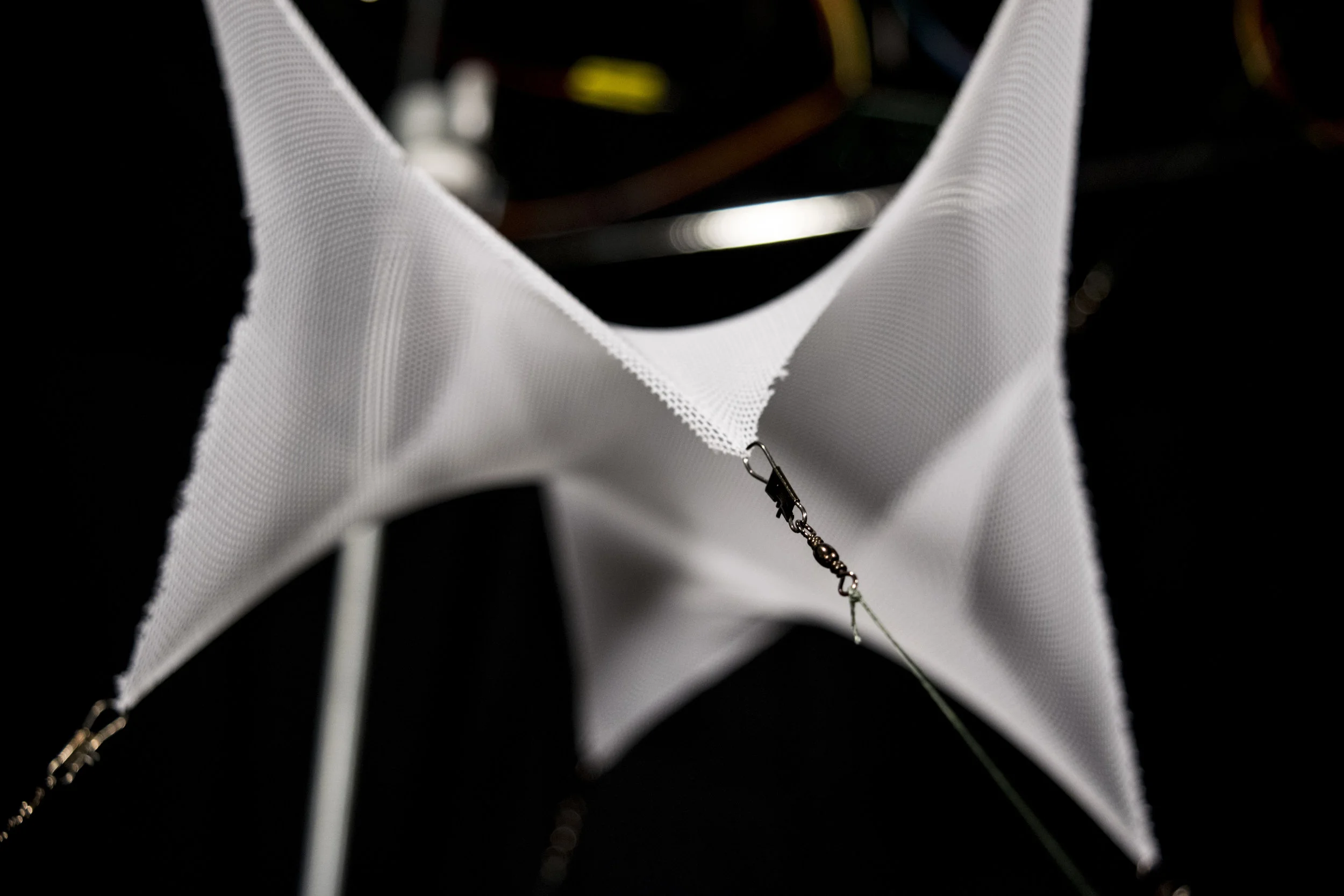
Adaptable pavilion structure interfacing geometric distortions through performative actions of occupants. The project explores the dynamic interaction between architecture and its occupants. It features an adaptable pavilion structure, where the main attraction is a fabric canopy controlled by stepper motors. These motors adjust the tension across various points, altering the fabric's geometry in response to the movements and actions of people in the space below. This innovative design not only changes the pavilion's aesthetic but also creates a lively, responsive environment that reflects the activity within it.
The Twist Gallery is composed of several rotated, alternating volumes that align to Summer Street and Delaware Avenue. Additionally, with the goal to ‘bring out’ the art to downtown Buffalo there was a step of adding volumes on the first floor to create the 24/7 Gallery. With these two motions, these volumes allow terracing in the exterior and interior of the building. The 24/7 Gallery offers a double height space with a flexible area, in which curators can hang their art on the walls or from the ceiling. This space connects to the main building through a staircase in which people can look down and see this space’s activities and installments.
South America is well known for one of the most important rainforests of the world: the Amazon Rainforest. It is not only big and beautiful, it is also home to an ample biodiversity unique to its setting. However, it is currently being gravely affected by mining activities along its rivers. Zaruma is one of the cities that has seen and felt the outcomes of illegal mining. Even though it is a beautiful city, known as one of the UNESCO heritage sites, it is also known for its rigorous mining activities. Last year, several of its beautiful houses collapsed due to an underground tunnel created by this unsanctioned activity.
Another example is the province of Napo, which is well within the Amazon Rainforest. As you can see, there has been severe deforestation in this area, which is due to mining and population growth but it is also important to keep in mind that there are people who live near these areas and that most of the materials used in these procedures are mercury and harmful chemicals that affect the people.
This lot is located in the city of Cuenca. The urbanization has 35 homes, recreational areas and resting areas. The houses are semi-detached, with front and rear distancing in a lot of 9 x 21 m; the architectural program is resolved on two floors. The architectural program utilized an initial module of 60 x 60 cm for dimensional and modular coordination between the different areas. This module is considered based on the dimensions of the different materials to be used. In addition, this module allows you to have comfortable spaces, with dimensions that allow the correct development of activities.
Three structural axes are proposed in one direction and four structural axes in the other direction. As part of the proposal the patio occupies a central bay in order to turn it into a nucleus; around which, the different spaces of the house are developed. The proposal complies with a 60% green area and 40% construction relationship requirement. The construction system is made of wood; 21 x 14 cm columns are proposed, 14 x 14 cm main beams, secondary beams 7 x 14 cm and 10 x 5 cm studs. In addition, fiber cement sheets are proposed as an exterior covering, 210 x 120 cm , and cardboard plasterboards for the interior; the patio’s wall covering is with wooden strips.
This project centers on providing students the opportunity to learn how to grow and cook their food. At the same time, it provides a space where community members can volunteer to take care of a food garden from which, in return, they can obtain fresh vegetables. Additionally, there is a community room that is open to the public that will help better understand the proper food growing processes.
The goal of this project is not only to educate the future generations of the adequate processes and how to successfully grow food, but also create a meeting point from which the community can also acquire this knowledge and strengthen neighborly bonds.
It incorporates a general school program, cooking spaces and food growing spaces. All the public spaces are placed on the first floor, while the more private/educational spaces are on the levels above. One of the key spaces is the double height cooking space from which teachers, visitors, as well as other students can observe what is being learned in this area. The orientation of this project was fundamental in order to maximize the available food growing area. For which, the roof serves as a dual function for this project. It is a green roof that will grow the more resilient vegetables, the ones that will survive for most of the winter, as well as serve as an exterior classroom for the students.
The Art Caboose project in Silo City, Buffalo, NY, showcases a creative transformation of an old red caboose car into a unique artist residency. This innovative space is designed for both work and living, blending historical charm with contemporary needs. The caboose is equipped with an extendable deck, a feature that enhances its functionality and appeal, especially during the warmer months, by providing an inviting space for gatherings and artistic collaboration. This project exemplifies a blend of adaptive reuse and artistic creativity.
[Project Developing]
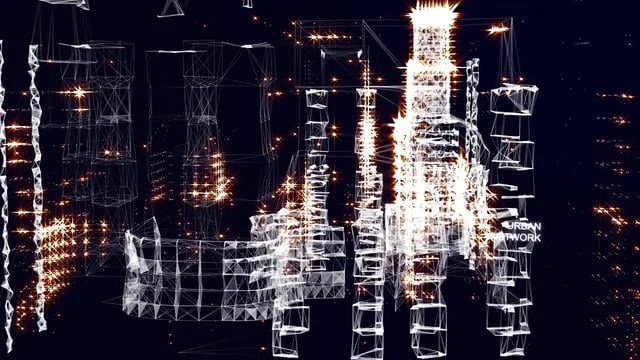
Experiment in networking the urban fabric of a city model. Generating new forms of visualization suggestive of a temporal environment.
This project delves into the realm of "smart materials," focusing on the potential of Nitinol, a material known for its unique response to temperature changes. The experimentation involves studying how Nitinol and similar materials can be applied innovatively, particularly in their ability to alter shape or properties with heating or cooling. This exploration aims to uncover new possibilities in design and functionality, potentially leading to breakthroughs in dynamic, responsive structures and objects.
Cuenca is the third most important city in Ecuador, it is located in a high seismic hazard zone; although the Ecuadorian Construction Standard, known as the Norma Ecuatoriana de la Construcción (NEC-SE-DS, 2015), establishes requirements for a correct earthquake resistant design, compliance with these is not strictly regulated. There is limited information on the constructive and architectural quality of existing buildings, which is why the introduction of seismic studies in different city sectors is necessary.
This research analyzes architectural and seismic characteristics of three buildings in the area of El Ejido. The selected buildings meet several criteria, in particular: isolated implantation, brick walls and a height of up to two floors. For the analysis of the architectural configuration the following variables were considered: inside corners, continuity of openings, long-wide relationship, slab openings and geometric regularity in facades. In the seismic analysis, mathematical models are developed. These were later subjected to a modal and spectral analysis obtaining results such as: periods, vibration modes, mass displacements and design spectra. Once the previously described analysis had been carried out, it was fundamental to verify that the floor drifts of the analyzed buildings did not exceed the maximum value established in the Ecuadorian Construction Standard in the Seismic Danger chapter: earthquake resistant design (NEC-SE-DS). Finally, the results from the architectonic and seismic analysis are compared.
“Networking Relationships of Temporal Dance Environments”
The Cypher is a spatial condition in hip-hop culture that is generated from a series of relationships between body, space, and time. This condition is inherently architectural as it utilizes bodies as a means of constructing a temporal environment. Breakdancing or b-boying/b-girling is a genre of dance that stems from the four pillars of hip-hop. The other three include emceeing, deejaying, and graffiti. The fourth pillar, breakdancing, utilizes the Cypher to host performances in an adaptable field. As a means to understand this construct, multimedia technology was used to document and capture data from performances at Verve Dance Studio. Through film and motion capture, performances in a time interval of minutes were processed into drawing sets to identify the unique relationships building up this threshold of architectural bodies.
The documentation of the Cypher serves to challenge architectural representation, in order to generate new methods of interrogation that are capable of analyzing social, cultural, and political environments. The drawings produced are transcriptions, meant to be expressive, that allow those perceiving the set to draw out their own interpretations. Gestures of the body are networked into a series of relationships with each other and the ephemeral qualities of space. These relationships are superimposed and assessed throughout ranges of time to visualize the constantly shifting spatial environment. The visuals will provide a correlation to understanding architecture through elements including ground, sequence, tension, boundaries, occupancy, and speed.
This project introduces an eco-friendly lighting solution through the creation of a concrete bulb infused with photoluminescent pigment. This innovative design harnesses solar energy, charging during the day to emit a soft glow in the dark. It exemplifies a passive lighting strategy, reducing electricity usage and providing a sustainable, ambient light source. This concept combines material experimentation with environmental consciousness, offering a unique approach to lighting in both public and private spaces.