There’s a Bag Between US | Rocco Batista
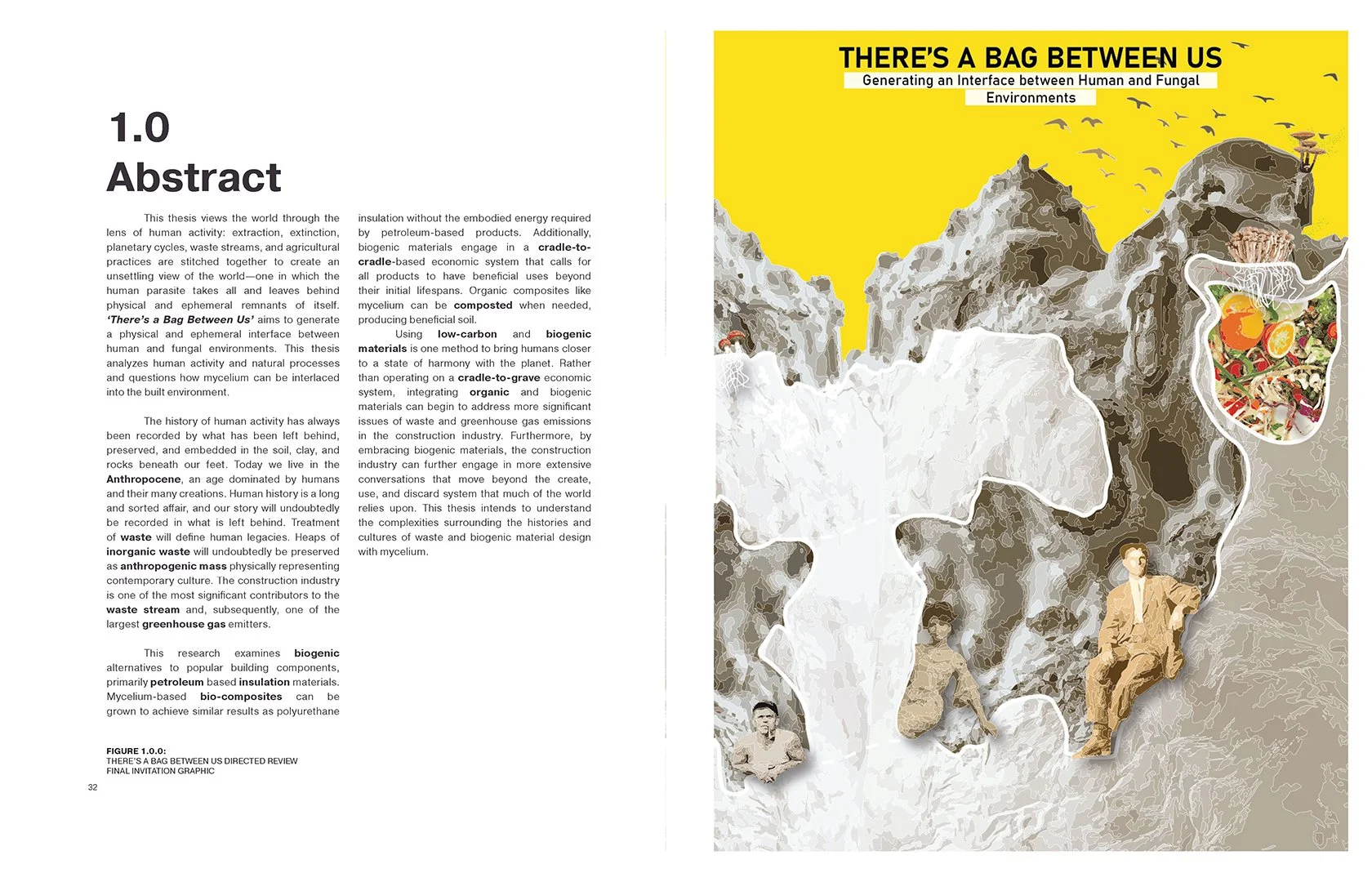
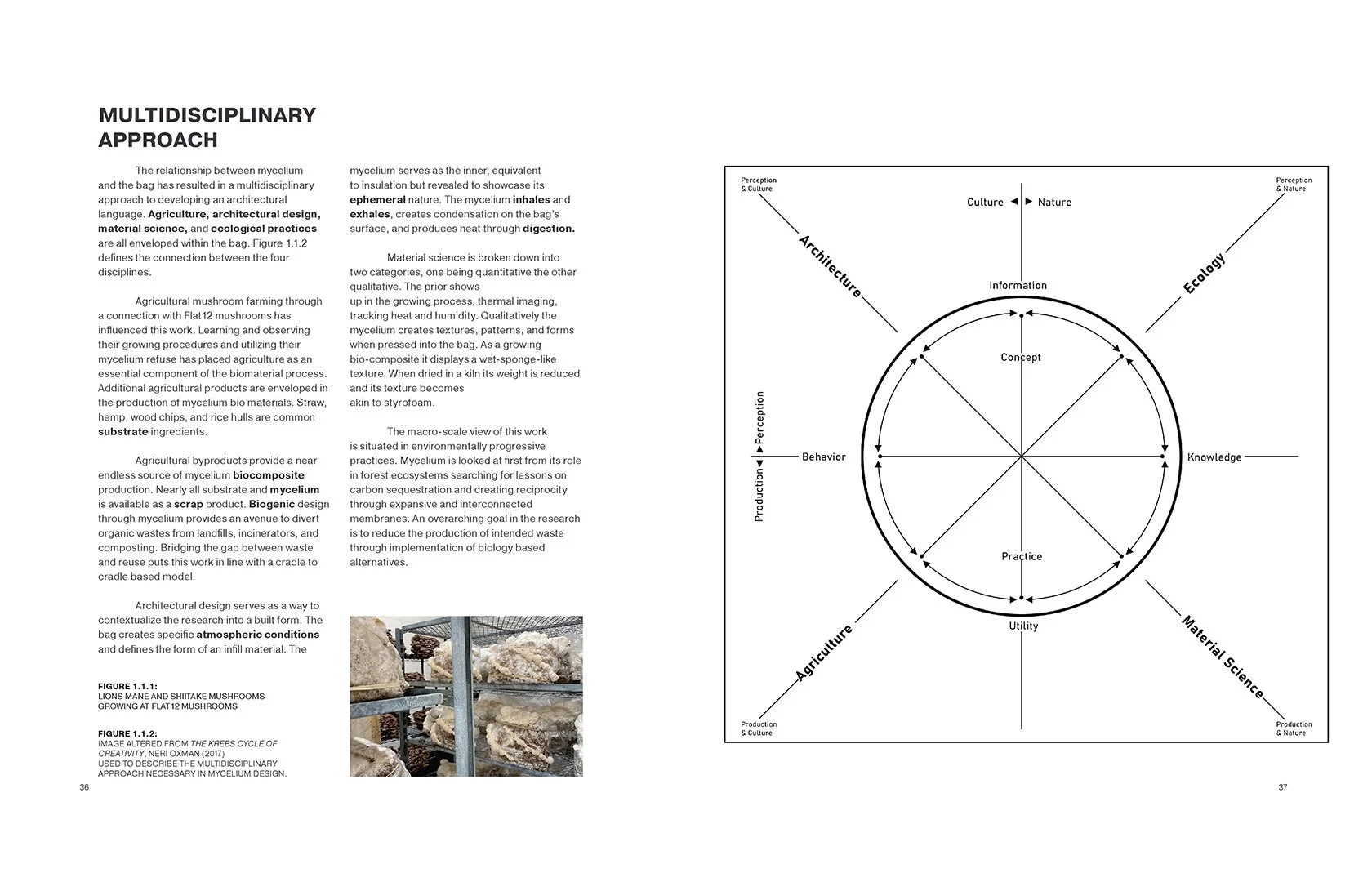
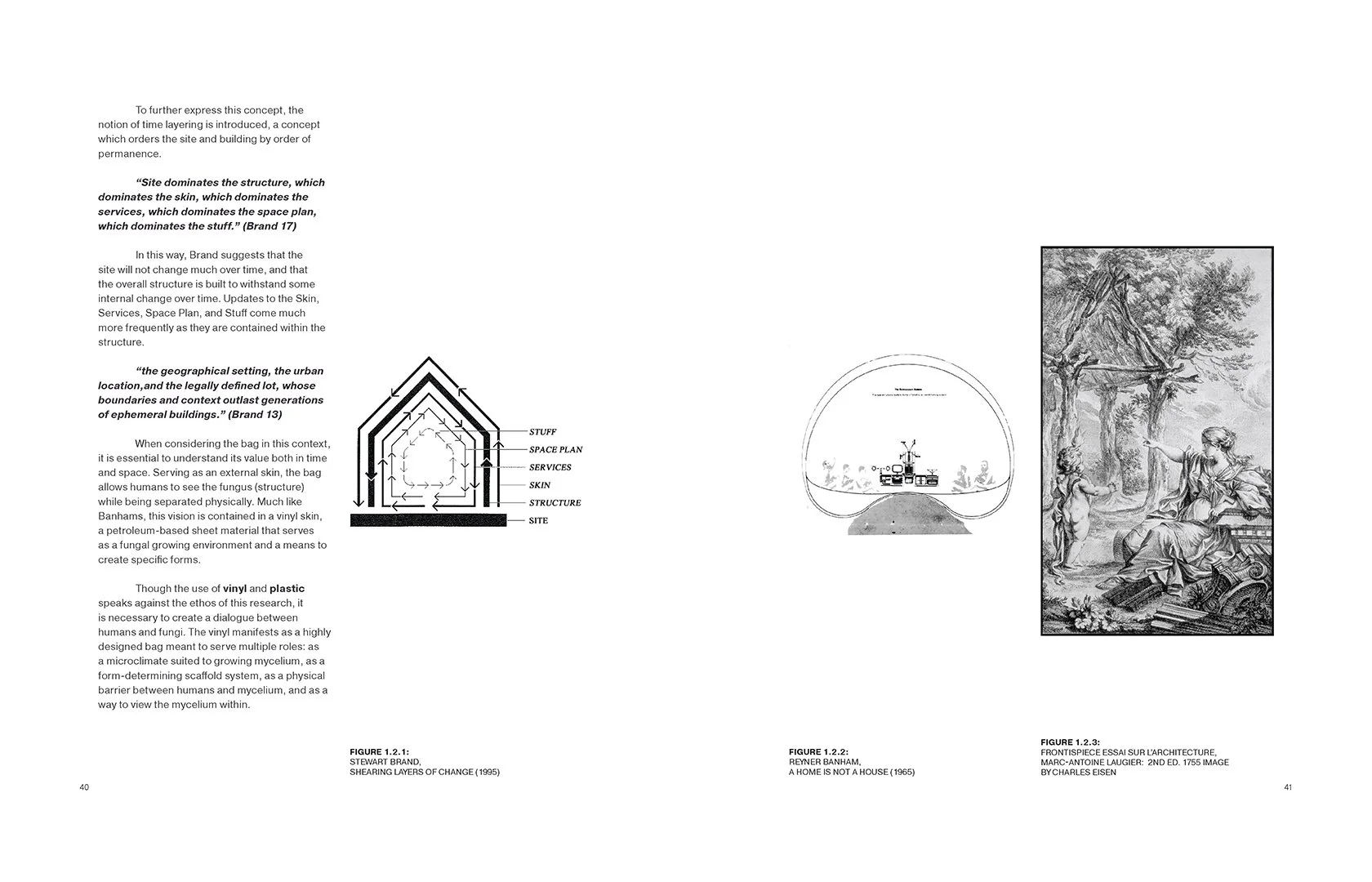
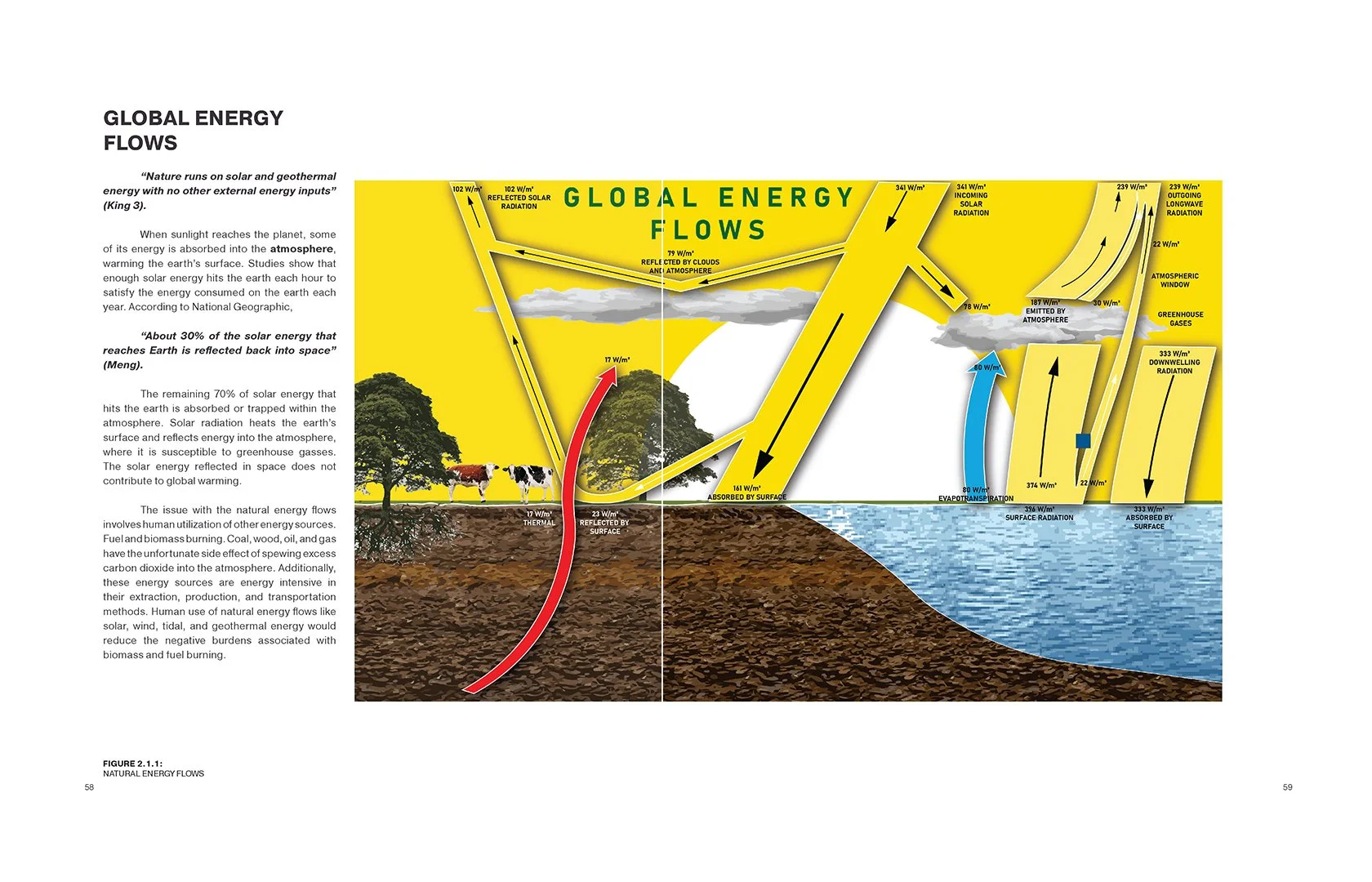
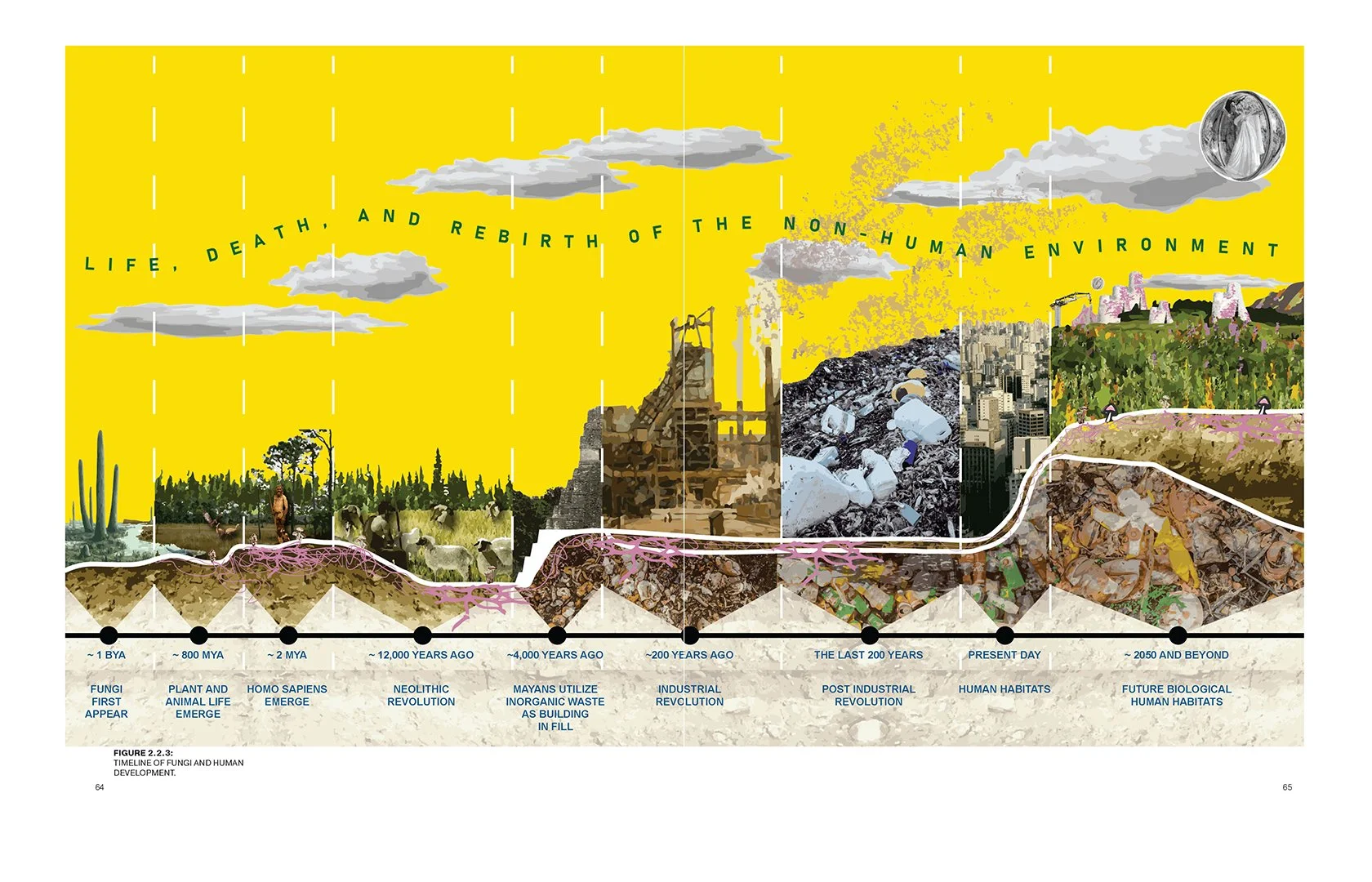
This thesis examines the world through the lens of human activity—extraction, extinction, planetary cycles, waste streams, and agricultural practices—woven together to present an unsettling portrait of a human-dominated landscape. It frames humanity as a parasitic presence that consumes resources and leaves behind both physical and ephemeral remnants of itself. There’s a Bag Between Us seeks to establish a physical and experiential interface between human and fungal environments, analyzing the intersections of human activity and natural processes while questioning how mycelium can be meaningfully integrated into the built environment. Human history has always been recorded through what is left behind—embedded in soil, clay, and rock—and in the Anthropocene, this legacy is increasingly defined by waste.
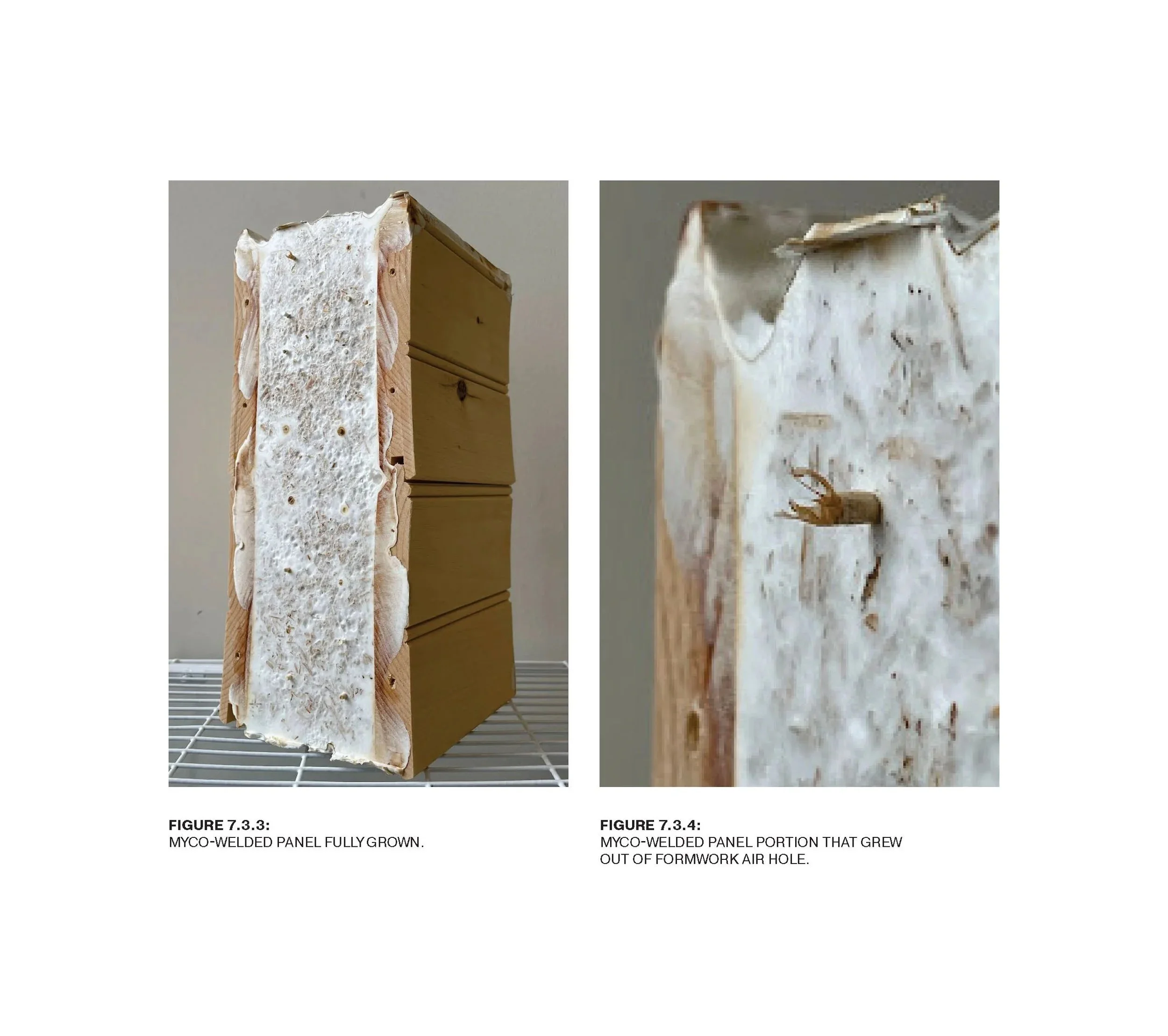
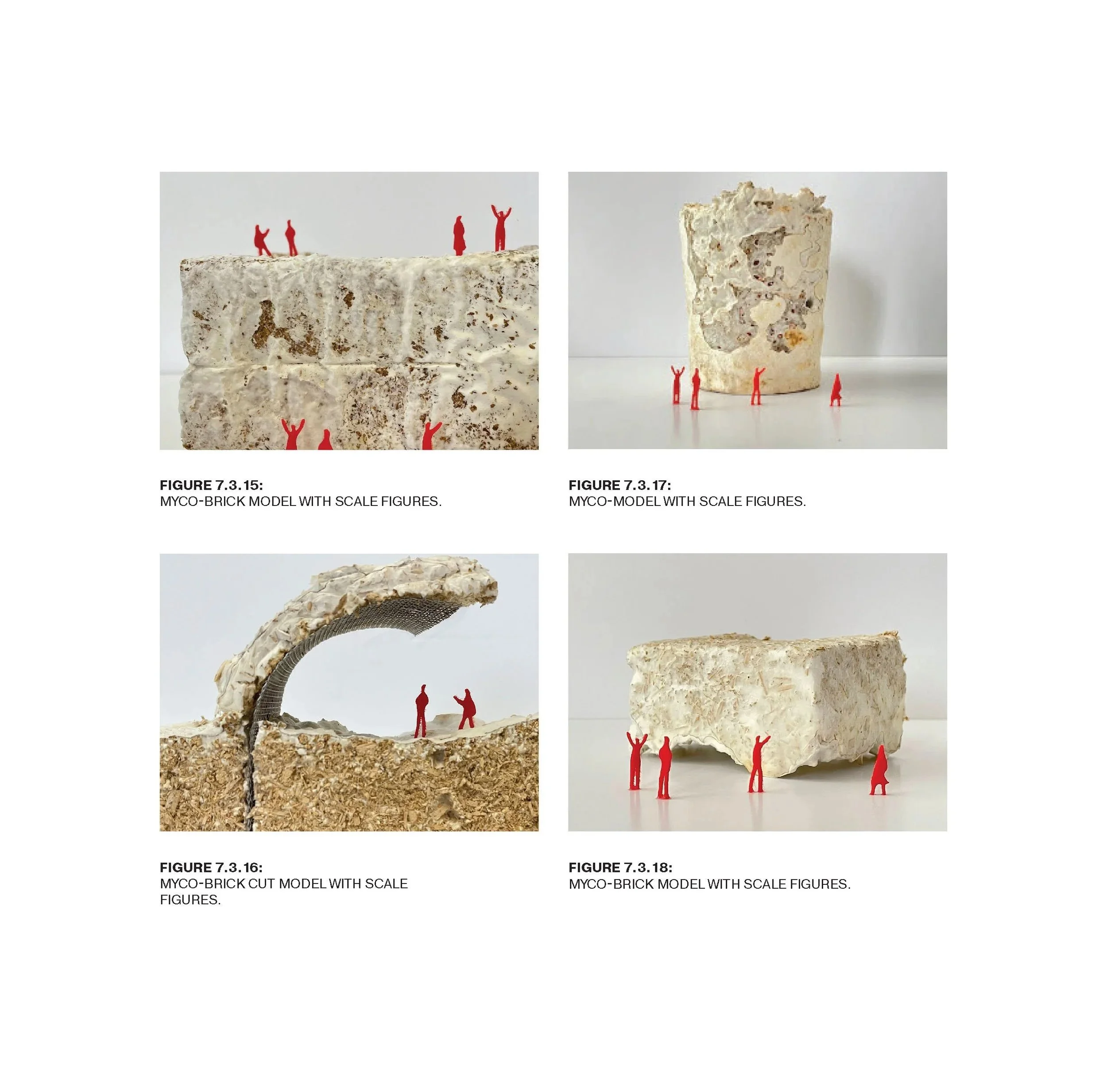
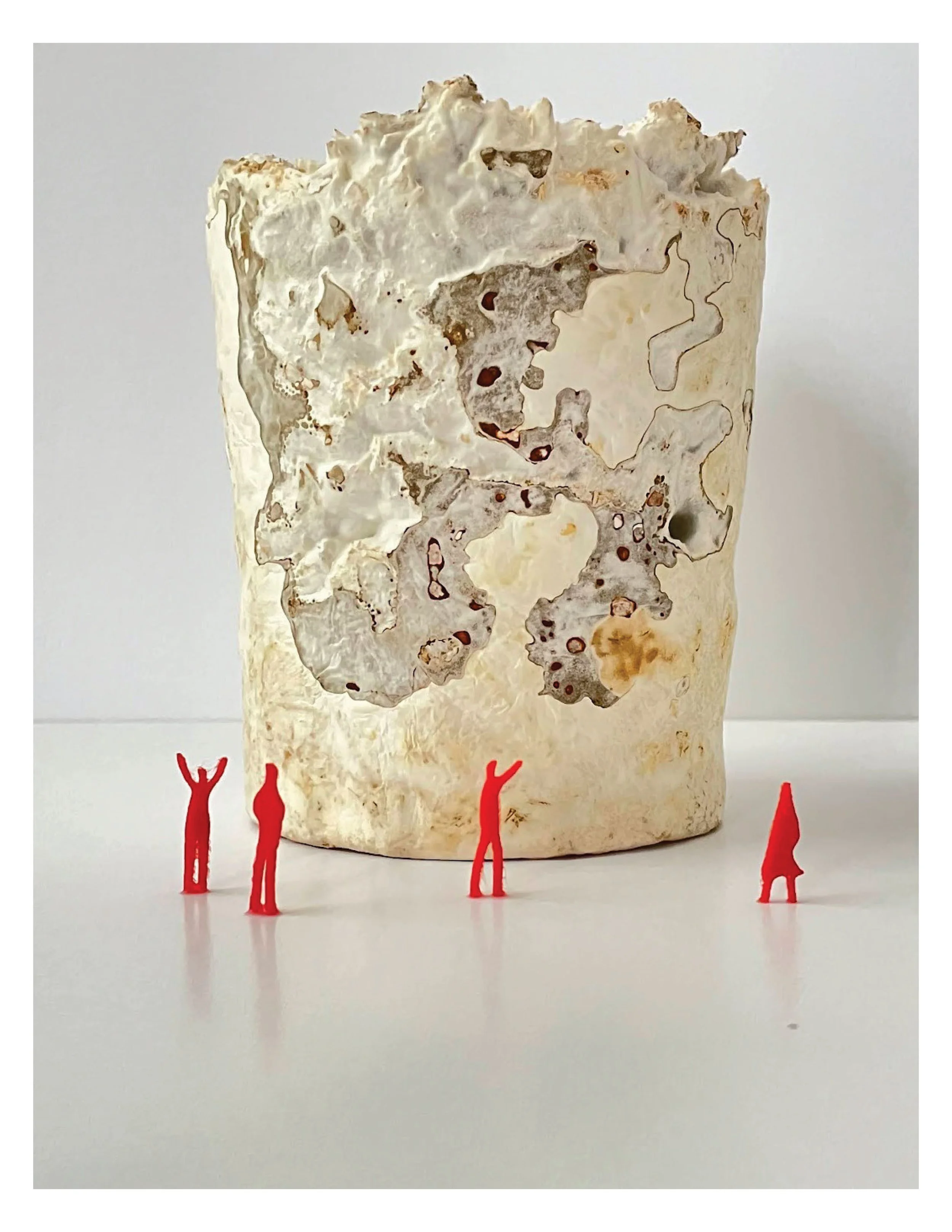
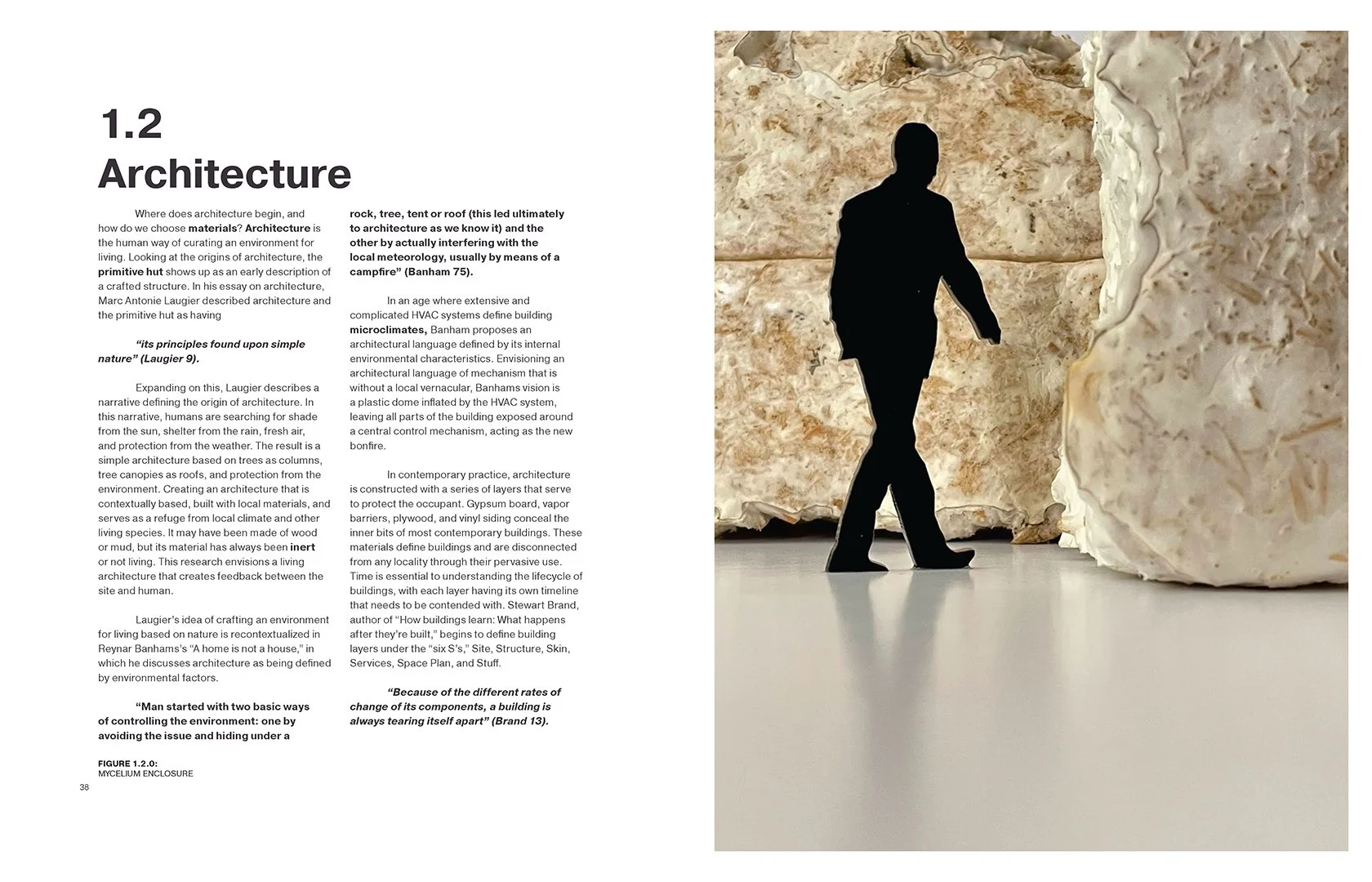
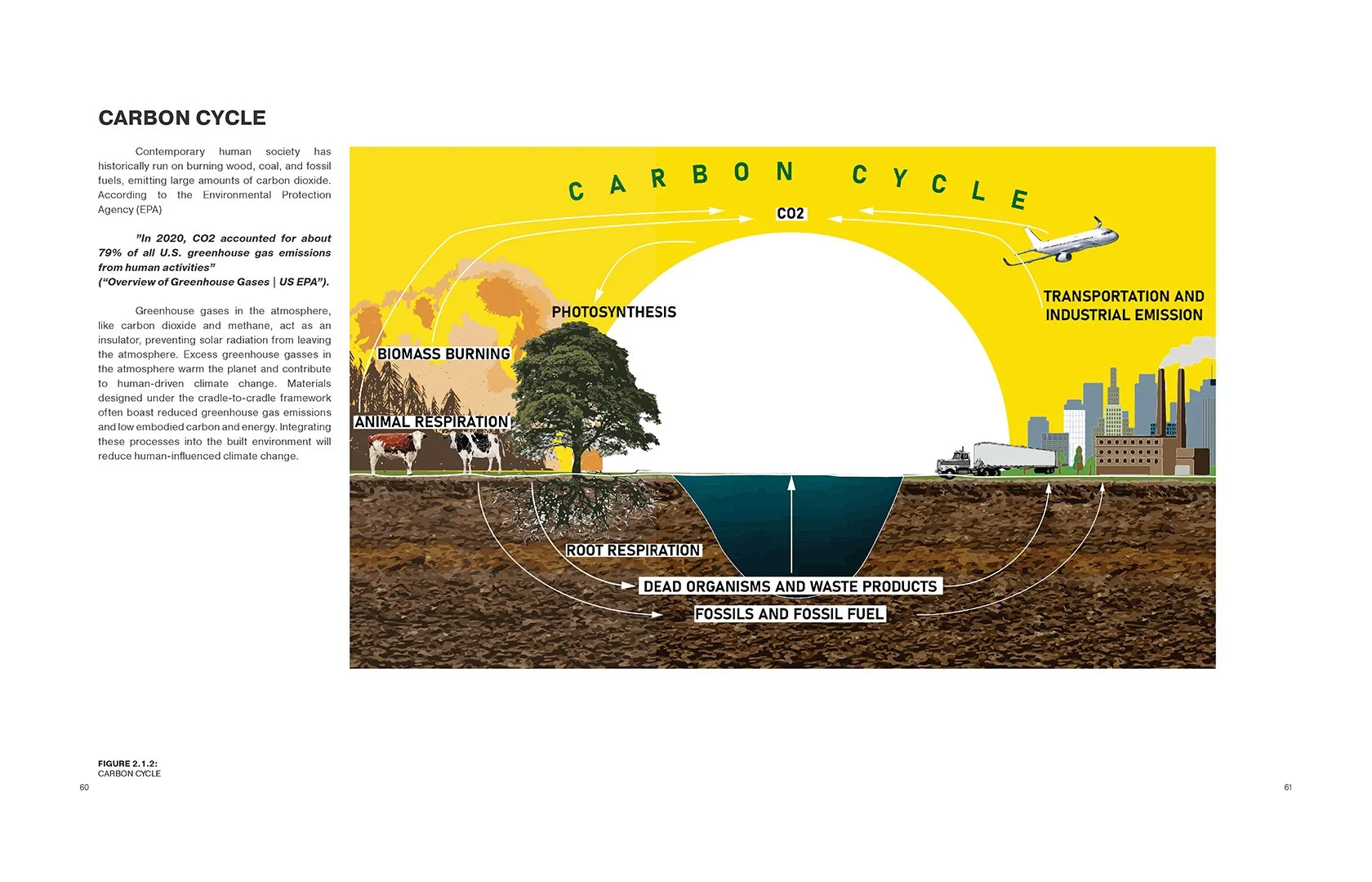
The treatment of waste will ultimately shape how contemporary culture is understood, with vast accumulations of inorganic material becoming preserved as anthropogenic mass. As one of the largest contributors to global waste streams and greenhouse gas emissions, the construction industry plays a central role in this narrative. In response, this research explores biogenic alternatives to conventional building components, particularly petroleum-based insulation materials. Mycelium-based bio-composites offer comparable performance to polyurethane insulation without the high embodied energy of fossil-fuel-derived products, while also participating in cradle-to-cradle material cycles that allow for composting and soil regeneration at the end of their life. By embracing low-carbon and biogenic materials, the construction industry has the potential to move toward a more harmonious relationship with the planet, shifting away from extractive cradle-to-grave systems toward regenerative models that address waste, emissions, and broader cultural attitudes toward material use.