
Location: Monteverde, Costa Rica
Student Team: Juan Luis Romero Vazquez, Nicholas Frantzeskos, Julia Ferone, Anthony Meli, Hannah Ruth
Faculty Team: Stephanie Cramer, Randy Fernando, Gabriela McAdam
Program Coordinator: Anibal Torres
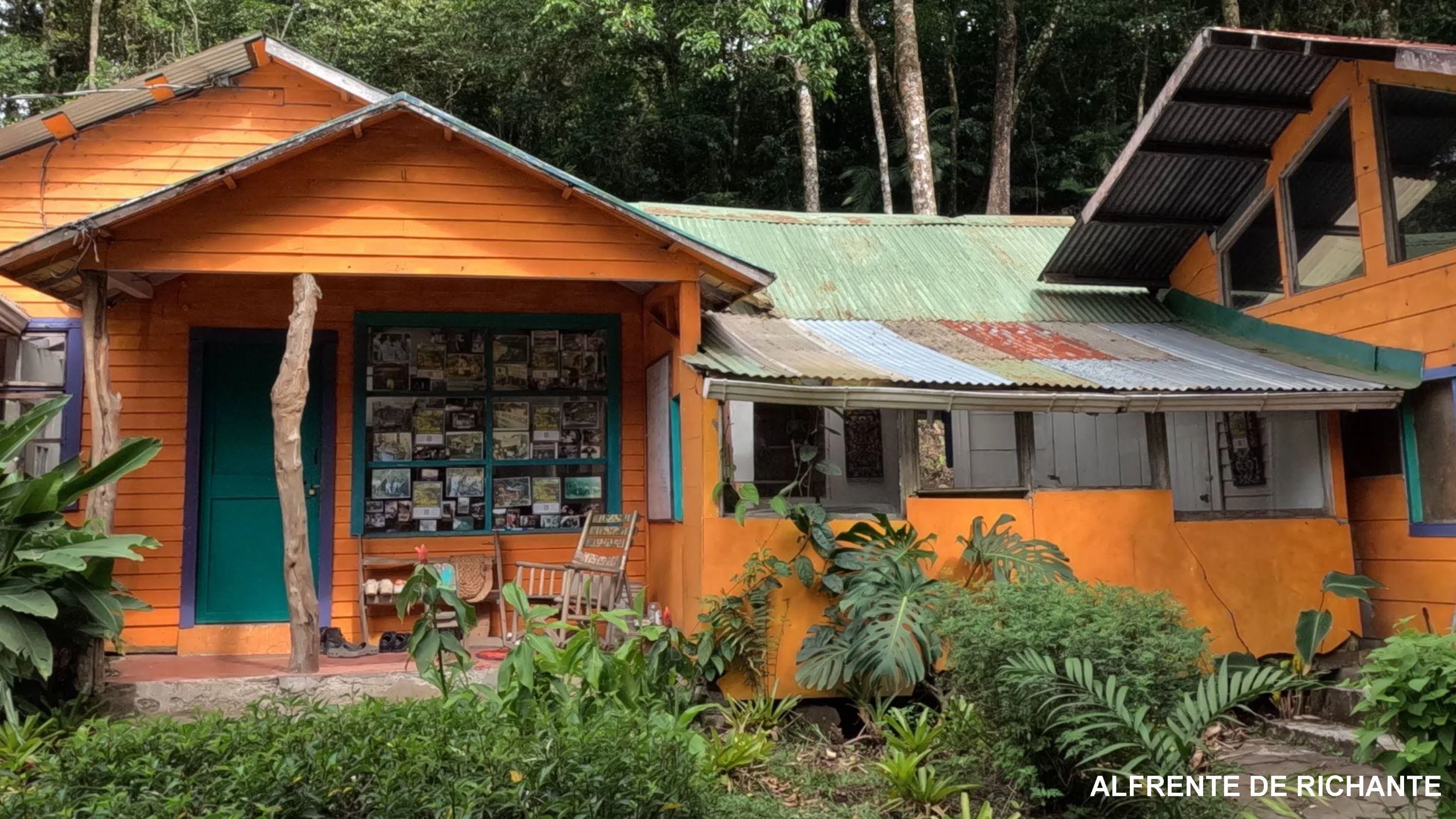
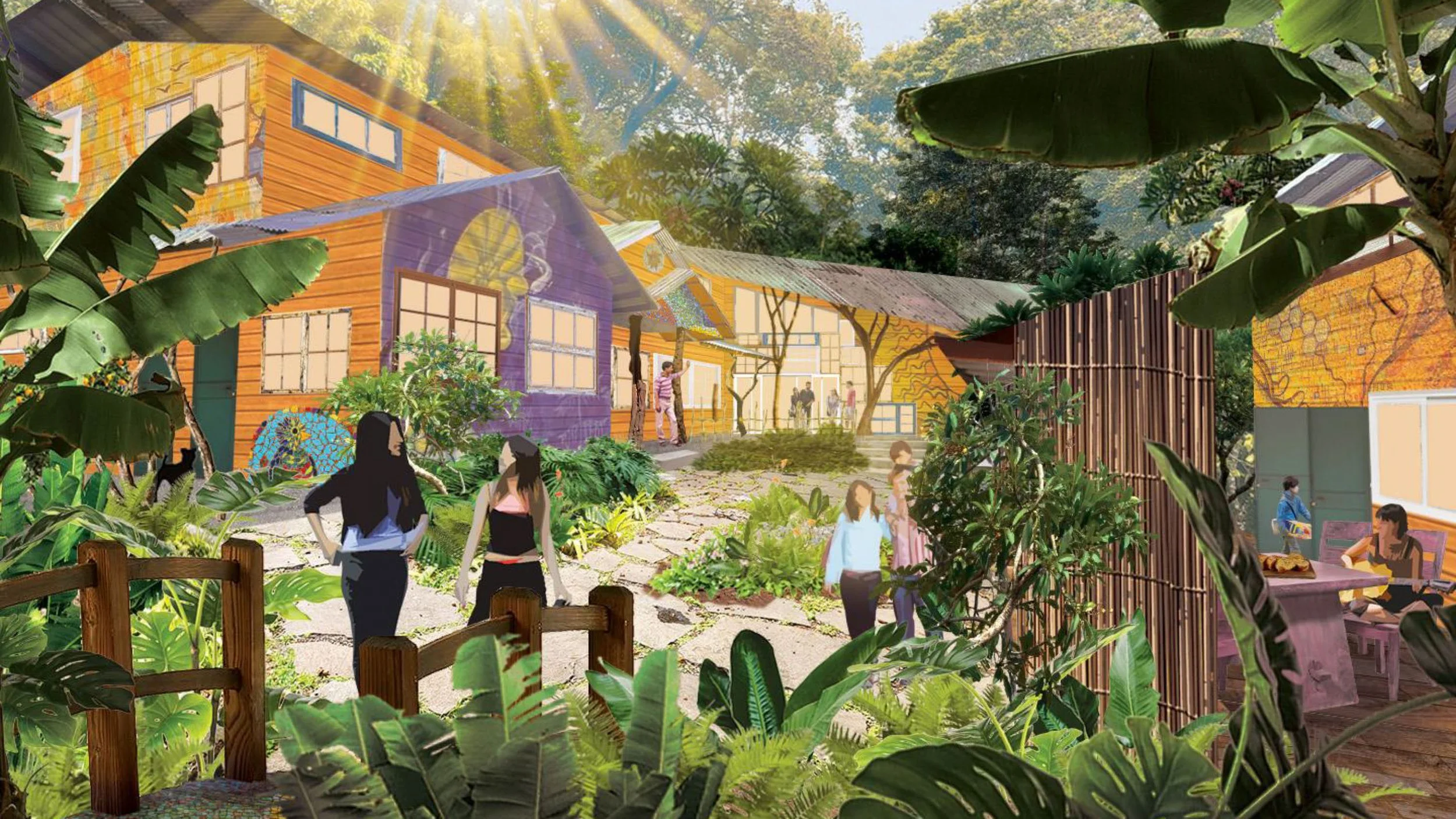
The Riochante Community Center Revitalization project is a community-centered architectural proposal focused on strengthening Riochante’s role as a welcoming space for gathering, creativity, and connection to nature while actively resisting gentrification pressures in Monteverde. Over the past 80 years, the site has undergone multiple transformations, ultimately becoming a place shaped through volunteer labor, restoration, and collective stewardship. This project builds upon that legacy by preserving the site’s identity while expanding its capacity to serve local programs and community needs.
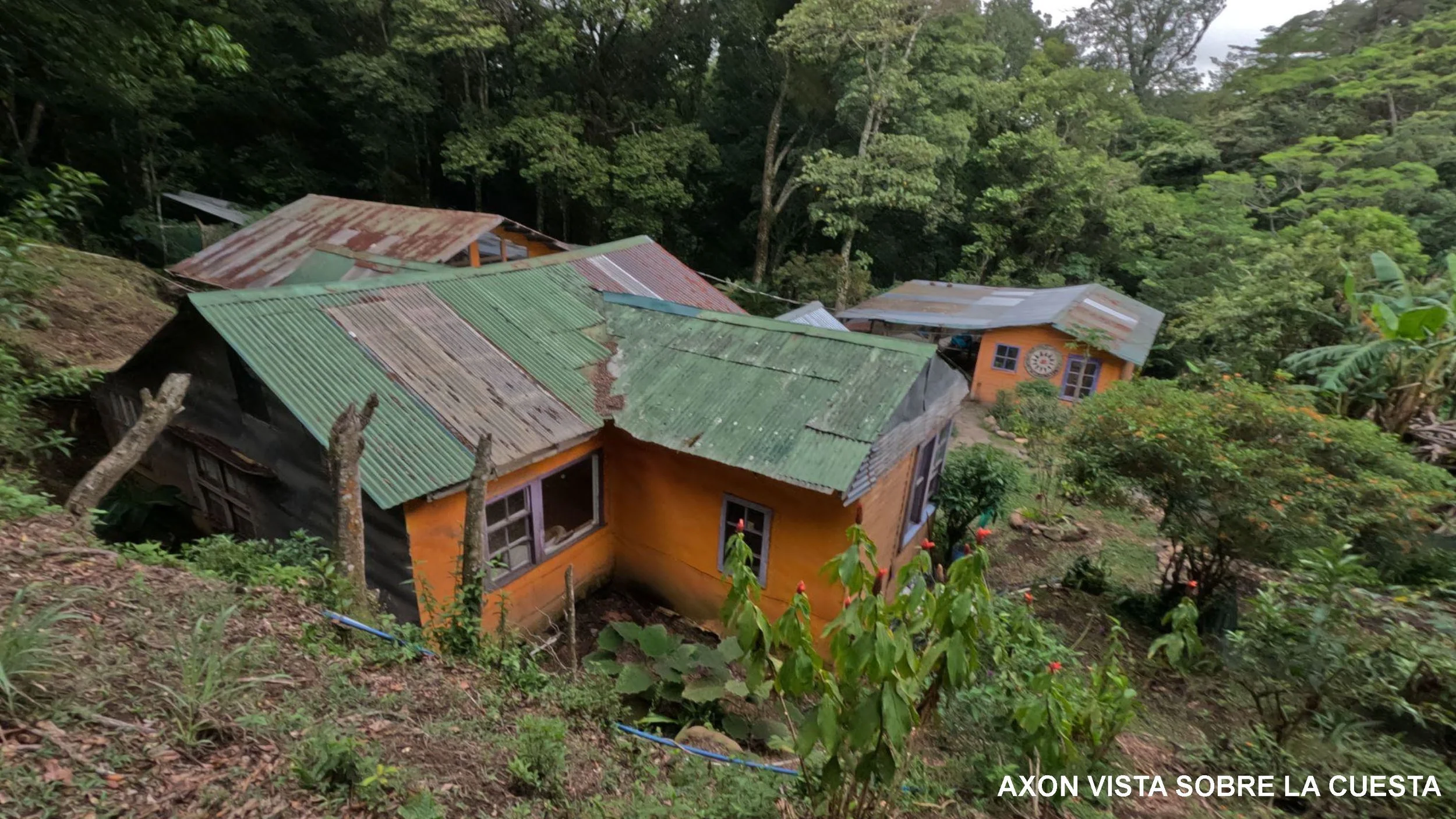
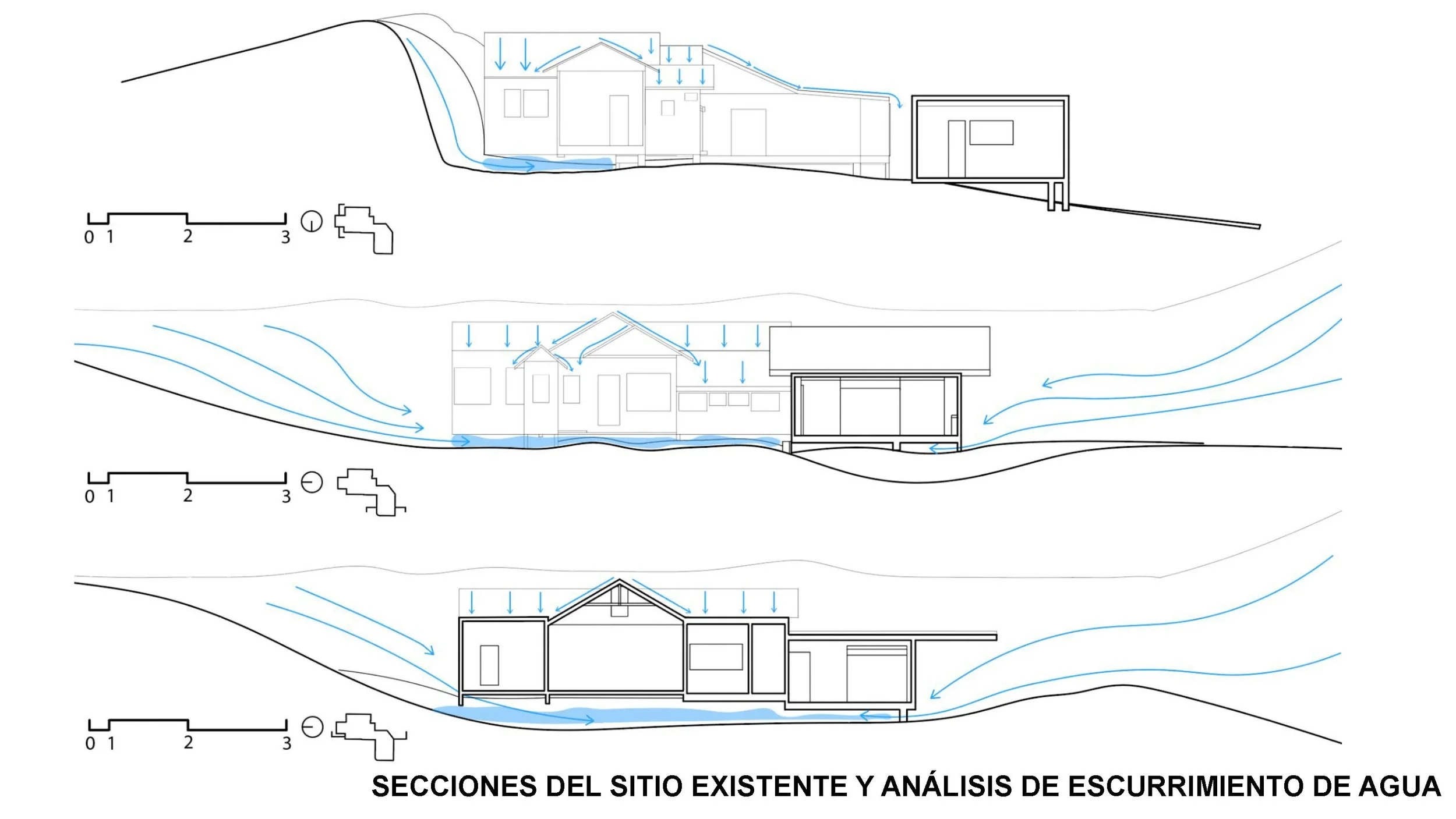
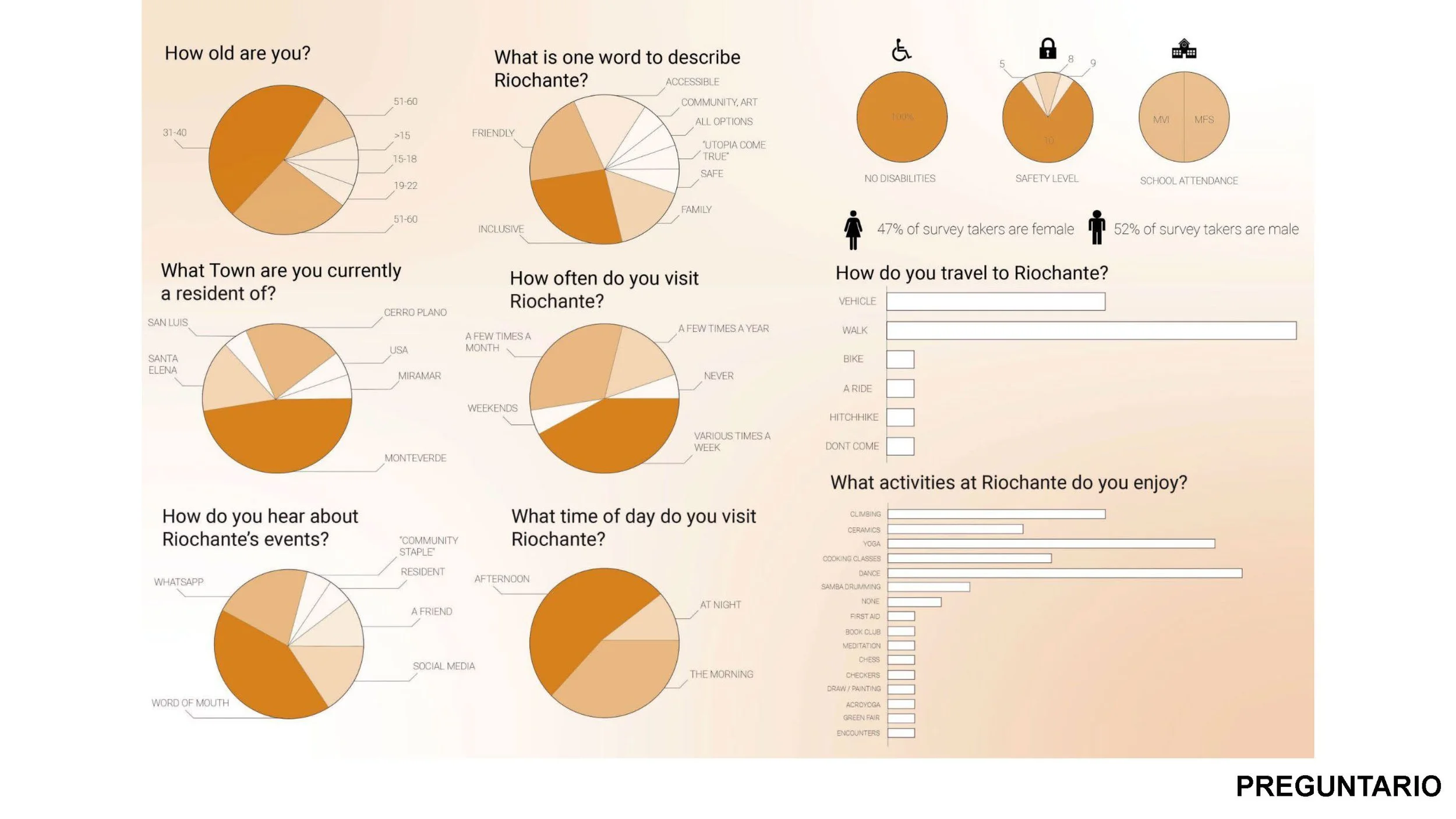
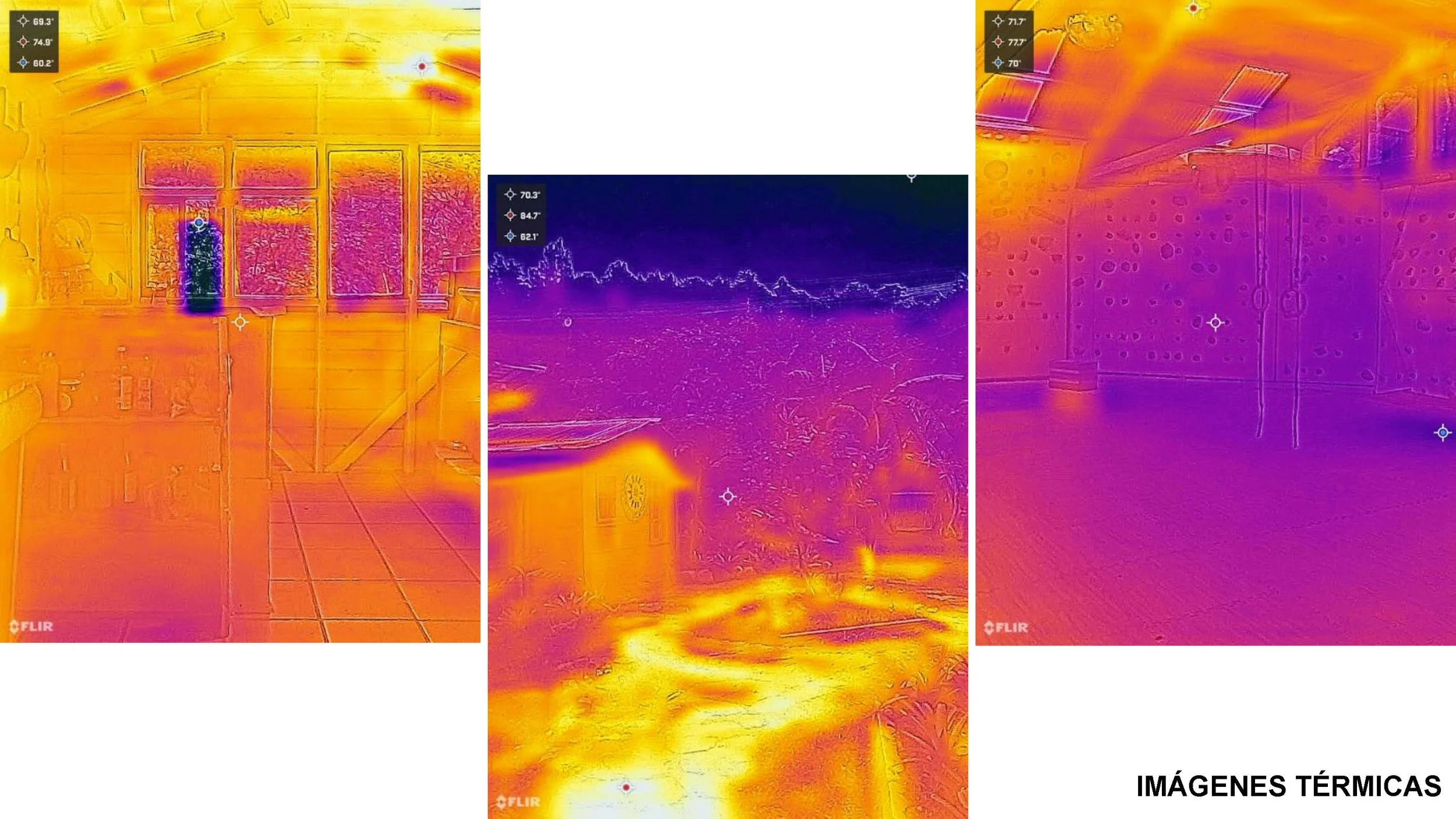
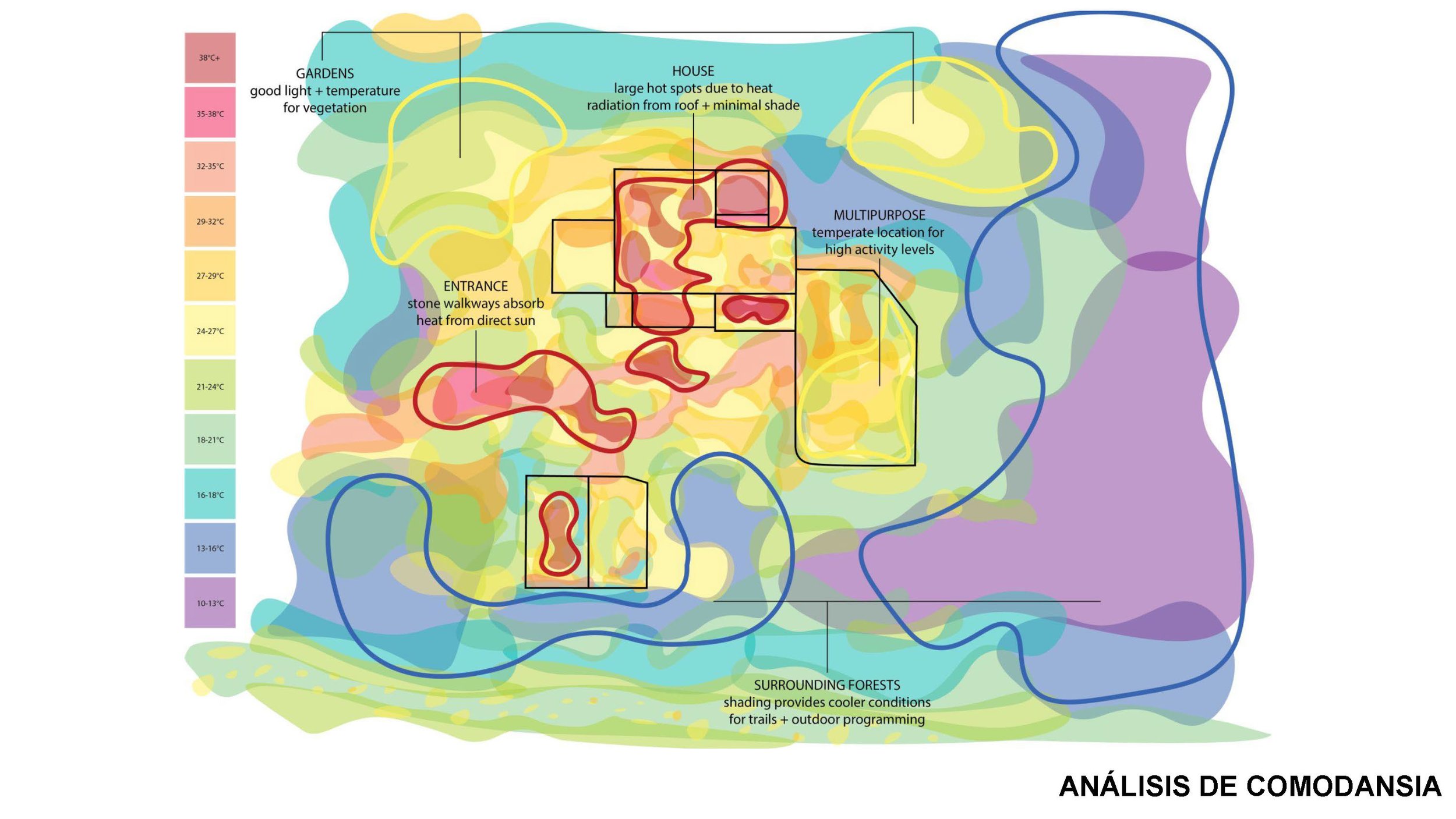
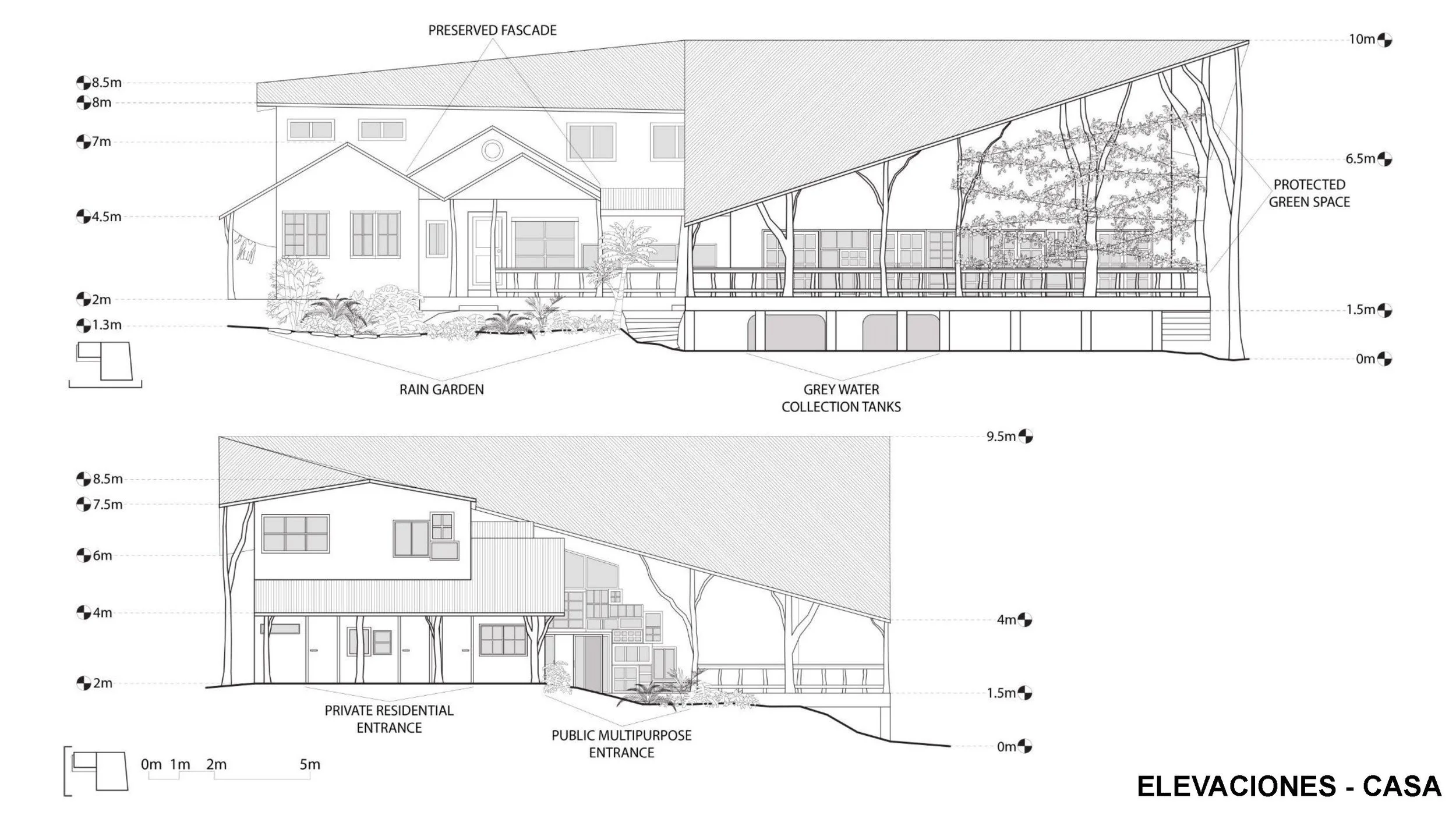
Grounded in extensive site analysis, the proposal addresses critical environmental and spatial challenges, including steep topography, water runoff, flooding beneath the existing structure, limited ventilation, and insufficient program space. Through topographic mapping, water-flow studies, sun and wind analysis, thermal imaging, and community surveys, the design responds directly to existing conditions and lived experiences of Riochante’s users.
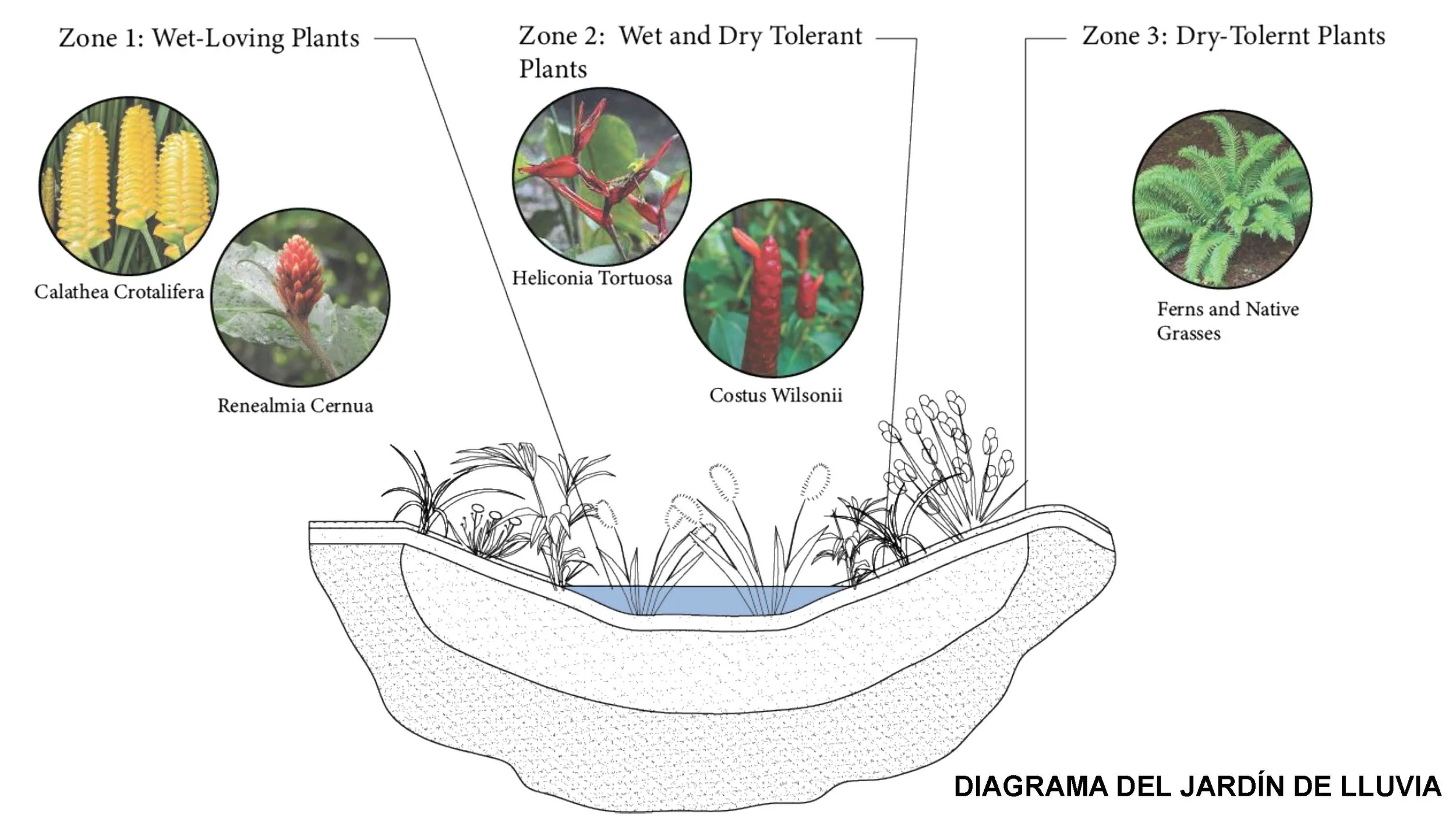
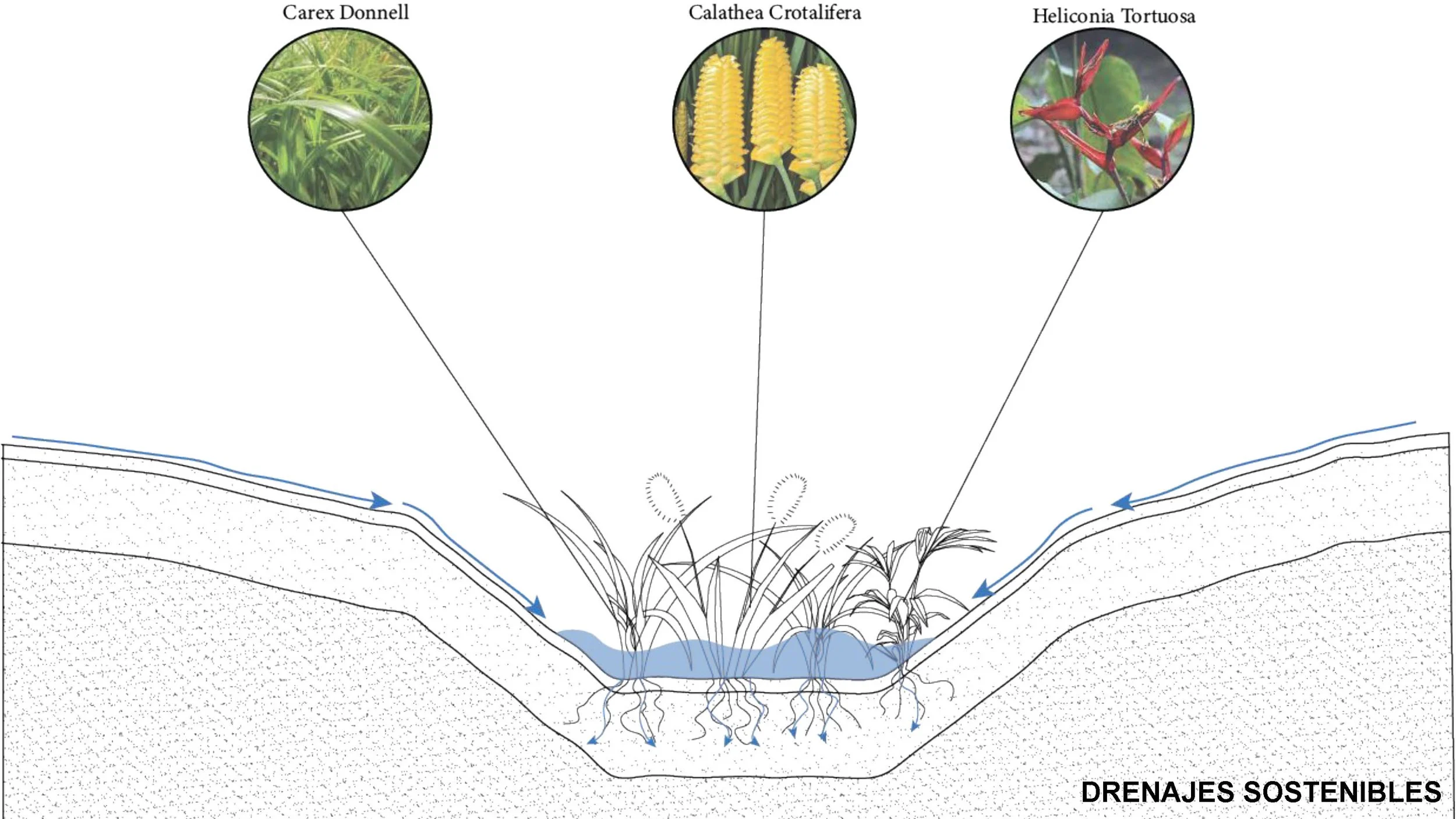
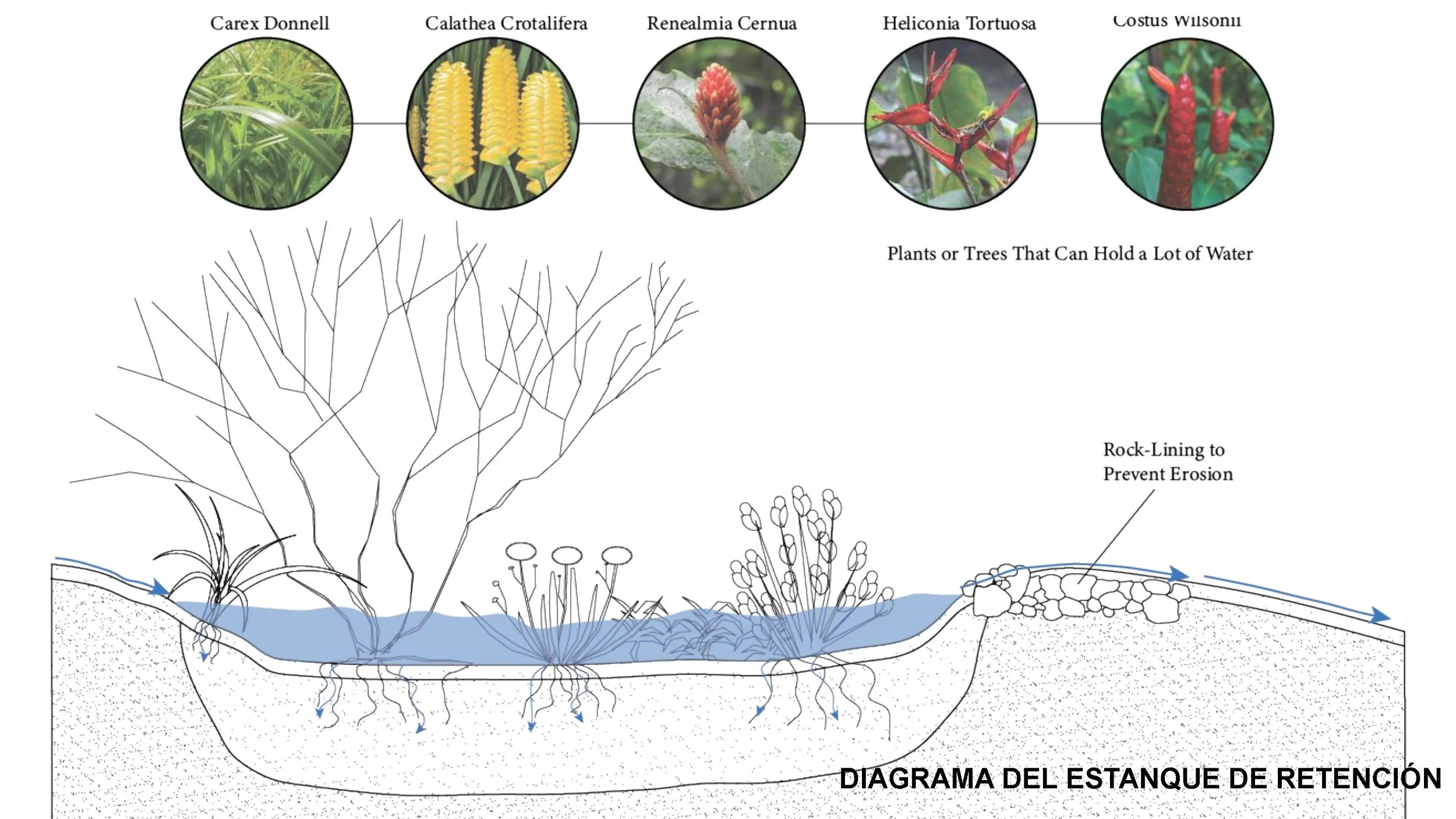
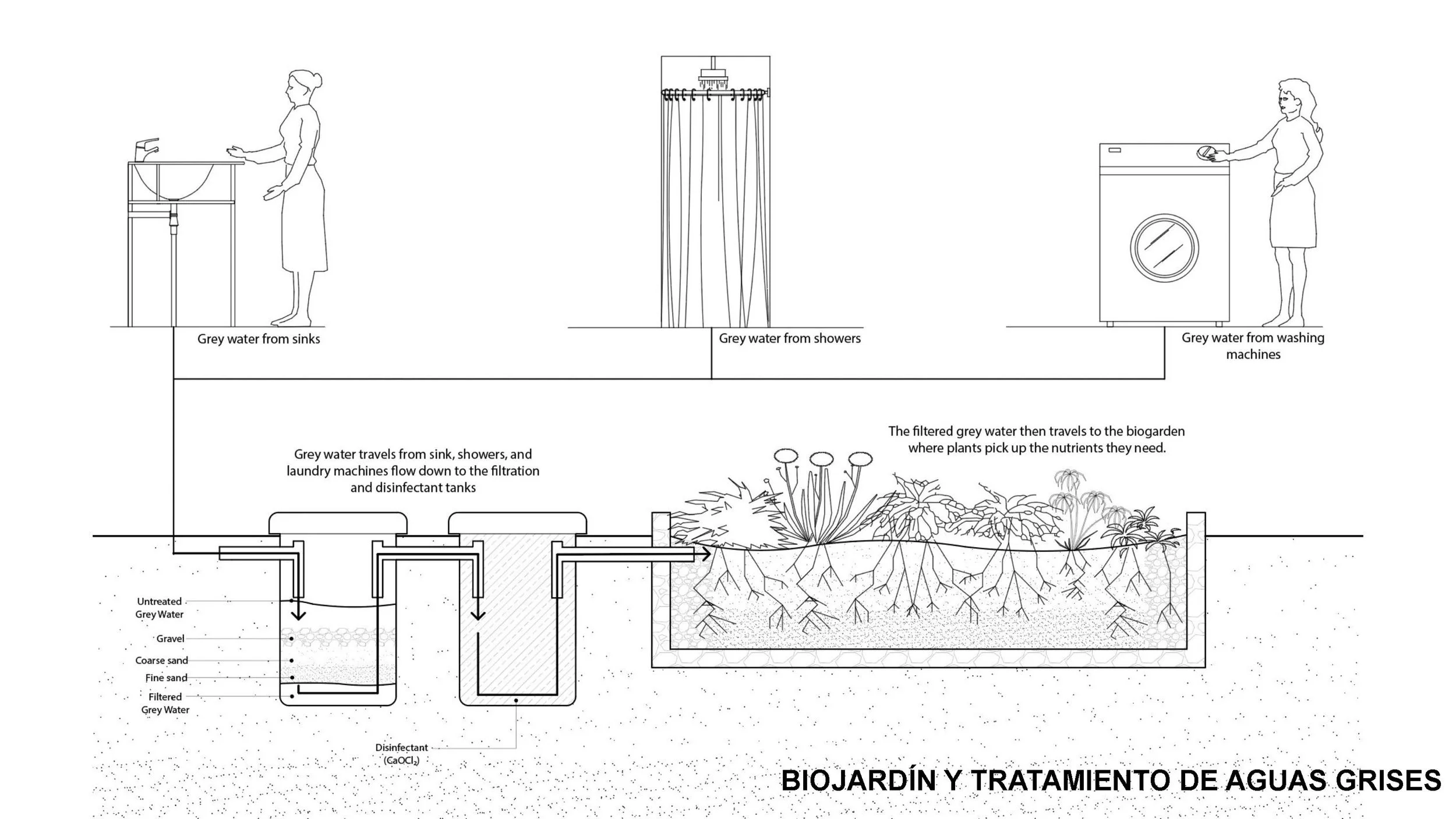
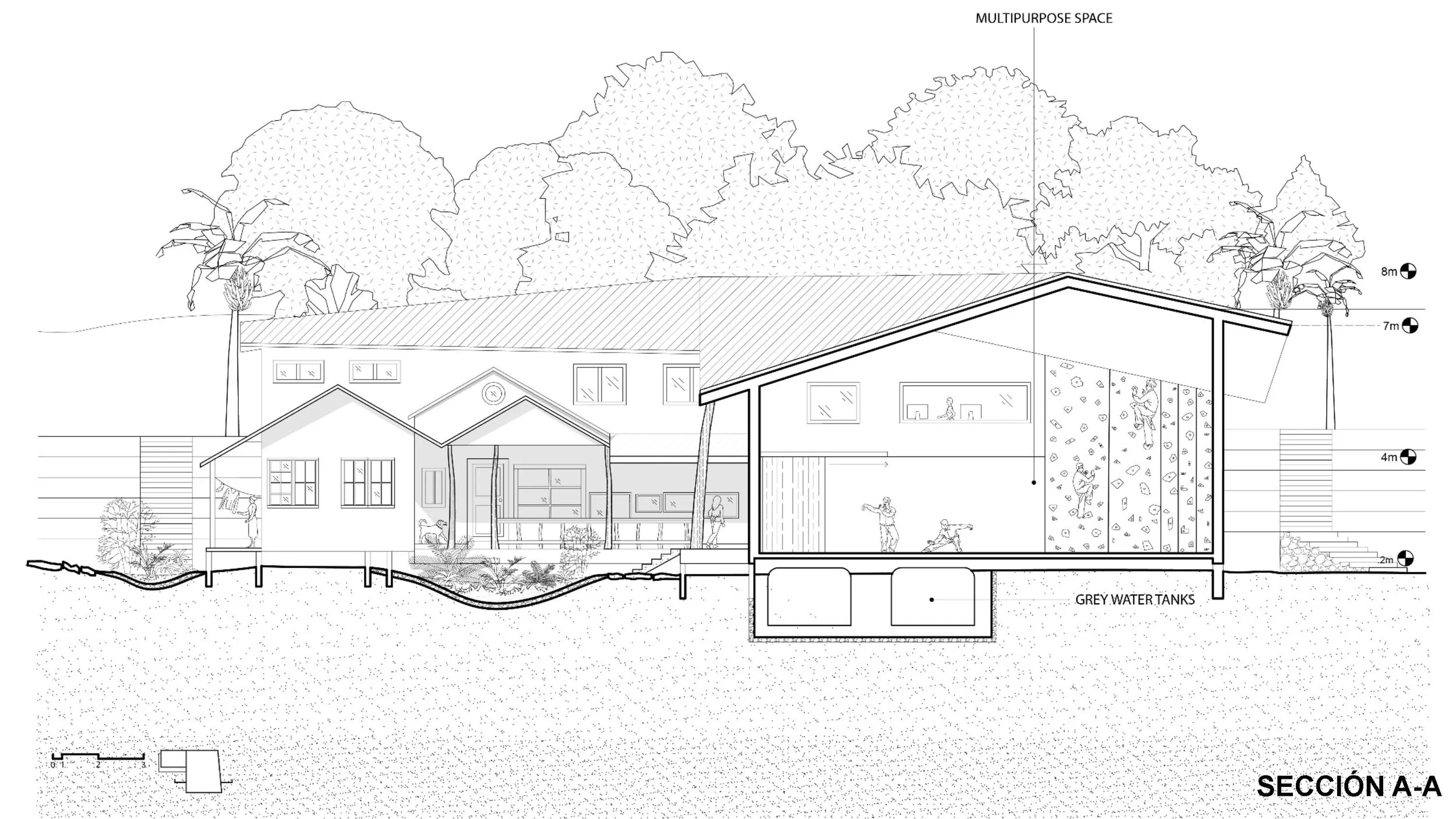
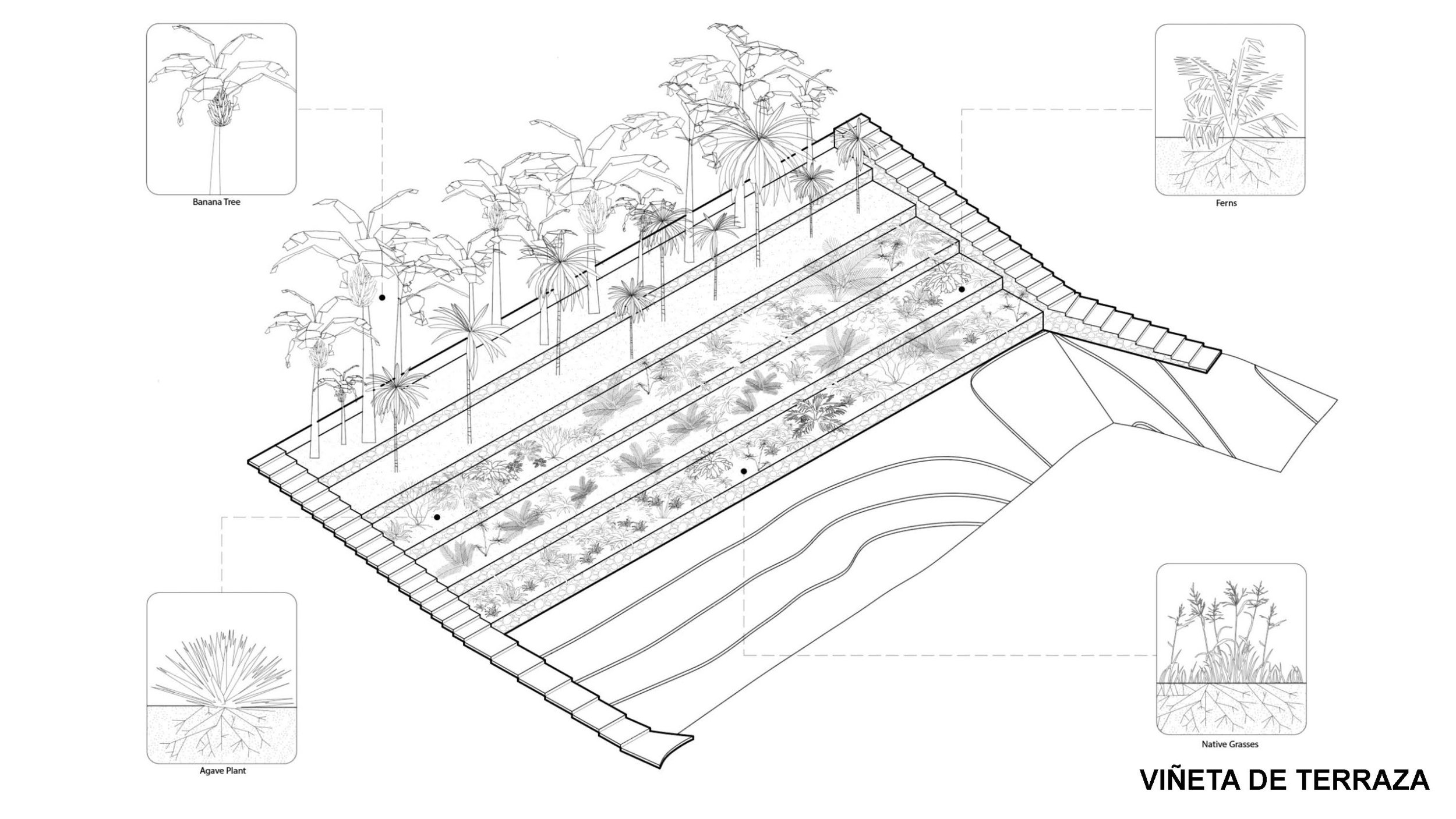
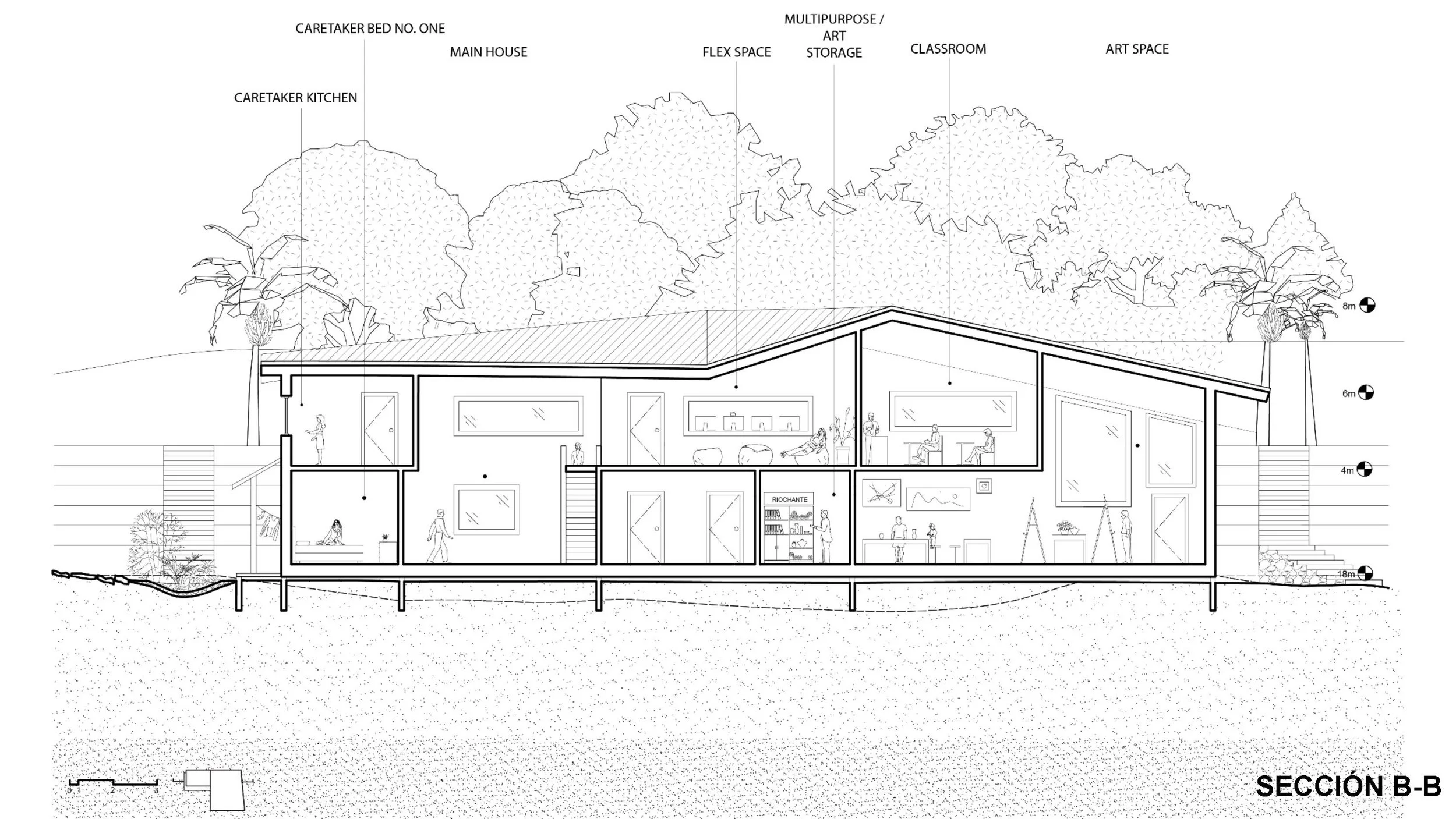
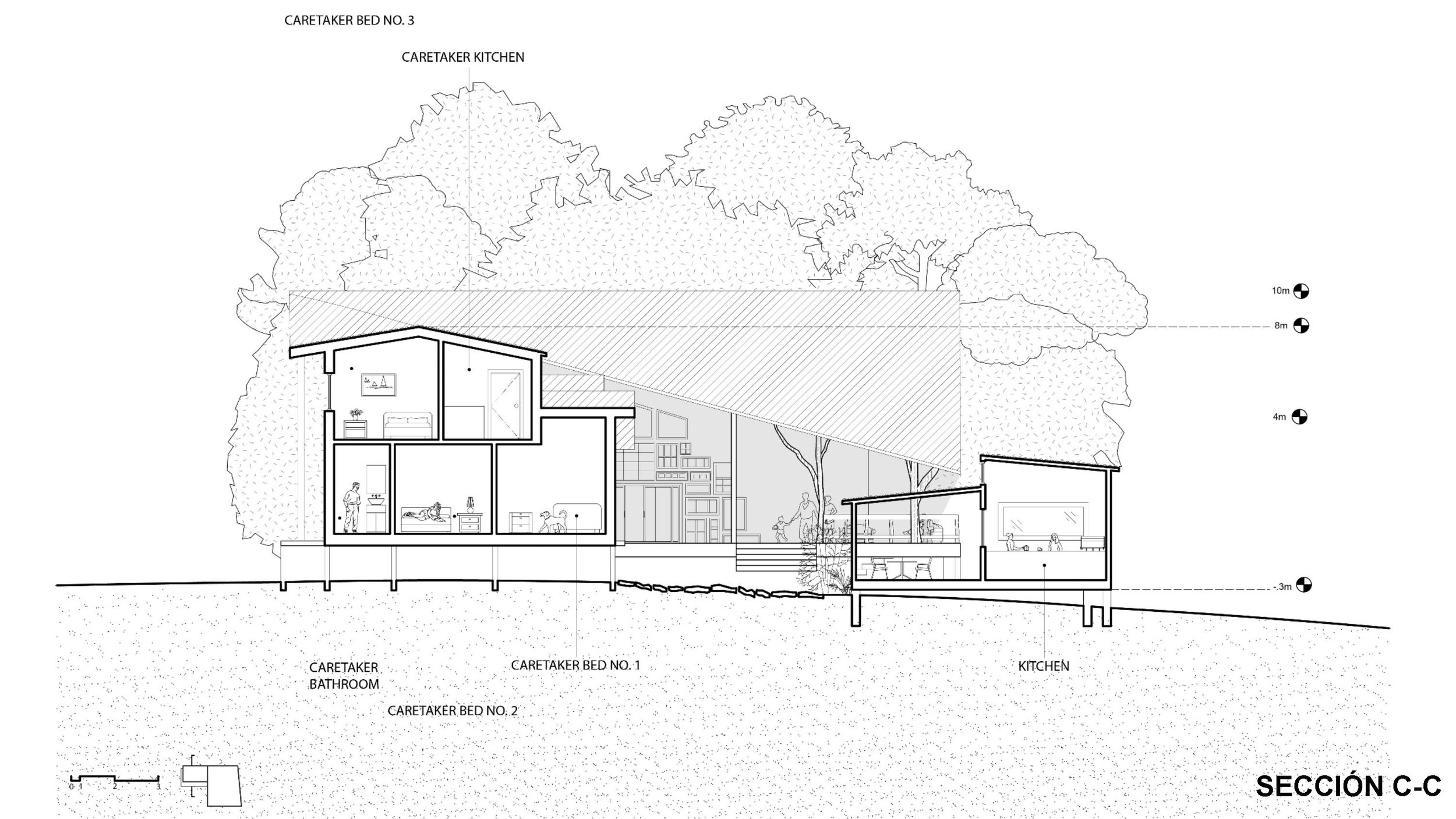
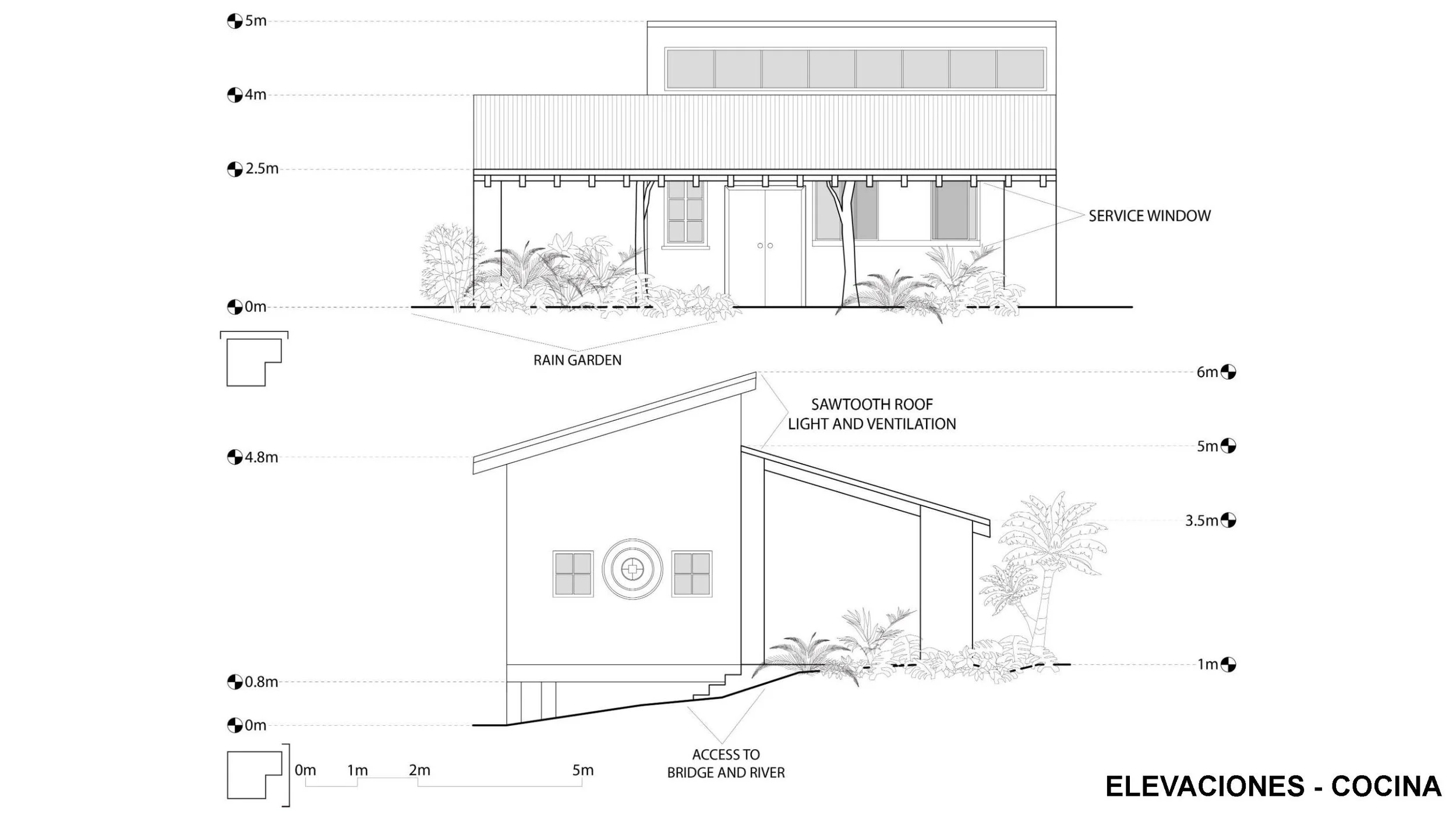
The architectural intervention introduces a phased strategy for growth that prioritizes water management, environmental comfort, and program flexibility. Garden terraces, rain gardens, bioswales, and retention ponds work together as an integrated landscape system to slow runoff, absorb excess water, and redirect flow safely toward the river. Roof geometries and pitches are carefully reconfigured to support these systems while improving daylighting, ventilation, and thermal performance.
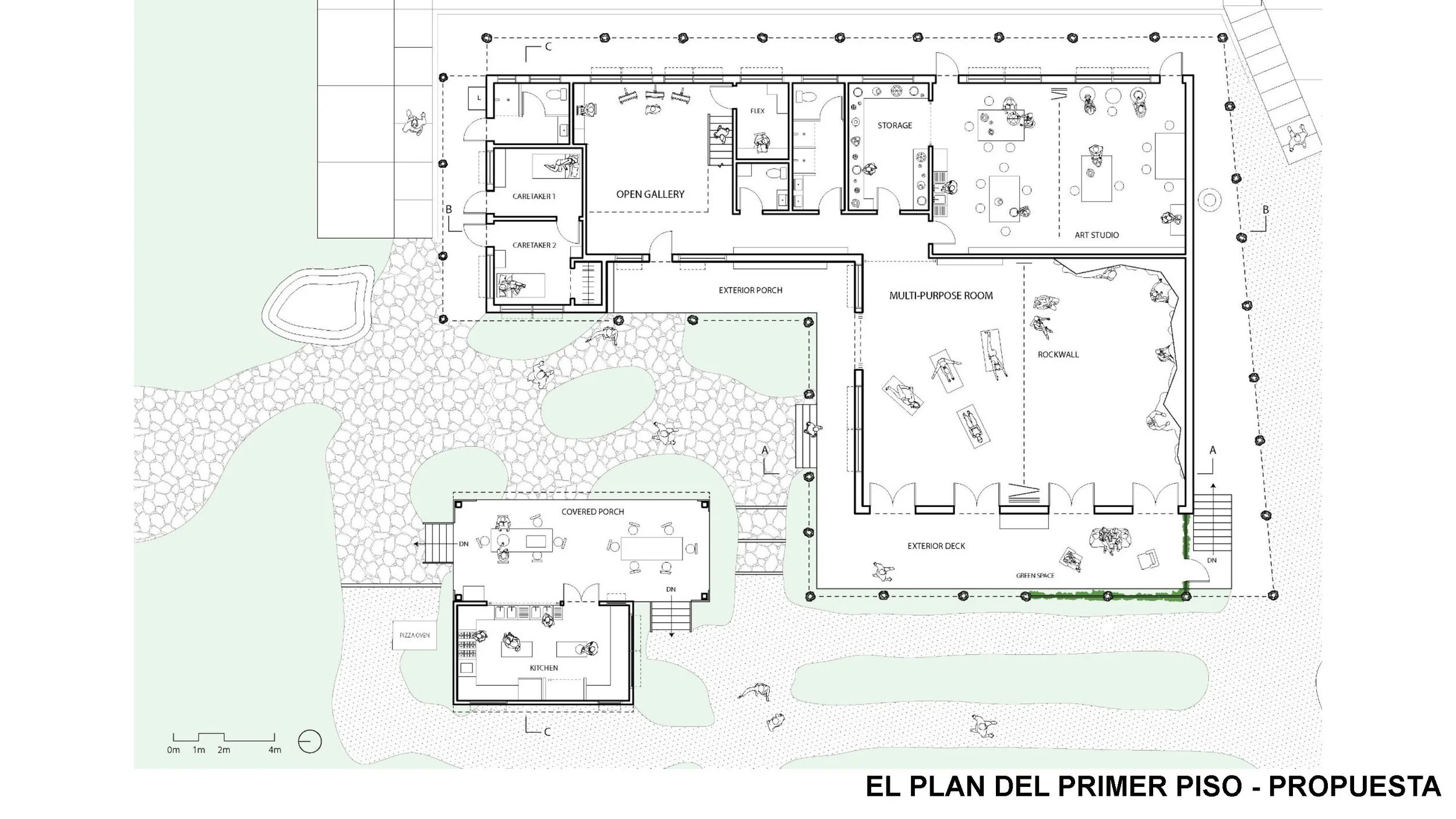
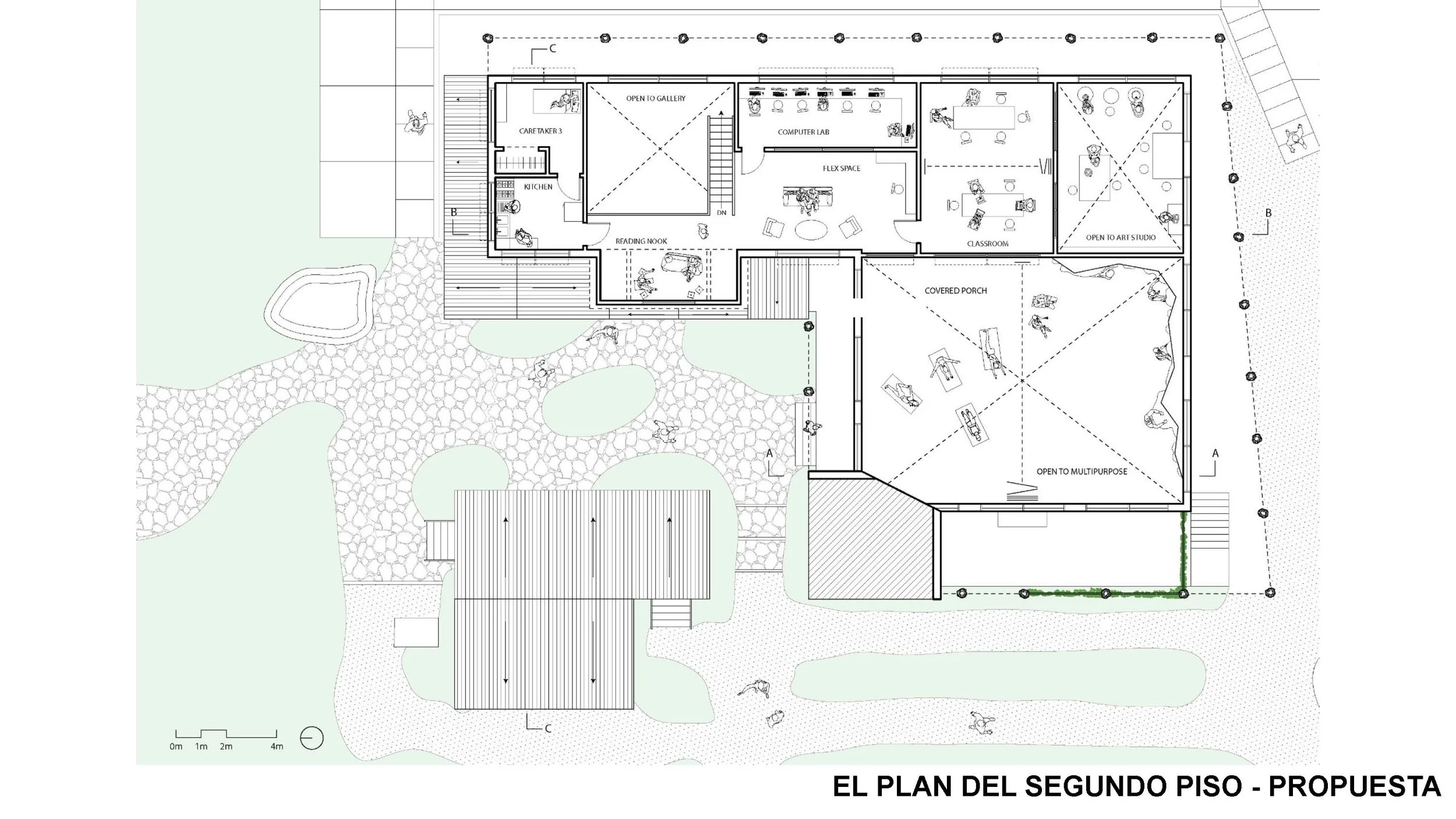
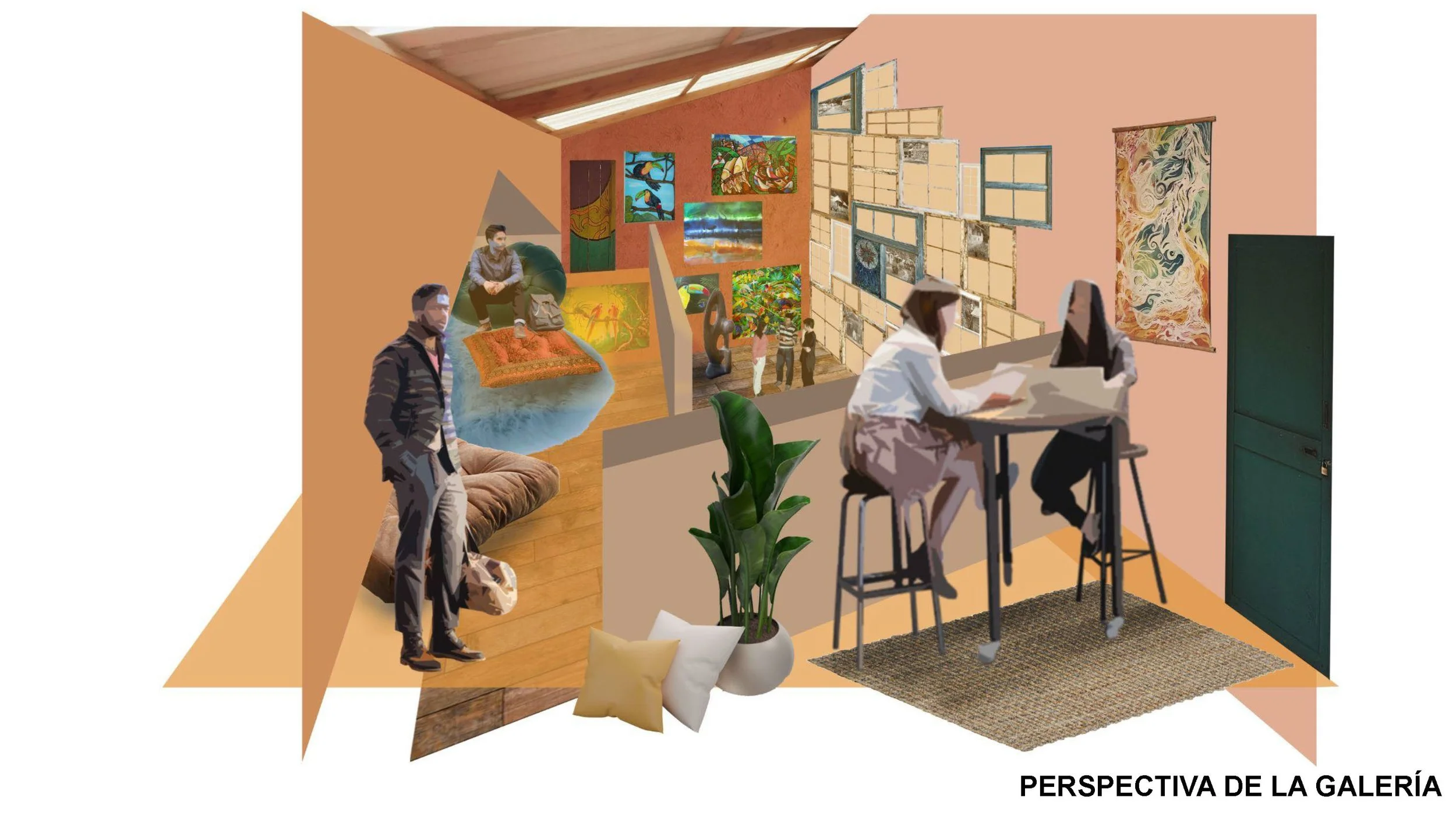
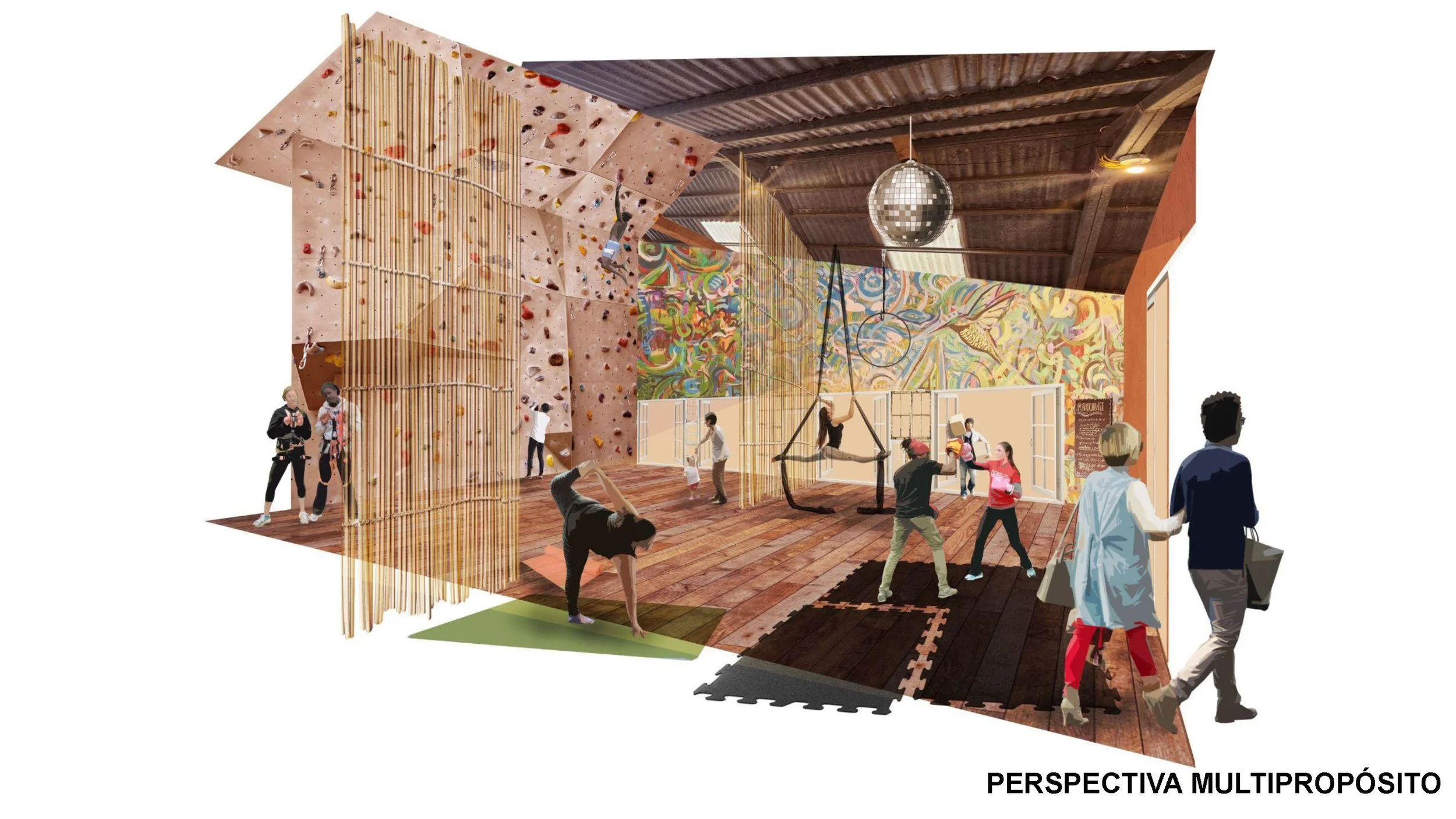
Programmatically, the project expands Riochante’s ability to host locally focused activities through the introduction of an industrial kitchen, art studios, multipurpose spaces, classrooms, computer labs, caretaker housing, and outdoor amenities including a sculpture garden, amphitheater, greenhouse, and river access. Interior and exterior spaces are designed to overlap visually and spatially, encouraging interaction between simultaneous programs while maintaining areas for privacy and reflection. Movable partitions and flexible layouts allow the center to adapt over time to evolving community needs.
Material strategies reinforce Riochante’s identity by continuing the use of familiar and locally resonant elements such as wood, stained glass, corrugated metal roofing, bamboo partitions, reused windows, murals, and mosaics. These materials are mapped and reintroduced to preserve the site’s eccentric, handcrafted character while supporting new construction and expanded program space.