
Location: Monteverde, Costa Rica
Student Team: Faith Vale, Jasmin Ferreiras, Xinyi Qiu, Matt Kinnally
Faculty Team: Stephanie Cramer, Randy Fernando, Gabriela McAdam
Program Coordinator: Anibal Torres
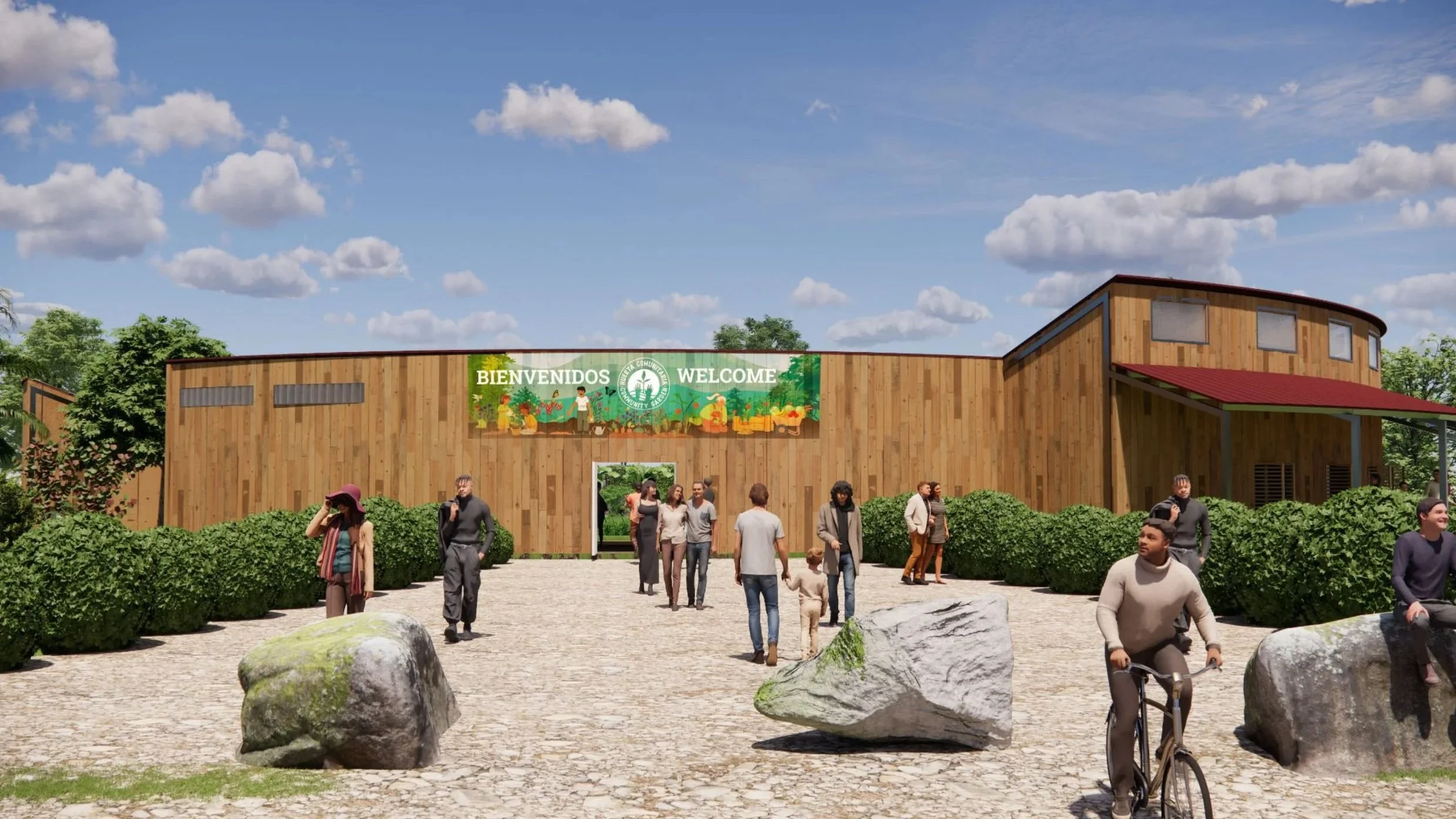
The Huerta Comunitaria project is a community-centered redesign proposal focused on expanding the capacity, accessibility, safety, and long-term resilience of an existing community garden in Cerro Plano, Monteverde. Developed in collaboration with Corclima, an organization dedicated to combating climate change through carbon capture and emissions reduction, the project positions the garden as both a social anchor and a climate-resilient public space.
Established through a partnership between the neighboring school, the town of Cerro Plano, and Corclima, the garden has evolved into an important communal resource following years of abandonment prior to the COVID-19 pandemic. Building on this history, the proposal seeks to transform the site into a more visible, welcoming, and multifunctional environment that supports everyday use while also functioning as a resiliency hub during emergencies.
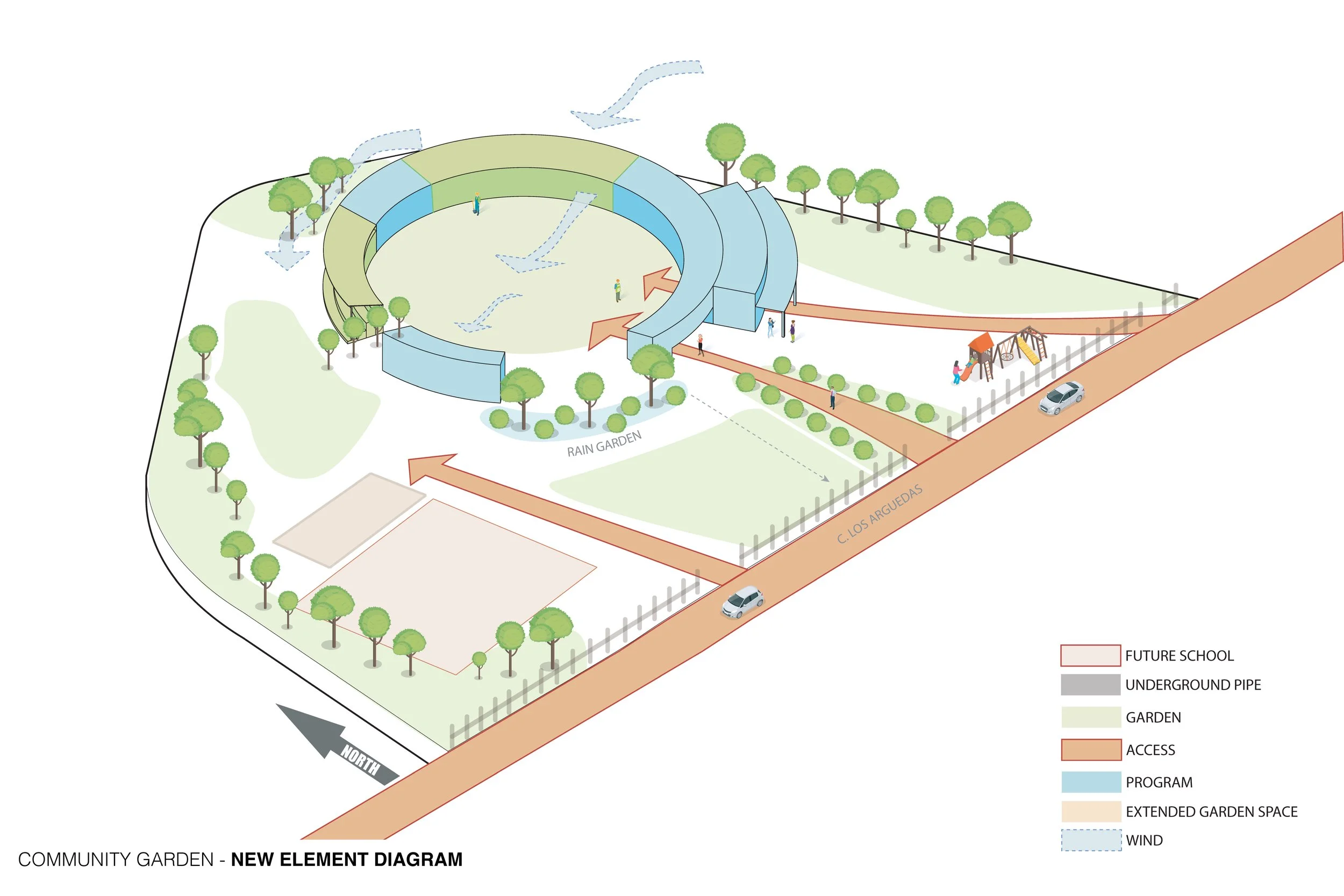
Extensive site analysis informed the design, including demographic research, circulation and transportation mapping, wind and water-flow studies, structural assessments, and documentation of existing garden use. Key challenges identified included limited visibility and transparency, deteriorating bleacher structures, unsafe circulation patterns, insufficient weather protection, and underutilized views toward the surrounding landscape. At the same time, the site’s flat terrain, strong community engagement, and strategic location along walkable routes presented significant opportunities for growth.
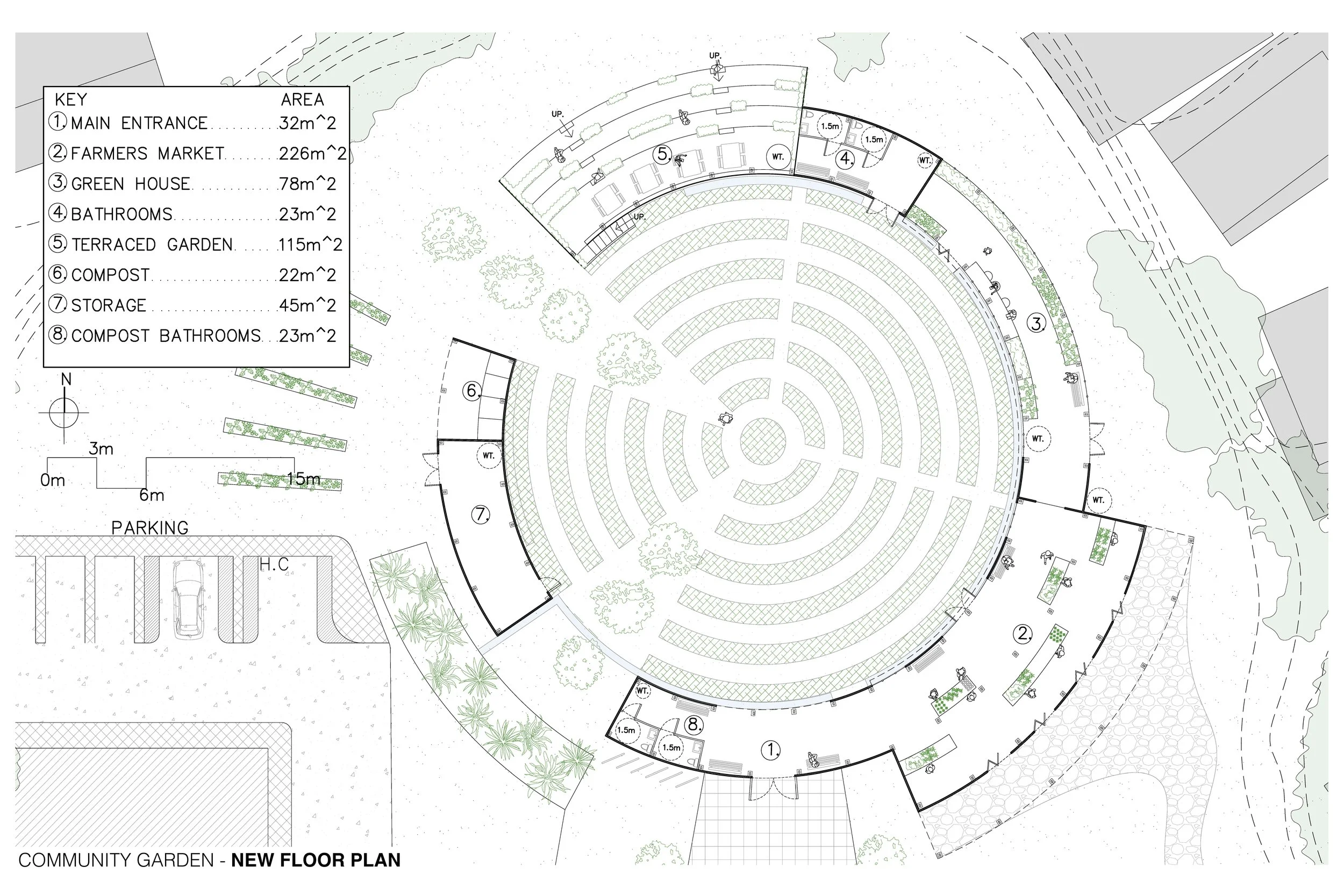
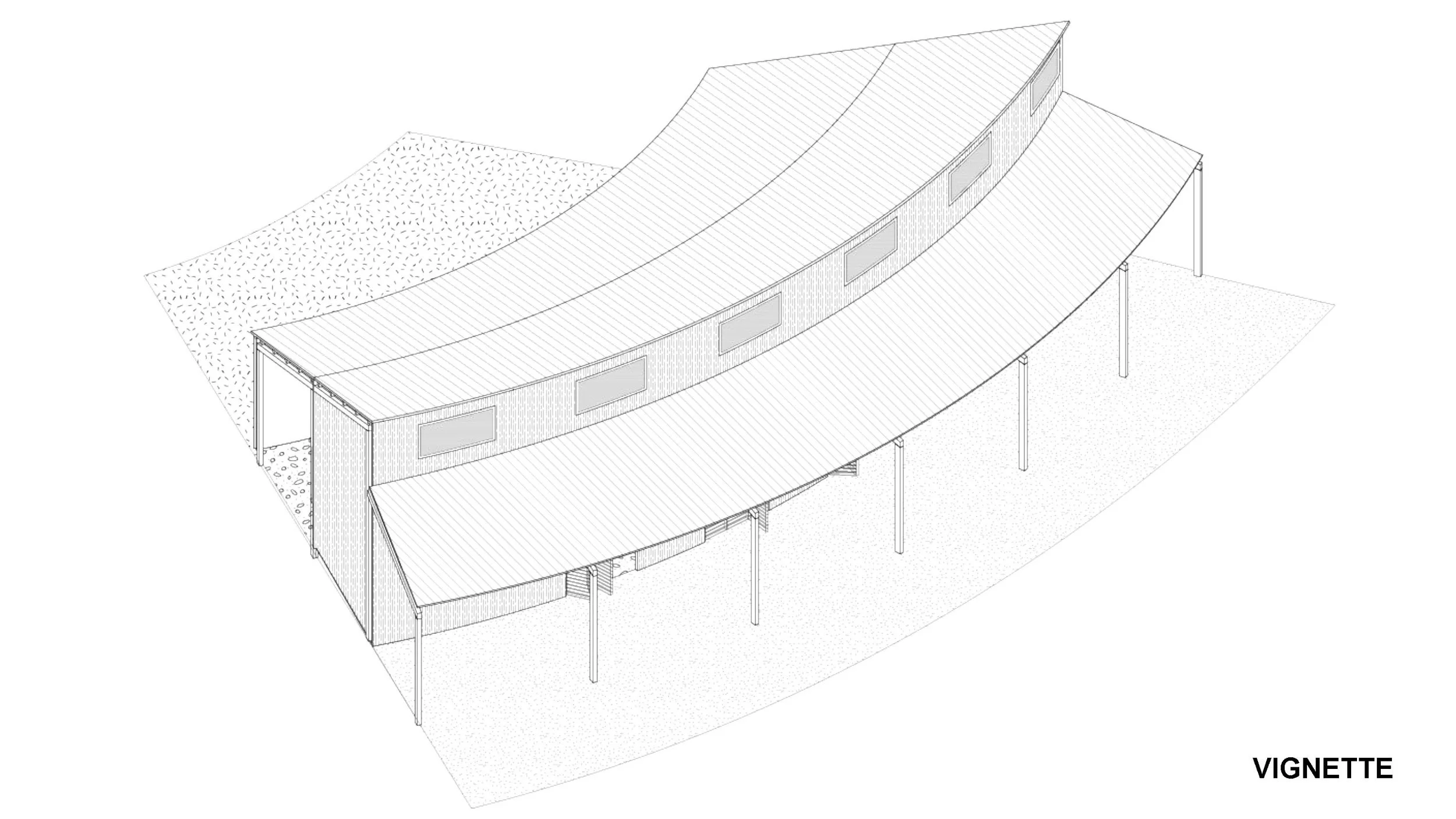
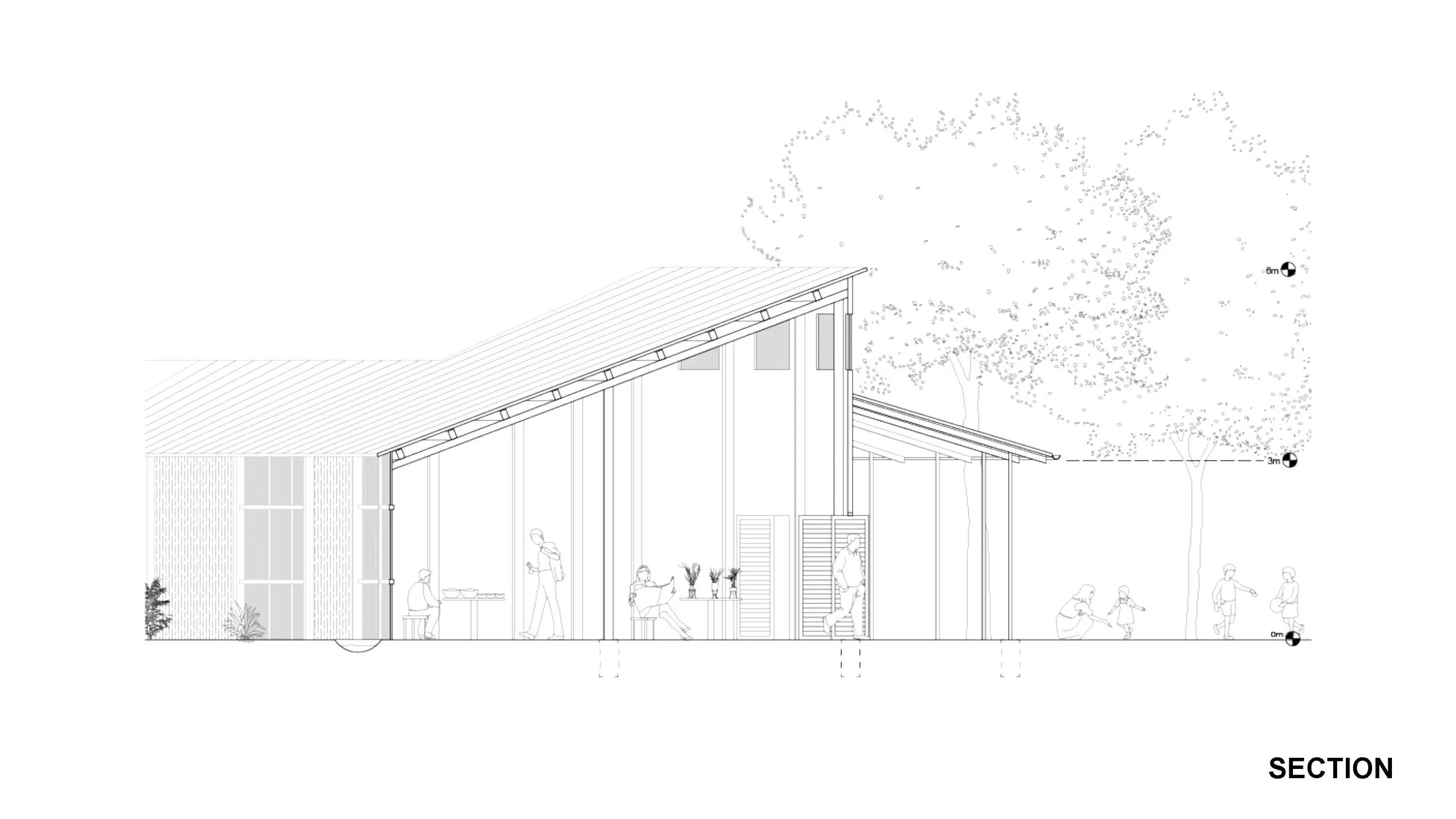
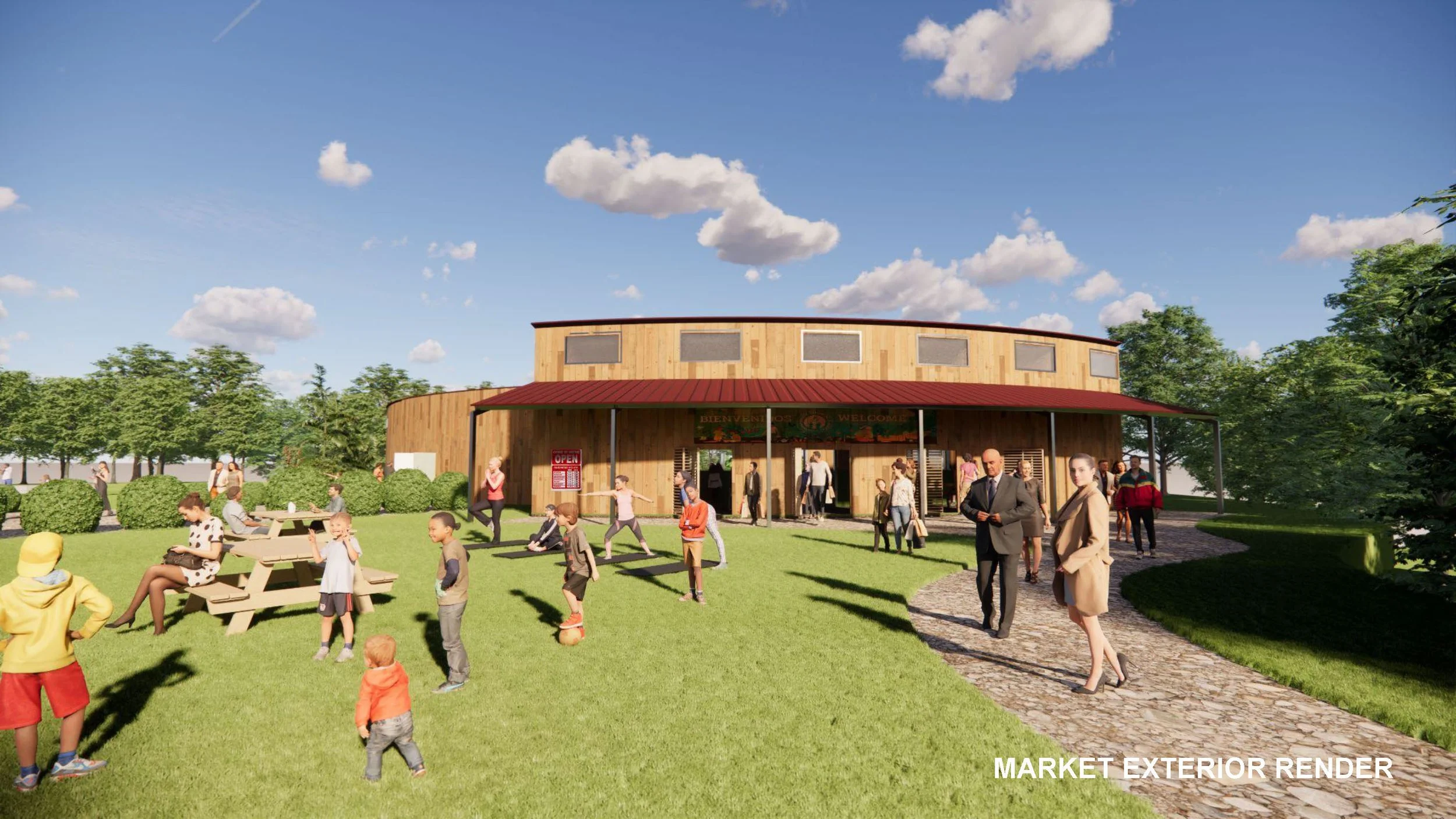
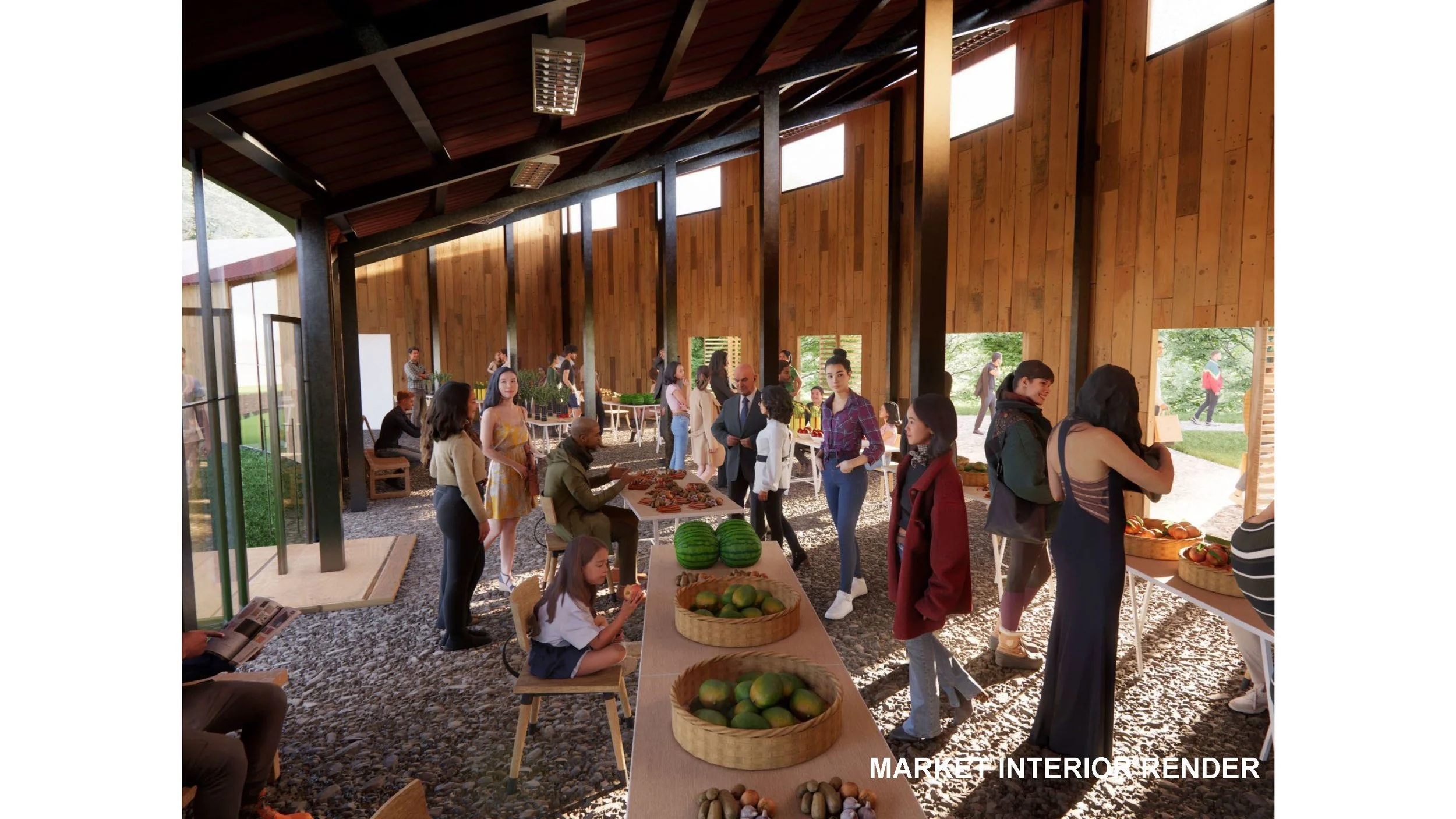
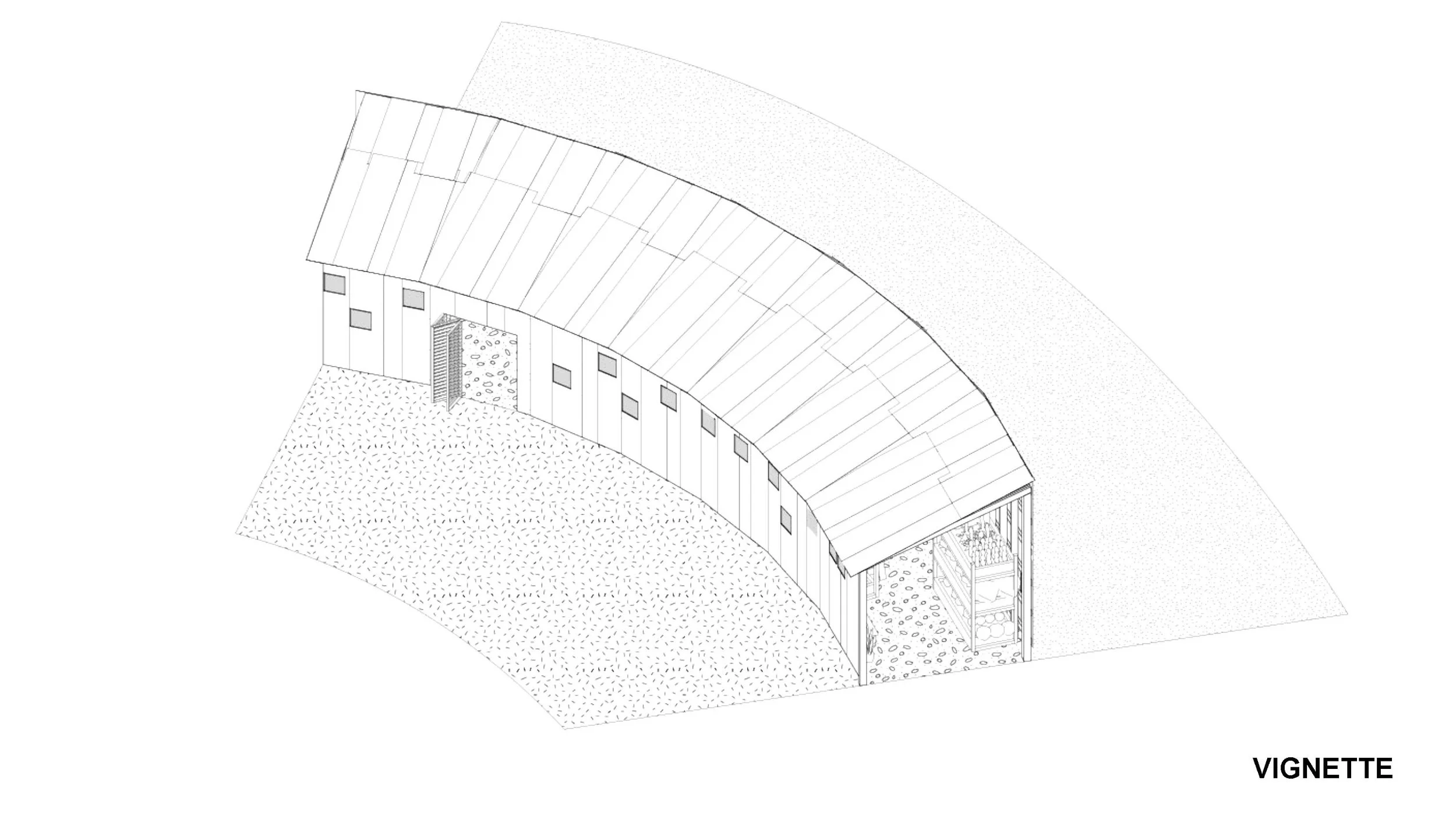
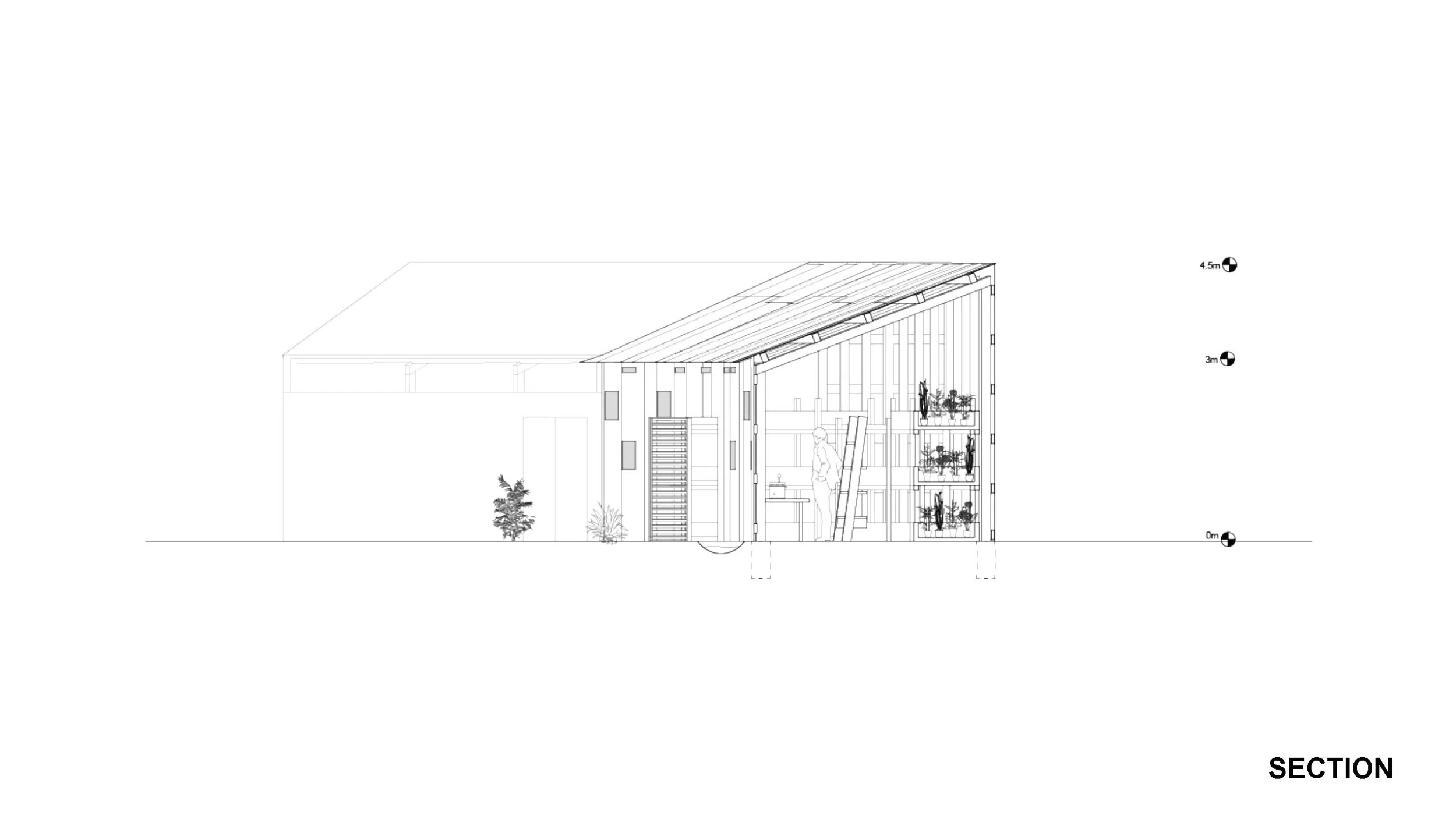
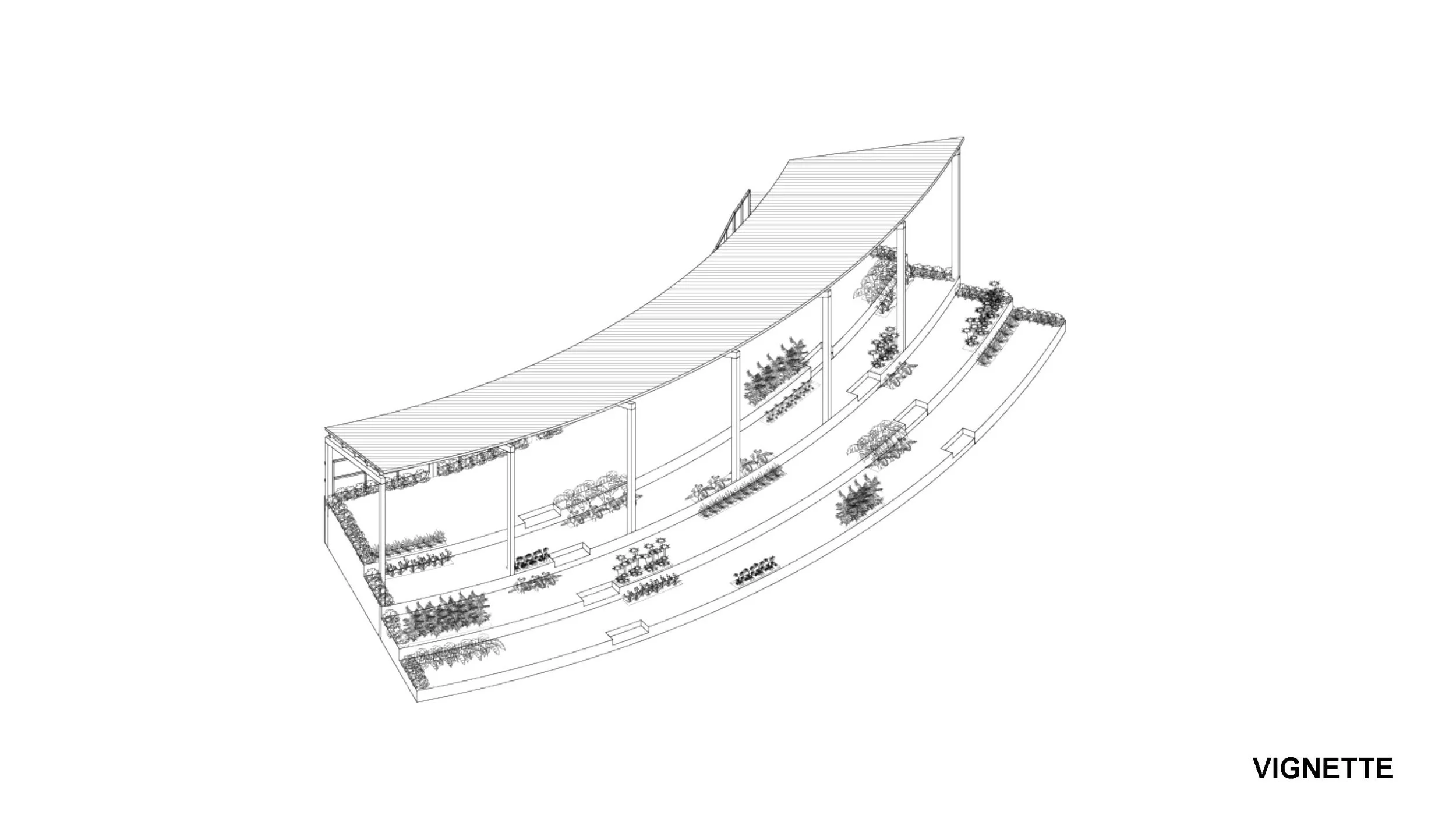
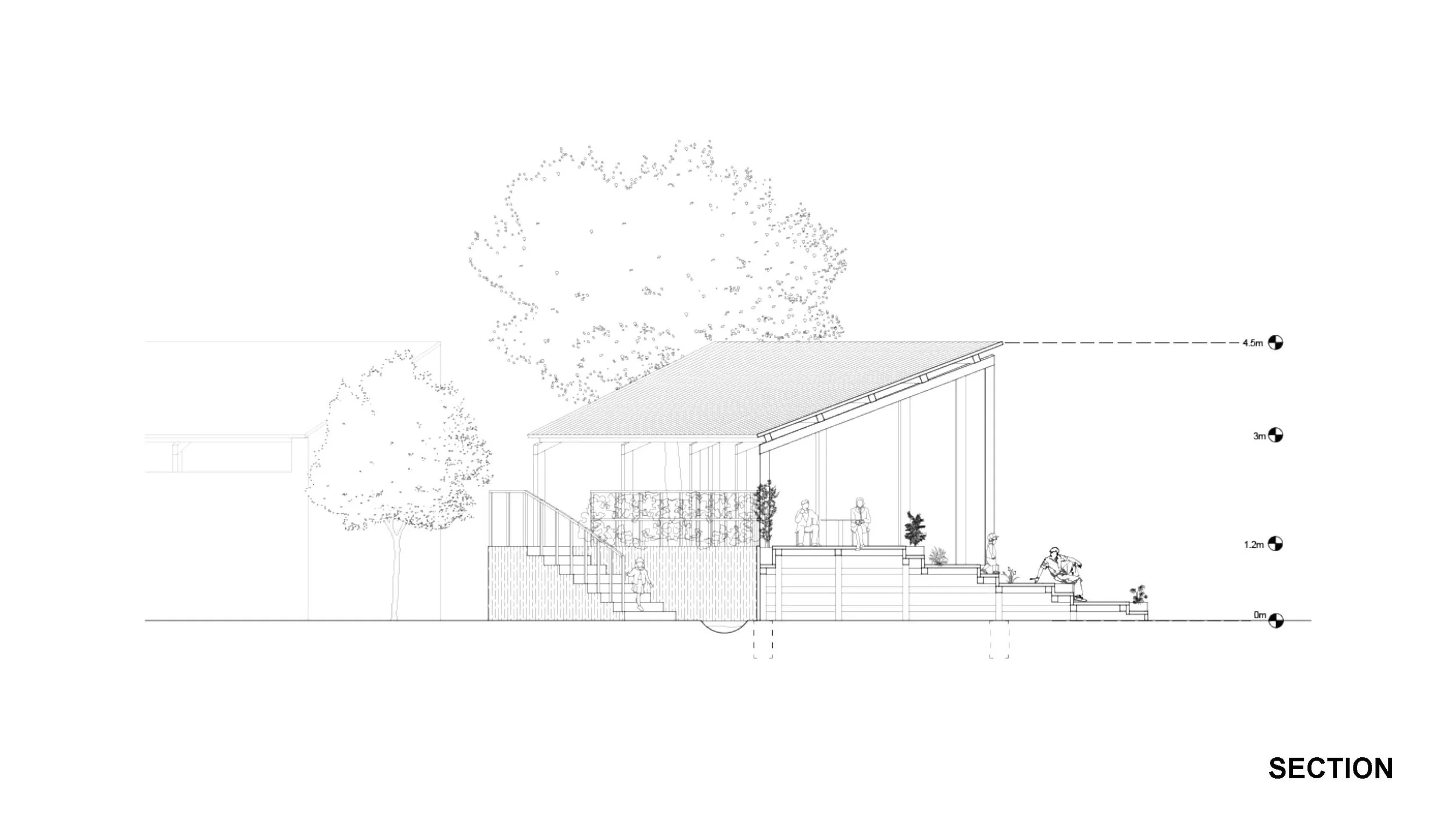
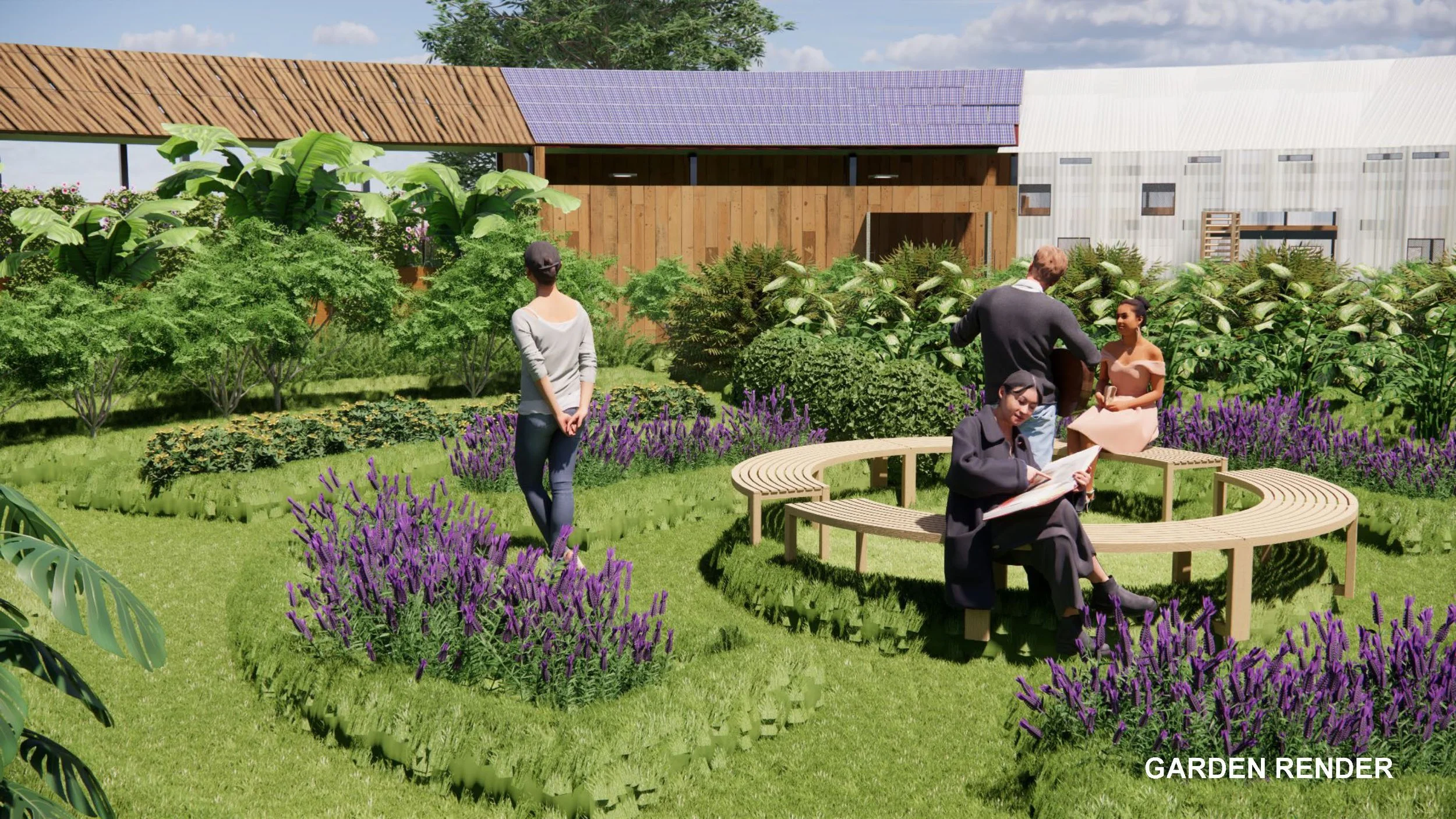
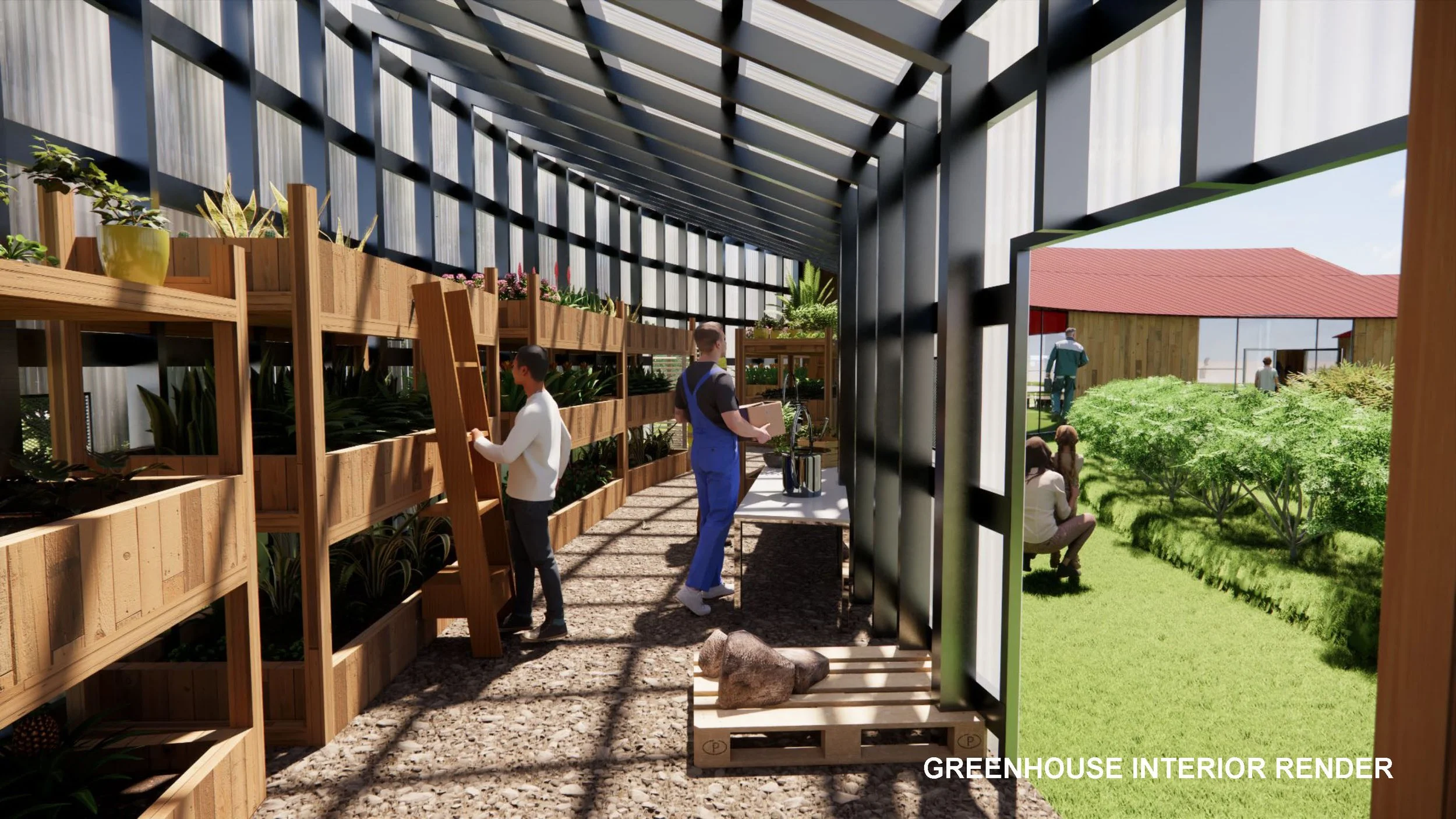
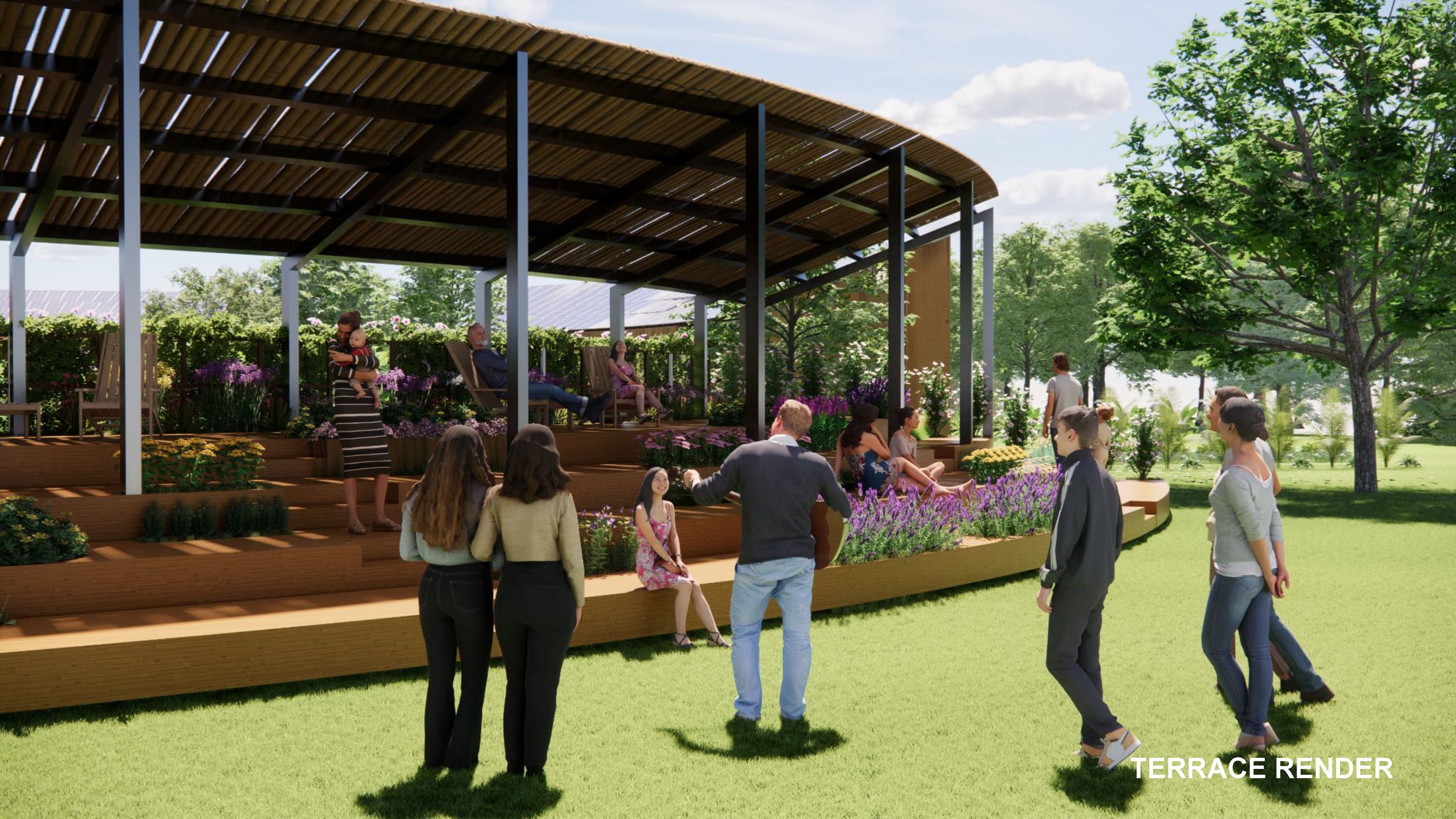
The proposal introduces a phased design strategy that incrementally reconfigures the existing structure and landscape. Programmatic additions include an expanded community market, greenhouse, improved bathrooms, terraced gardens with integrated seating, composting areas, storage, and flexible gathering spaces. Circulation is clarified through distinct paths for pedestrians, vehicles, and service access, while increased transparency and open sightlines strengthen the relationship between the garden and the surrounding neighborhood.
Environmental performance is central to the project. A comprehensive water management system—including rainwater harvesting, swales, rain gardens, and storage tanks—slows runoff from the adjacent cliff and roof surfaces while providing irrigation for planting areas. Wind flow is moderated through building openings and strategic vegetation, and new roof geometries support both climate comfort and water collection. Native plants, edible crops, and pollinator-friendly species reinforce the garden’s ecological function and educational value.
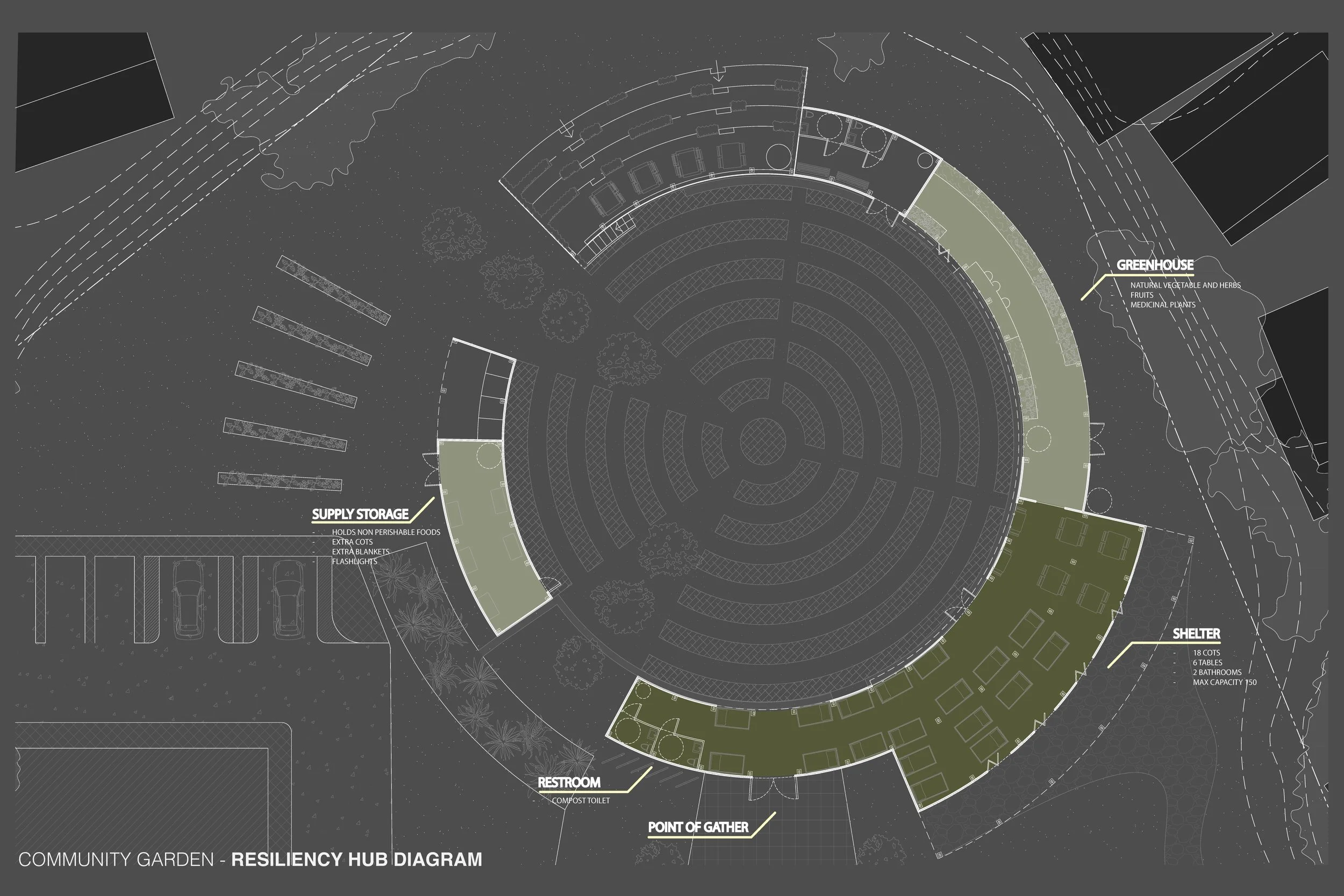
As a resiliency hub, the redesigned Huerta Comunitaria is envisioned as a safe gathering space capable of accommodating approximately 150 people during emergencies, with enclosed areas for shelter and storage for essential supplies. In everyday use, the garden supports food production, markets, education, social events, and informal gathering—strengthening community ties while modeling climate-responsive design practices.
Ultimately, the project frames architecture and landscape as tools for environmental stewardship, social cohesion, and long-term resilience, transforming the Huerta Comunitaria into a visible, adaptable, and community-driven public space.