Location: Monteverde, Costa Rica
Student Team: Sean O’Keefe, Alec Lewis, Sofia Pasquarella
Faculty Team: Stephanie Cramer, Randy Fernando, Gabriela McAdam
Program Coordinator: Anibal Torres
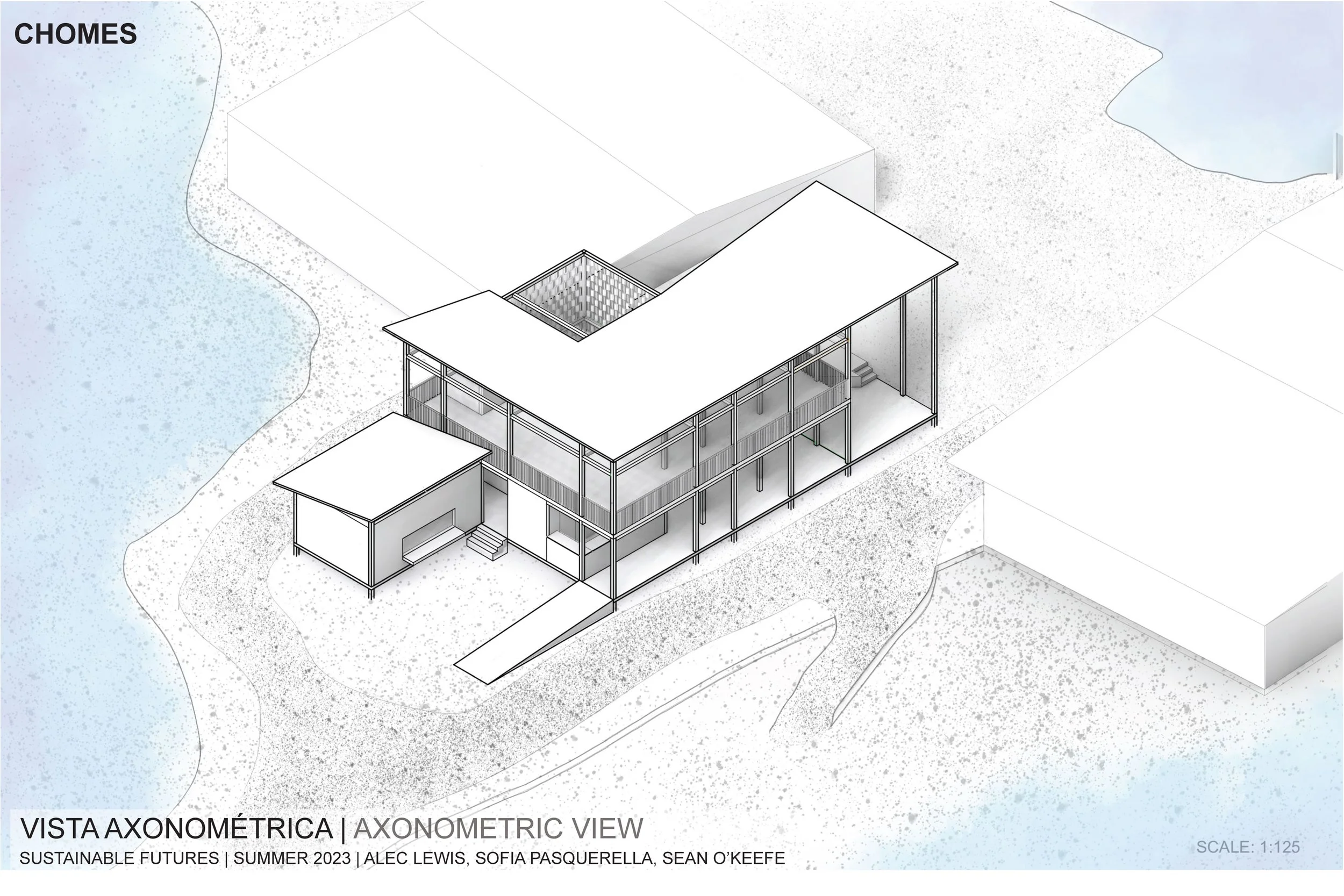
The pavilion is a site-responsive architectural proposal that explores openness, transparency, and public engagement within a coastal context. The project responds to the site’s flat terrain, proximity to water, pedestrian and boat traffic, and exposure to climate forces such as wind, tides, and sun, positioning the building as both a social gathering space and a mediator between land and water.
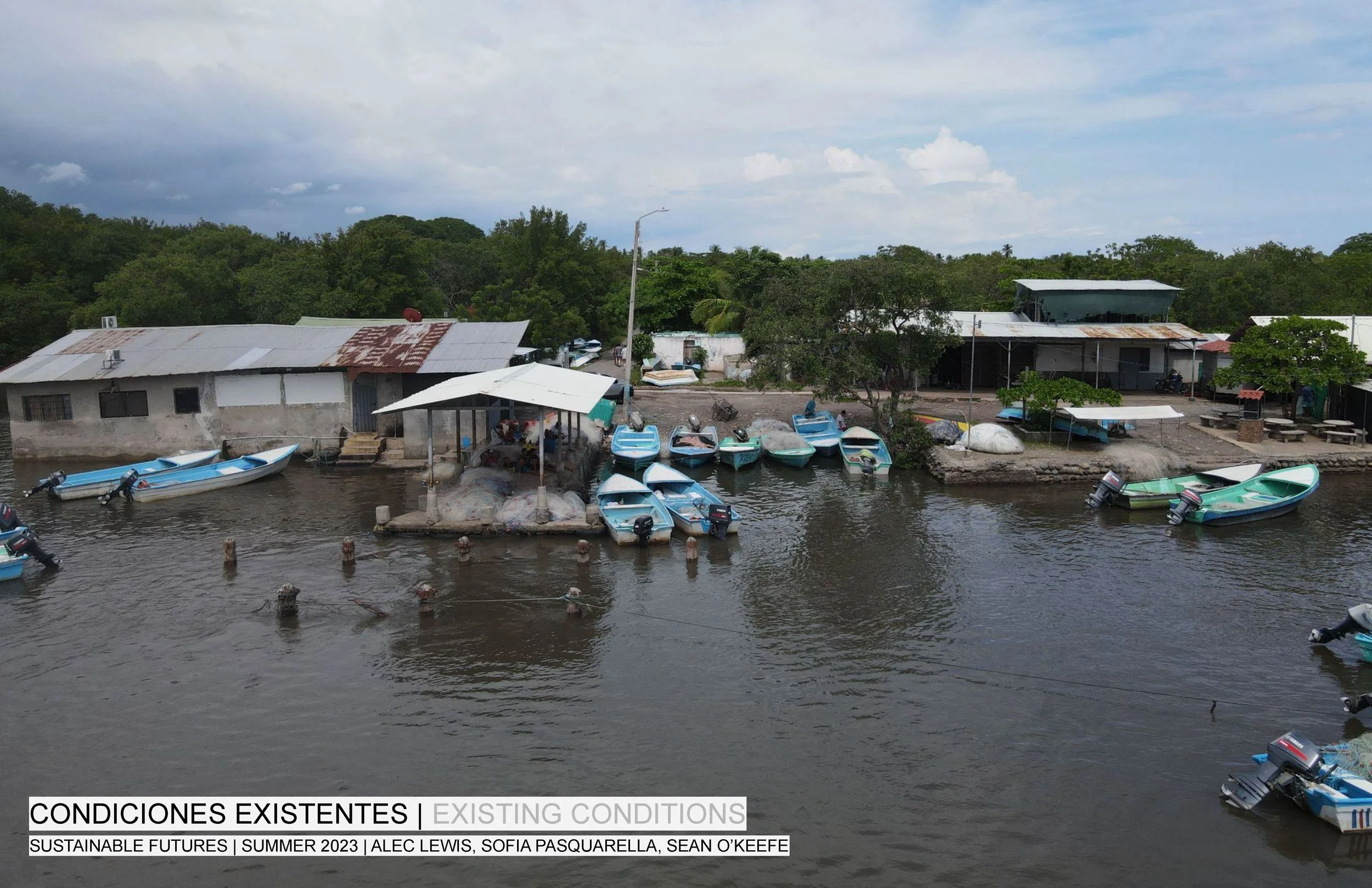
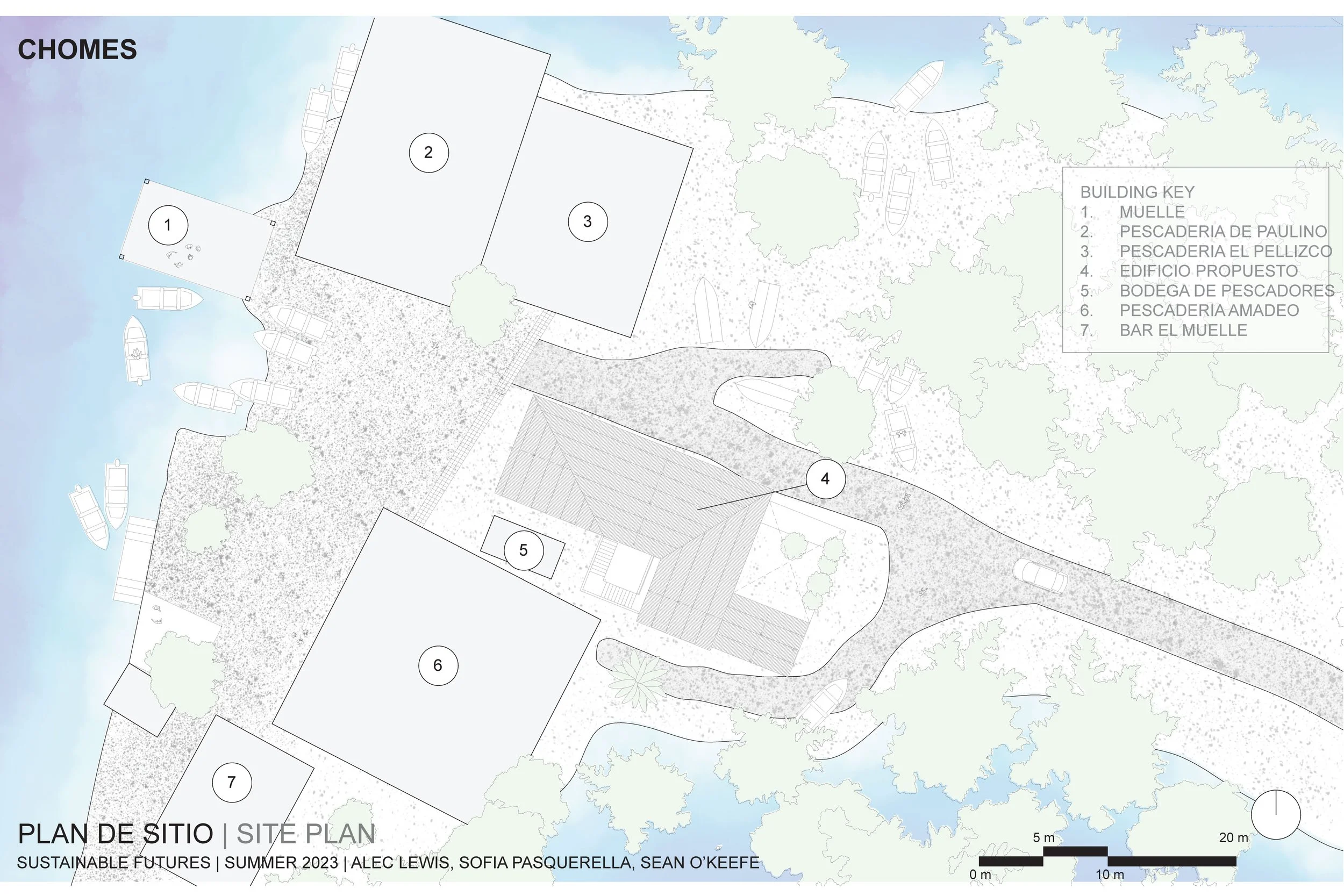
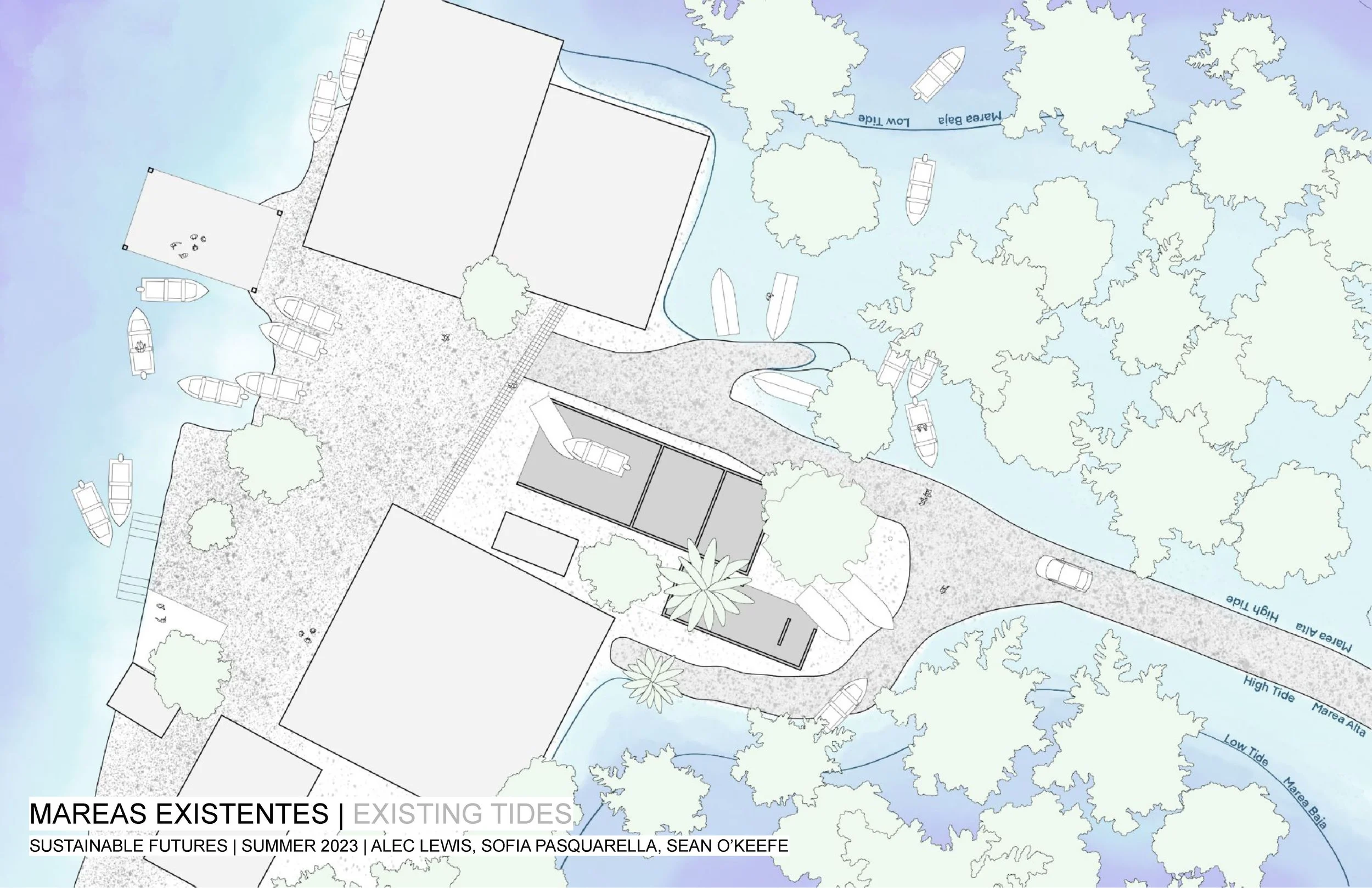
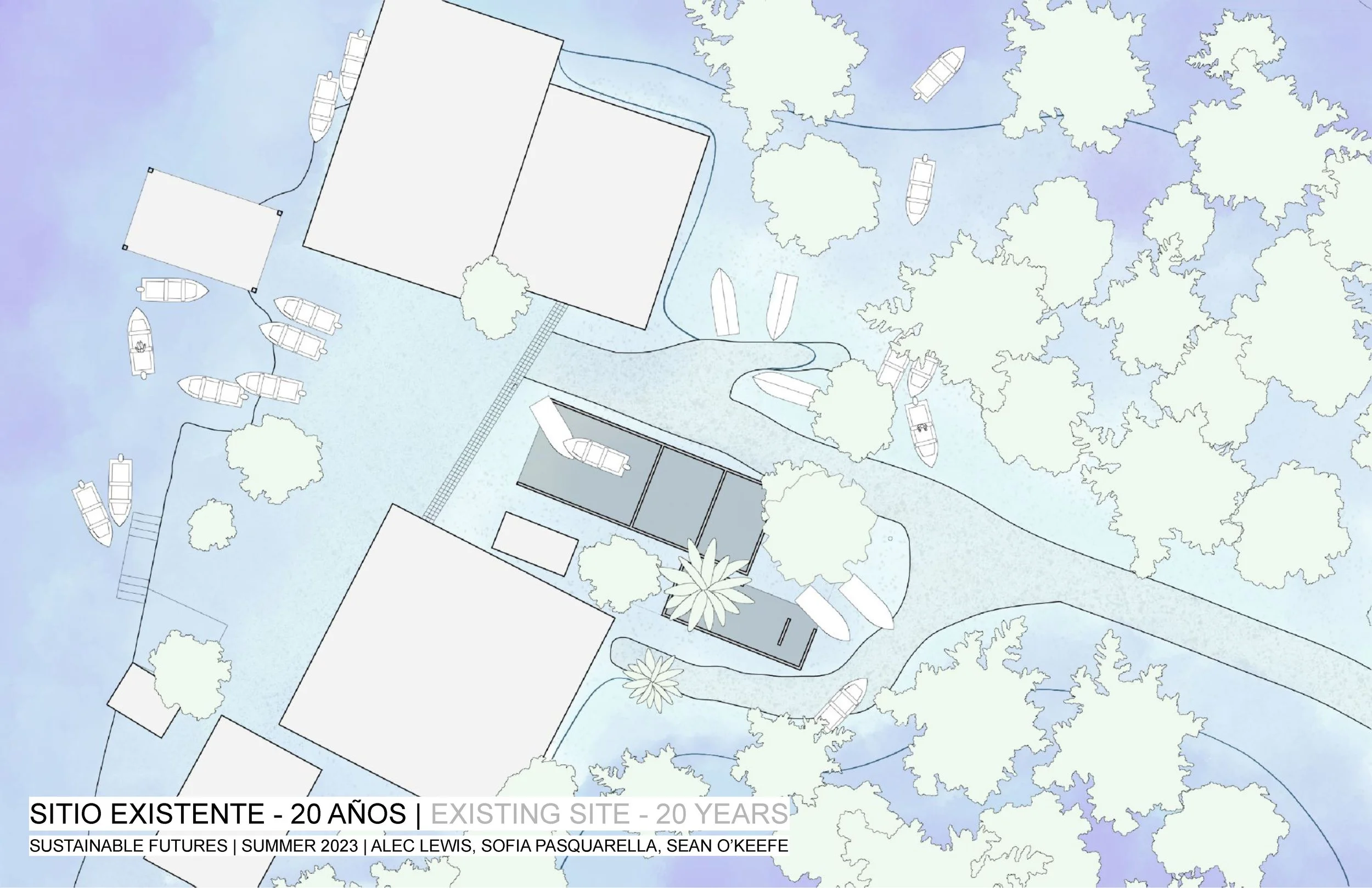
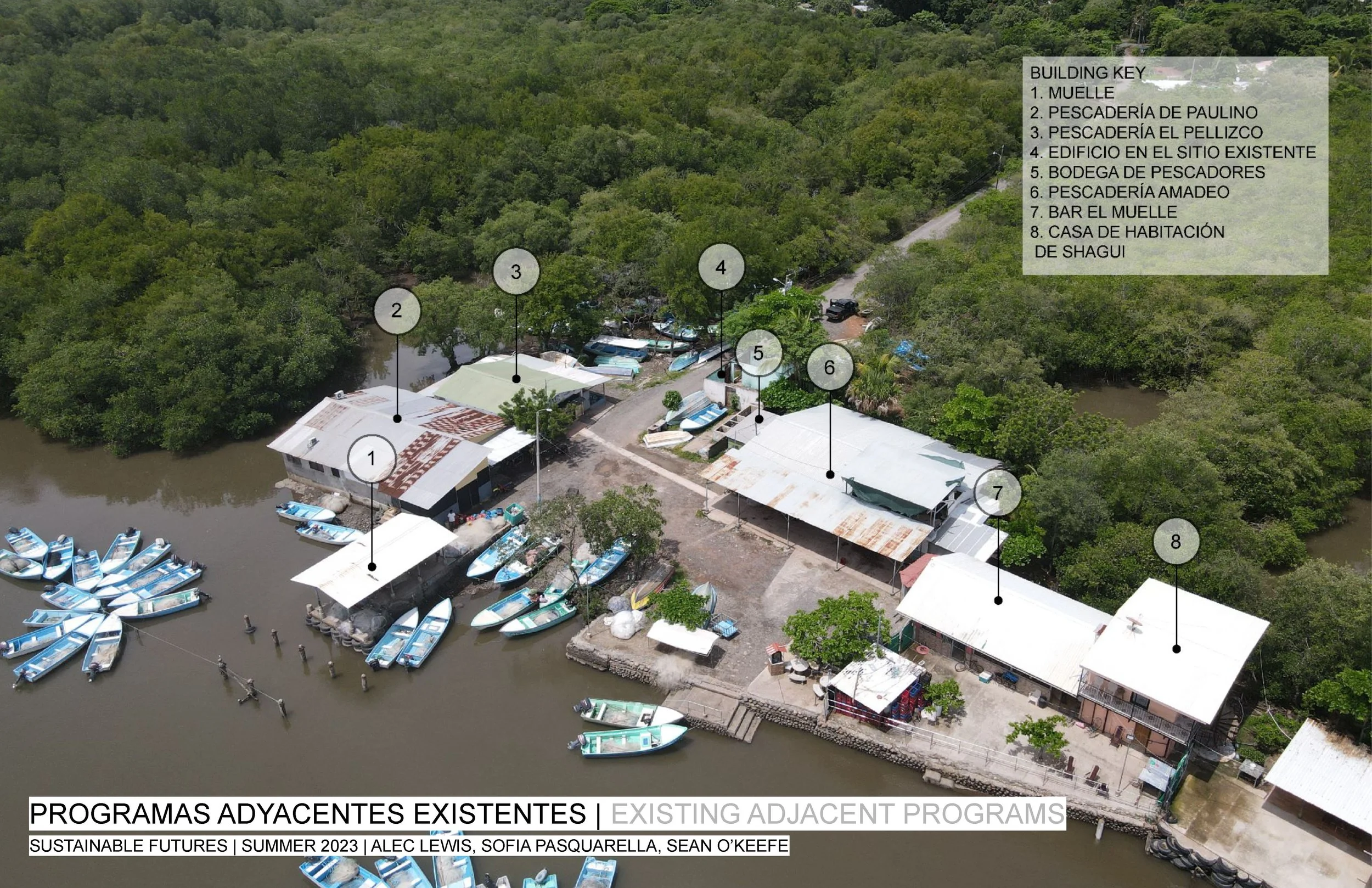
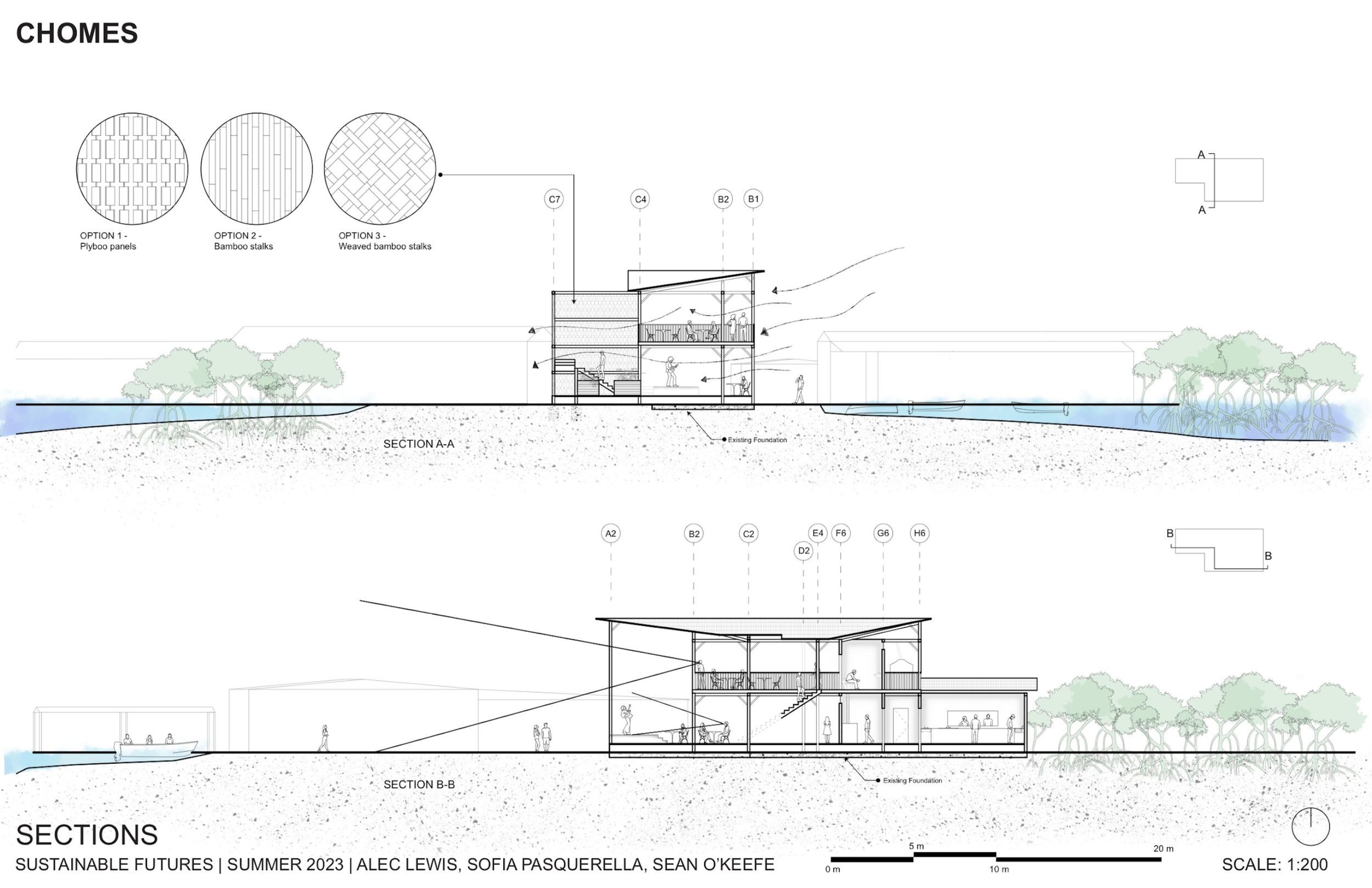
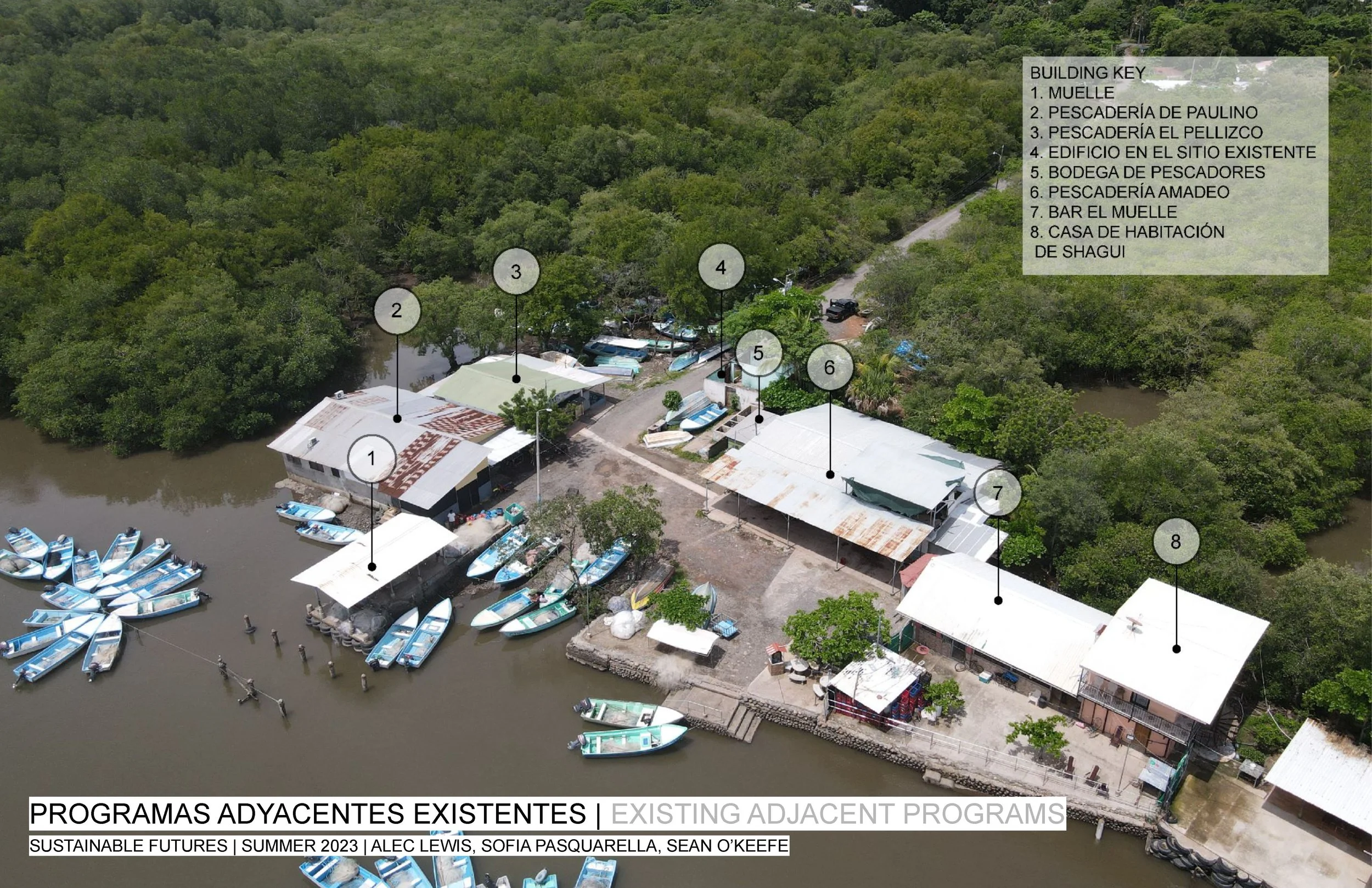
The design process began with extensive site visits and documentation, including on-site measurements, drone photography, and firsthand observation of pedestrian movement, dock access, and building adjacencies. Environmental analysis informed the project’s orientation and form, particularly prevailing winds from the northeast, tidal conditions, and solar exposure. These forces shaped decisions related to building openness, roof design, and material strategy.
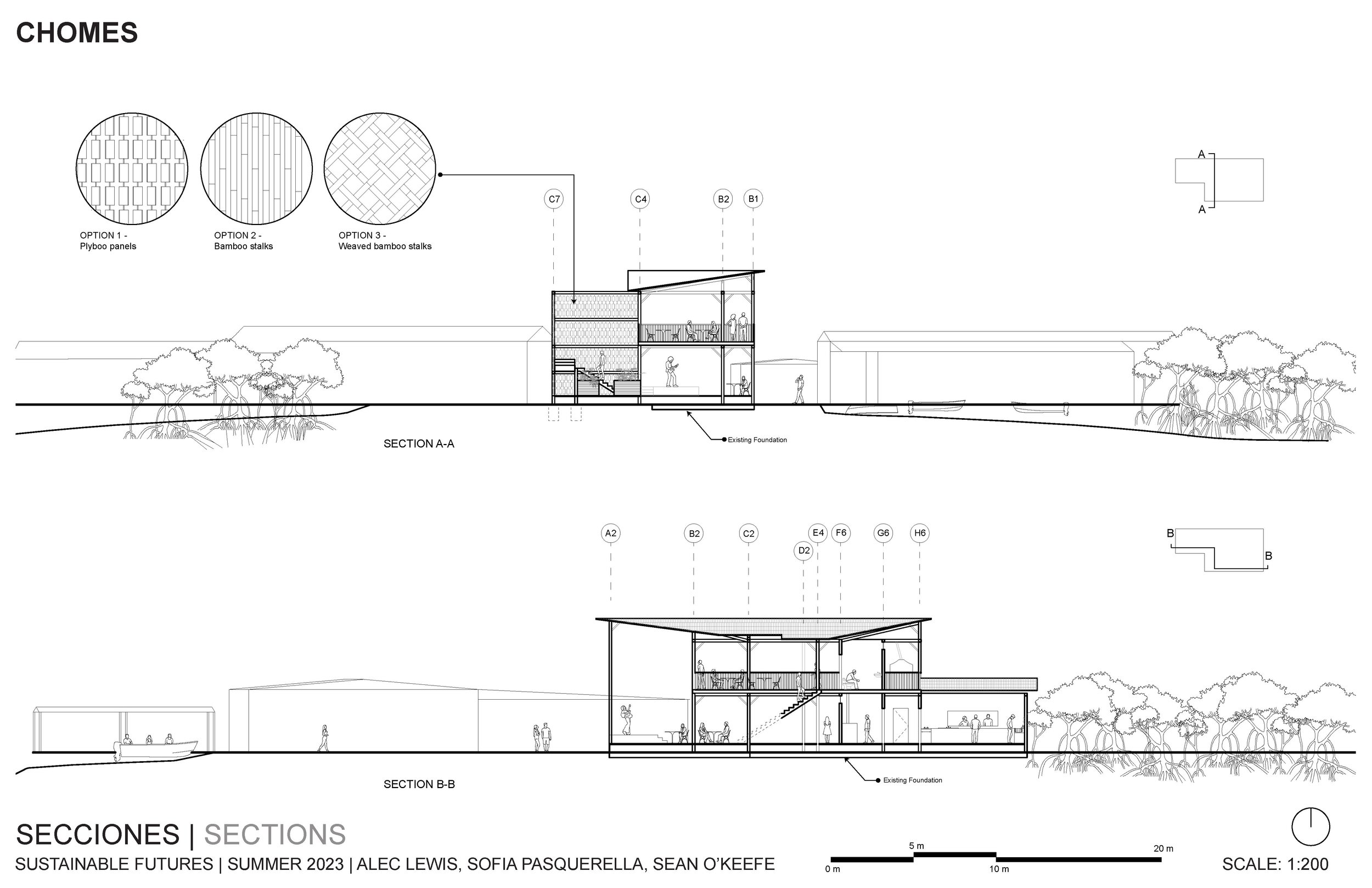
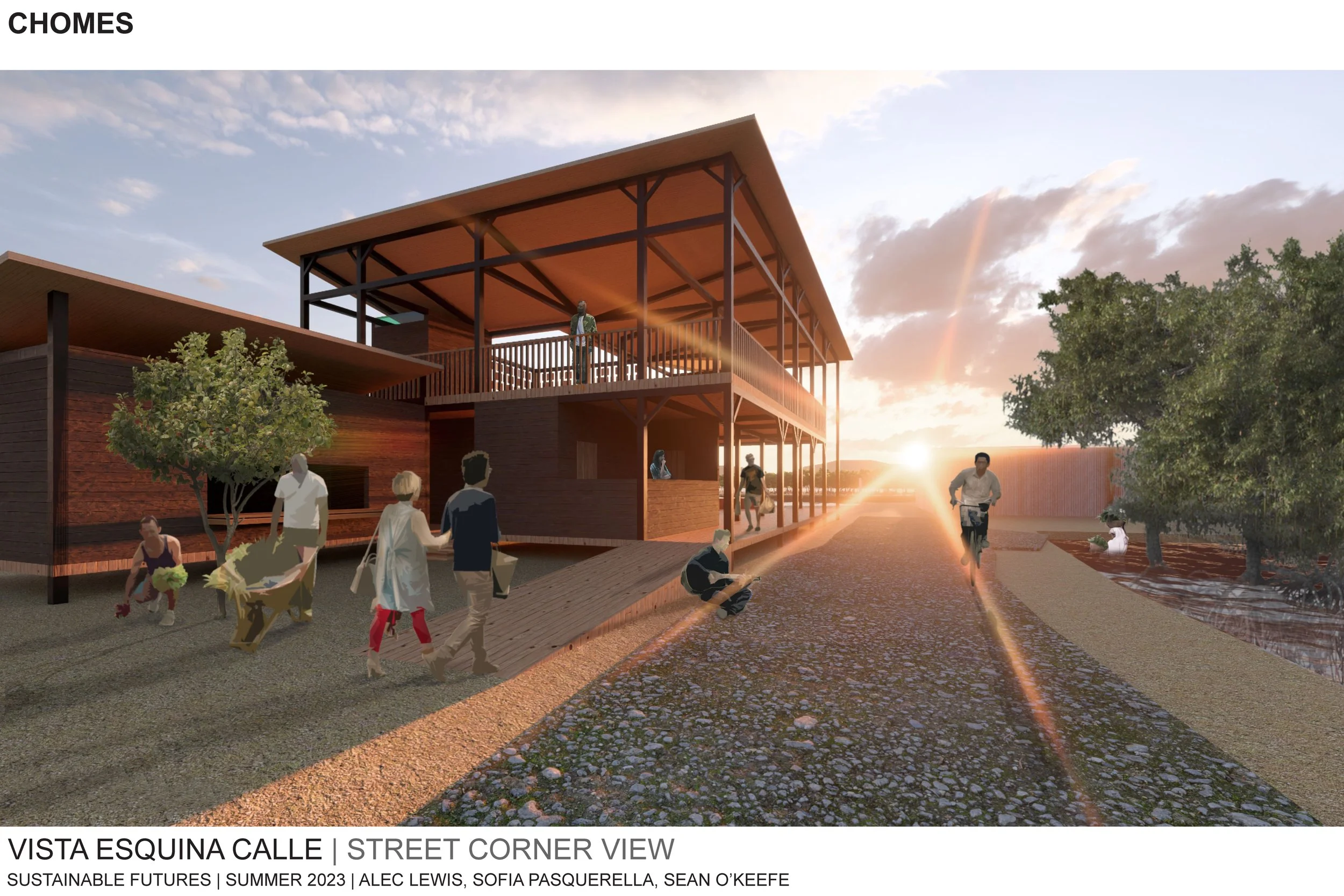
Programmatically, the pavilion prioritizes flexible public space. Most of the ground level is open and visually connected to the street, allowing the building to function as an extension of the public realm. A market space anchors the corner condition, while service functions are separated to maintain openness and clarity. Interior and exterior seating areas frame views toward the water and stage, encouraging lingering, gathering, and informal use throughout the day.
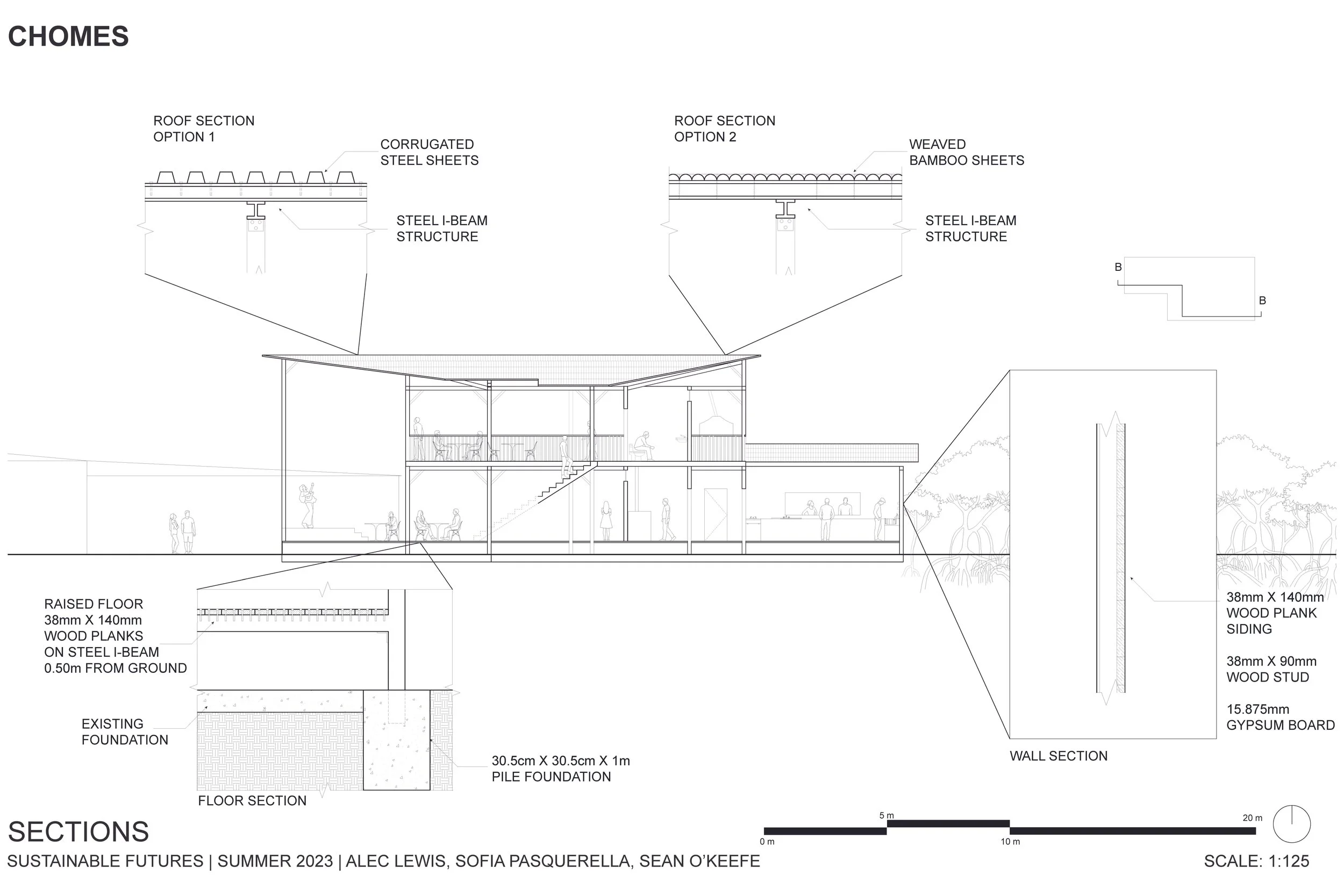
The building emphasizes transparency and permeability through semi-transparent assemblies, raised floor conditions, and layered thresholds. These strategies allow visual continuity across the site while accommodating changing environmental conditions. A second-floor level introduces elevated views toward the coast, reinforcing the project’s relationship to the waterfront and providing shaded, protected space below.
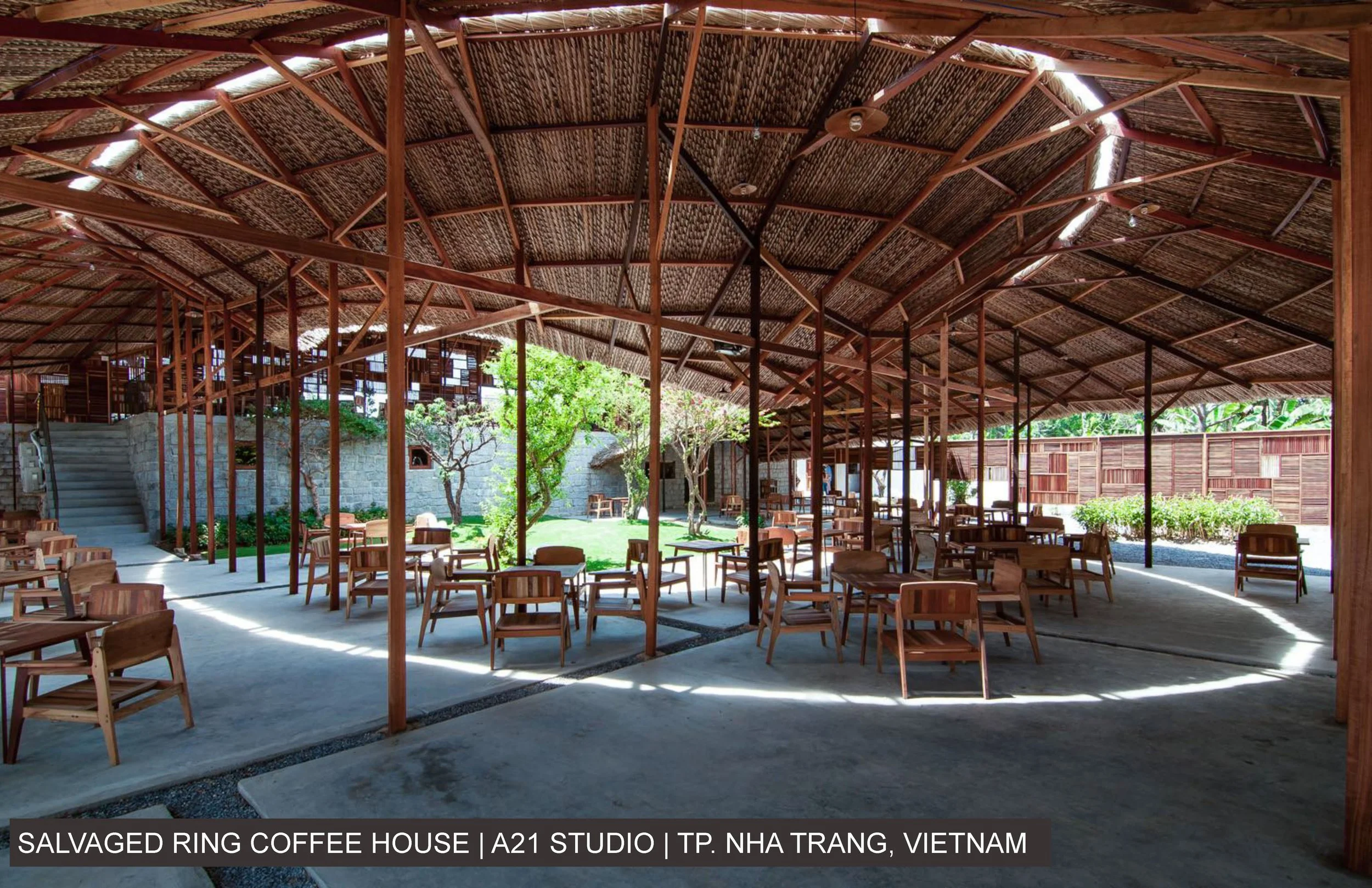
Structurally, the pavilion is organized on a clear grid with primarily column-based support and minimal walls, allowing programmatic flexibility and visual openness. Roof strategies balance shading and sun protection while directing rainwater into integrated collection systems. Material selections emphasize durability, weathering, and contextual fit, reinforcing the building’s role as a resilient public structure within a coastal environment.