
TWISTED ARCH
AI-Assisted Analytics for Ultra-Lightweight, Carbon-Reducing Concrete Structures
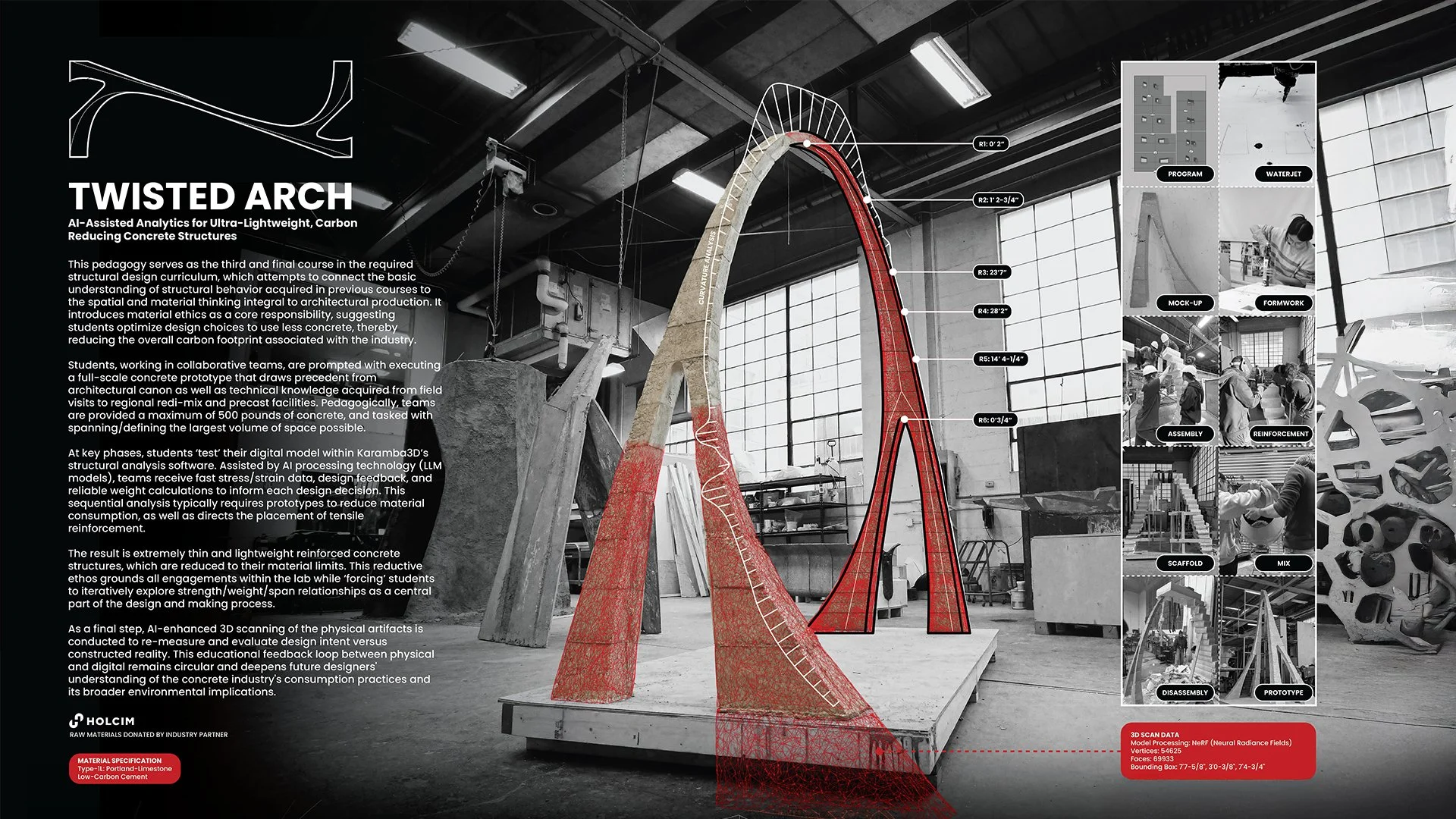
This pedagogy serves as the third and final course in the required structural design curriculum, which attempts to connect the basic understanding of structural behavior acquired in previous courses to the spatial and material thinking integral to architectural production. It introduces material ethics as a core responsibility, suggesting students optimize design choices to use less concrete, thereby reducing the overall carbon footprint associated with the industry.
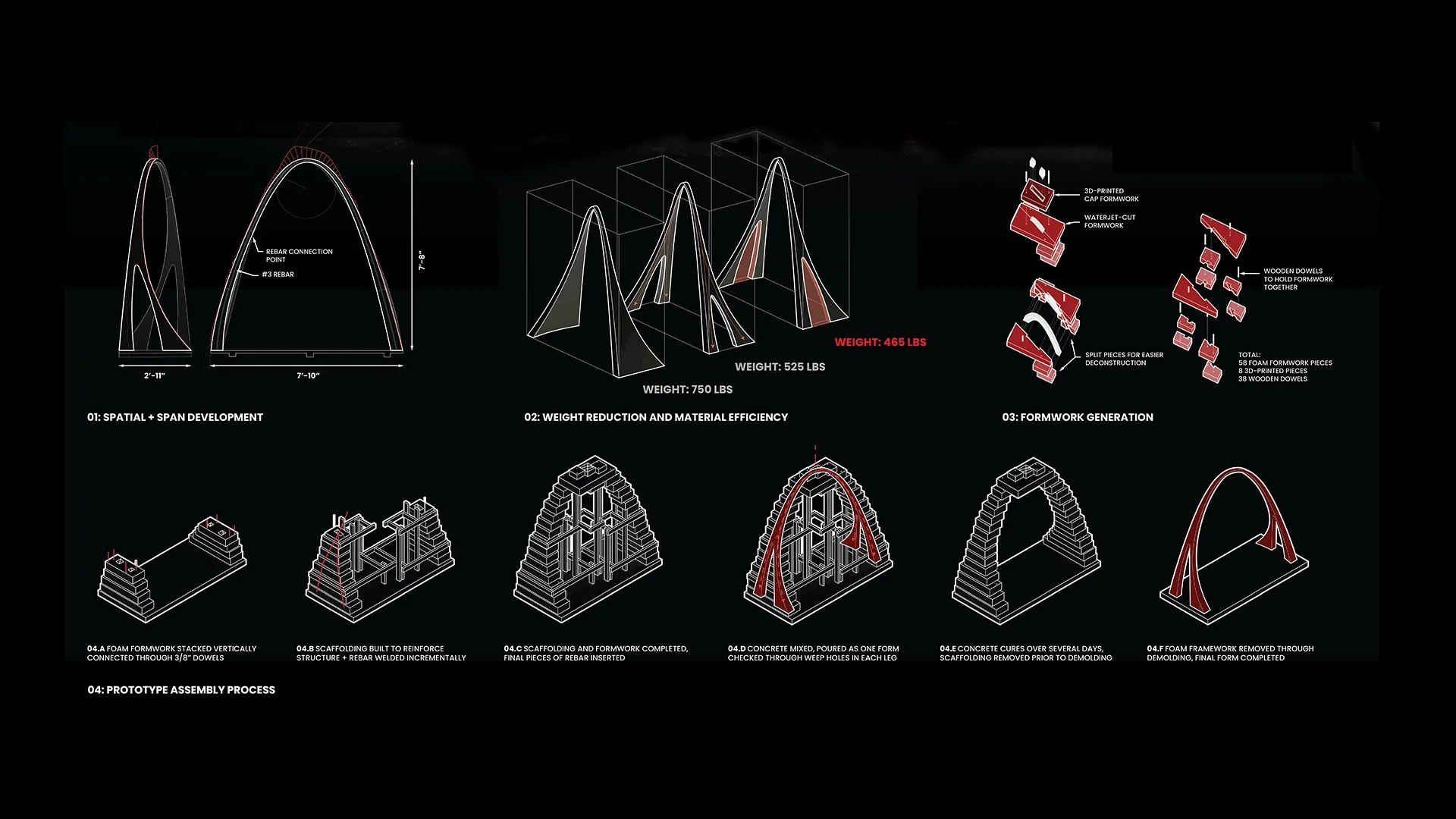
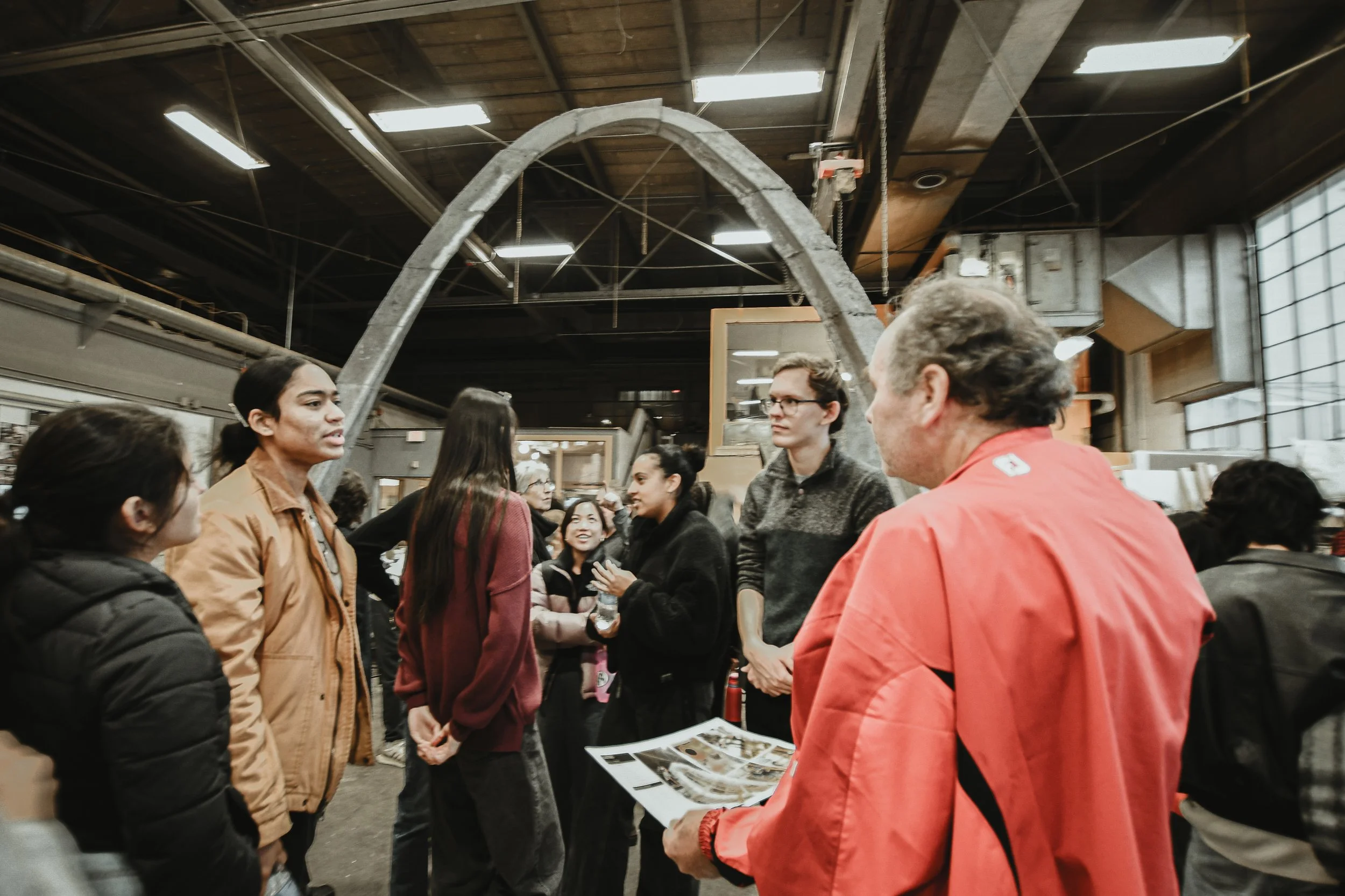
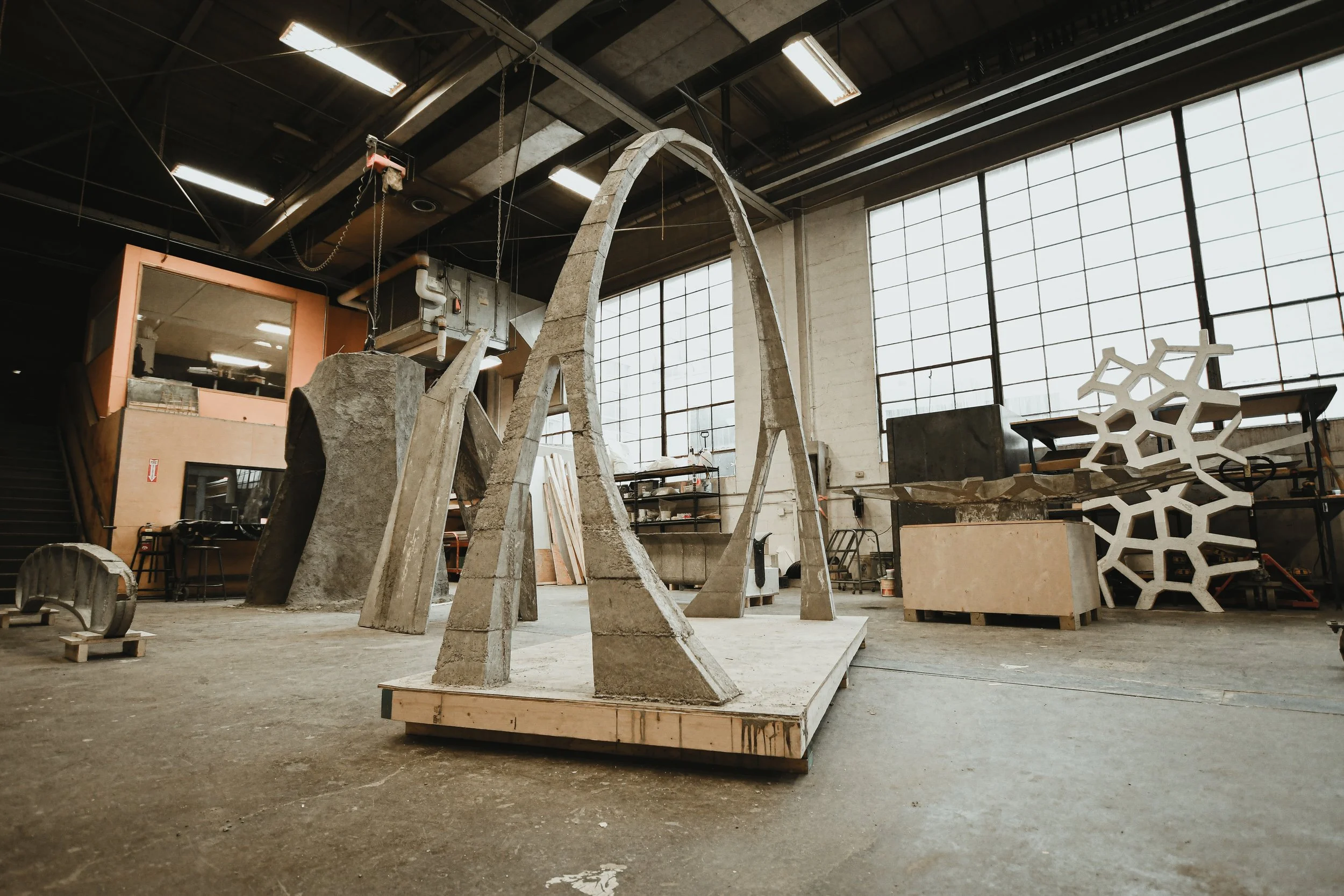
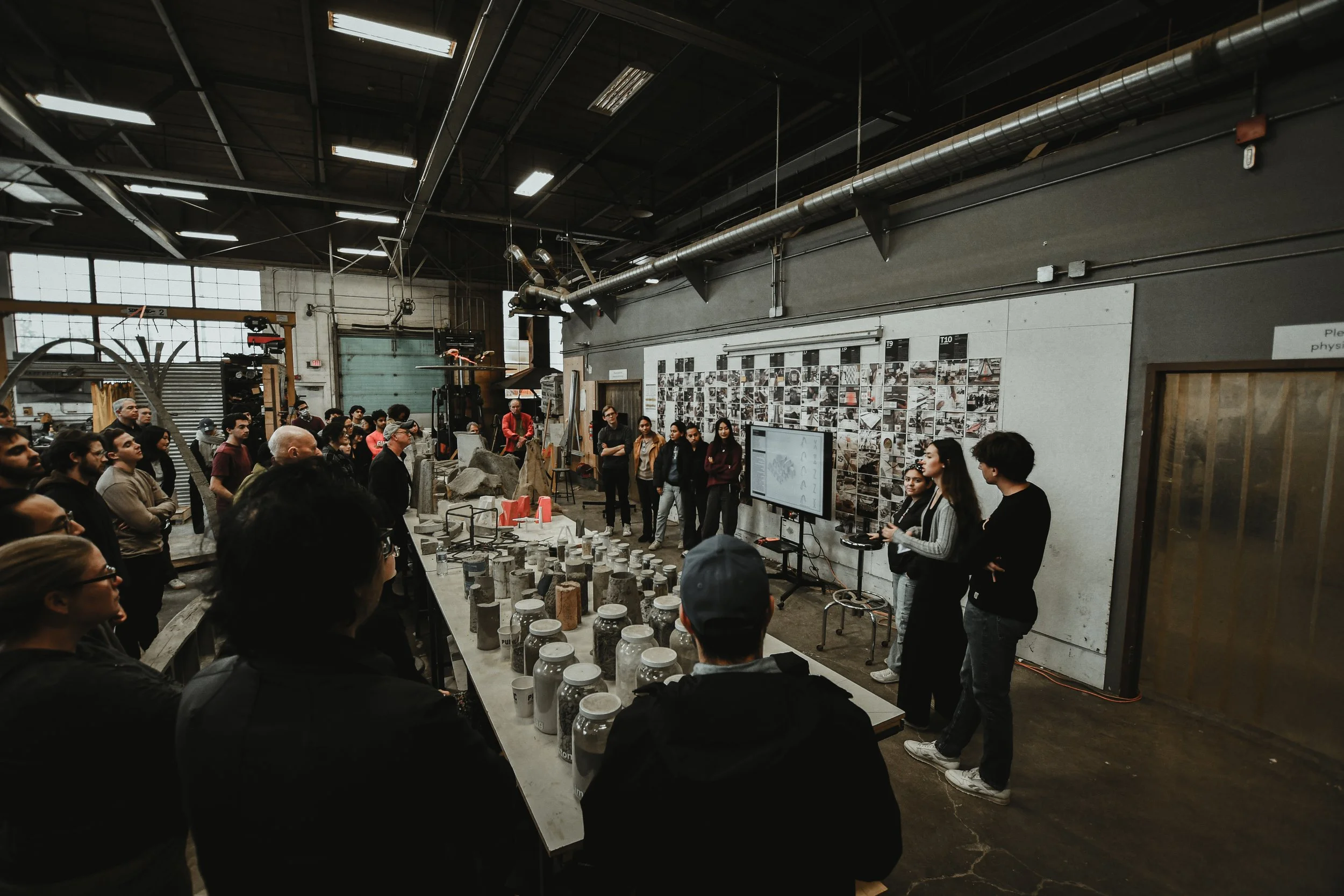
Students, working in collaborative teams, are prompted with executing a full-scale concrete prototype that draws precedent from architectural canon as well as technical knowledge acquired from field visits to regional ready-mix and precast facilities. Pedagogically, teams are provided a maximum of 500 pounds of concrete, and tasked with spanning/defining the largest volume of space possible.
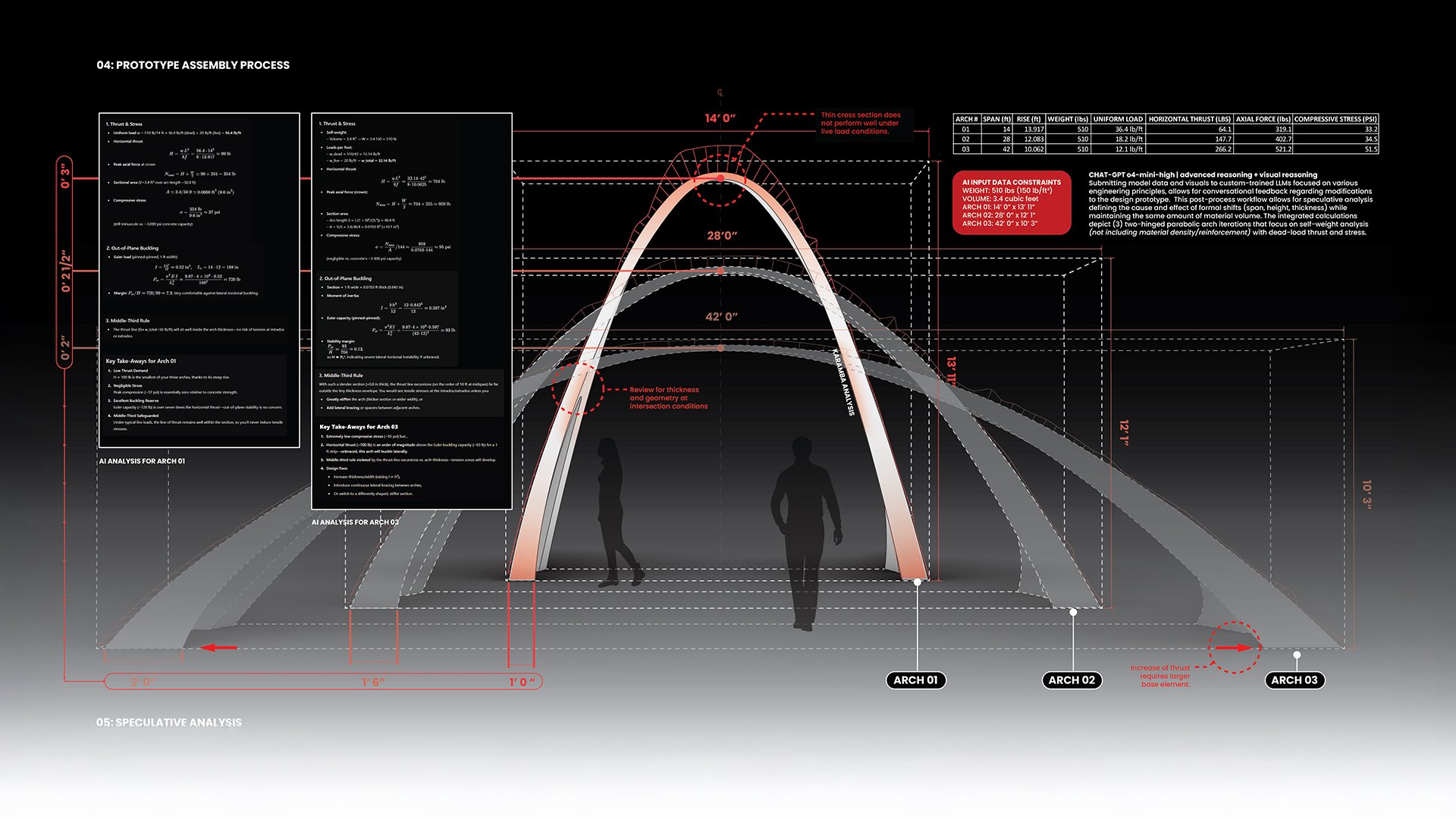
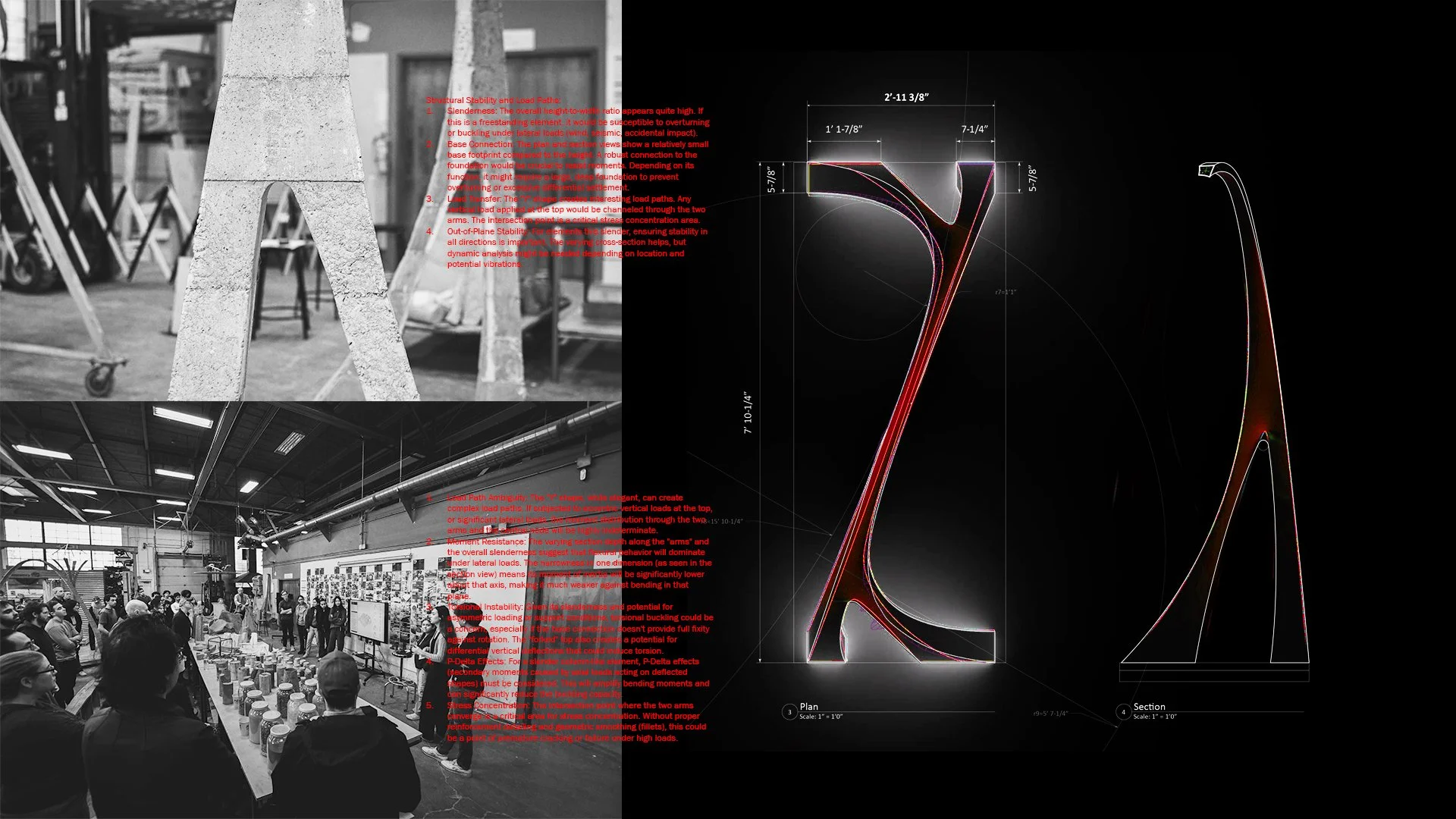
At key phases, students test their digital model within Karamba3D’s structural analysis software. Assisted by AI processing technology (LLM models), teams receive fast stress/strain data, design feedback, and reliable weight calculations to inform each design decision. This sequential analysis typically requires prototypes to reduce material consumption, as well as directs the placement of tensile reinforcement.
The result is extremely thin and lightweight reinforced concrete structures, which are reduced to their material limits. This reductive ethos grounds all engagements within the lab while “forcing” students to iteratively explore strength/weight/span relationships as a central part of the design making process.
As a final step, AI-enhanced 3D scanning of the physical artifacts is conducted to re-measure and evaluate design intent versus constructed reality. This educational feedback loop between physical and digital remains circular and deepens future designers’ understanding of the concrete industry’s consumption practices and broader environmental implications.
Published: ACSA | 2025 Intersections Research Conference: AI DESIGN PRACTICES
Faculty Team:
Christopher Romano, Randy Fernando (Group Lead), Michael HooverStudent Team:
Sandra Zarub, Melanie Wu, Yerlene Torres, Joey Glatz, Faith Vale, Ian Simmons,
Jasmine Ferreiras, Sweata Kakade Ursula Ramos