
Co-Taught: Christopher Romano (Coordinator)
Group Lead: Randy Fernando
Student Team: Zlata Anisimova, Aryan Cacodcar, Elizabeth Geiser, Michael Goodlander, Yosi Hoffman, Allison Lavis, Ryan Osborne
Mixed Reality Support: Nicholas Bruscia
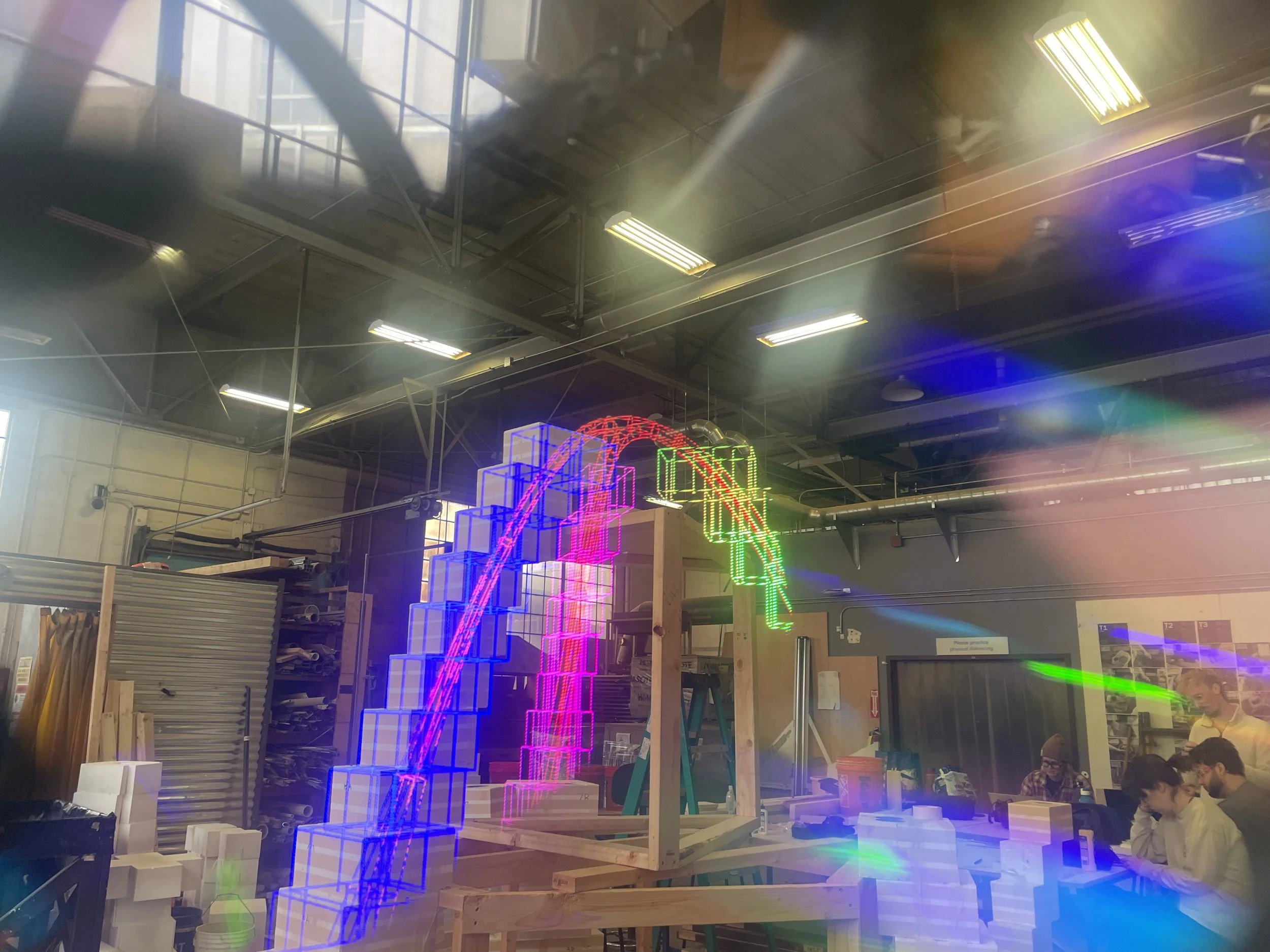
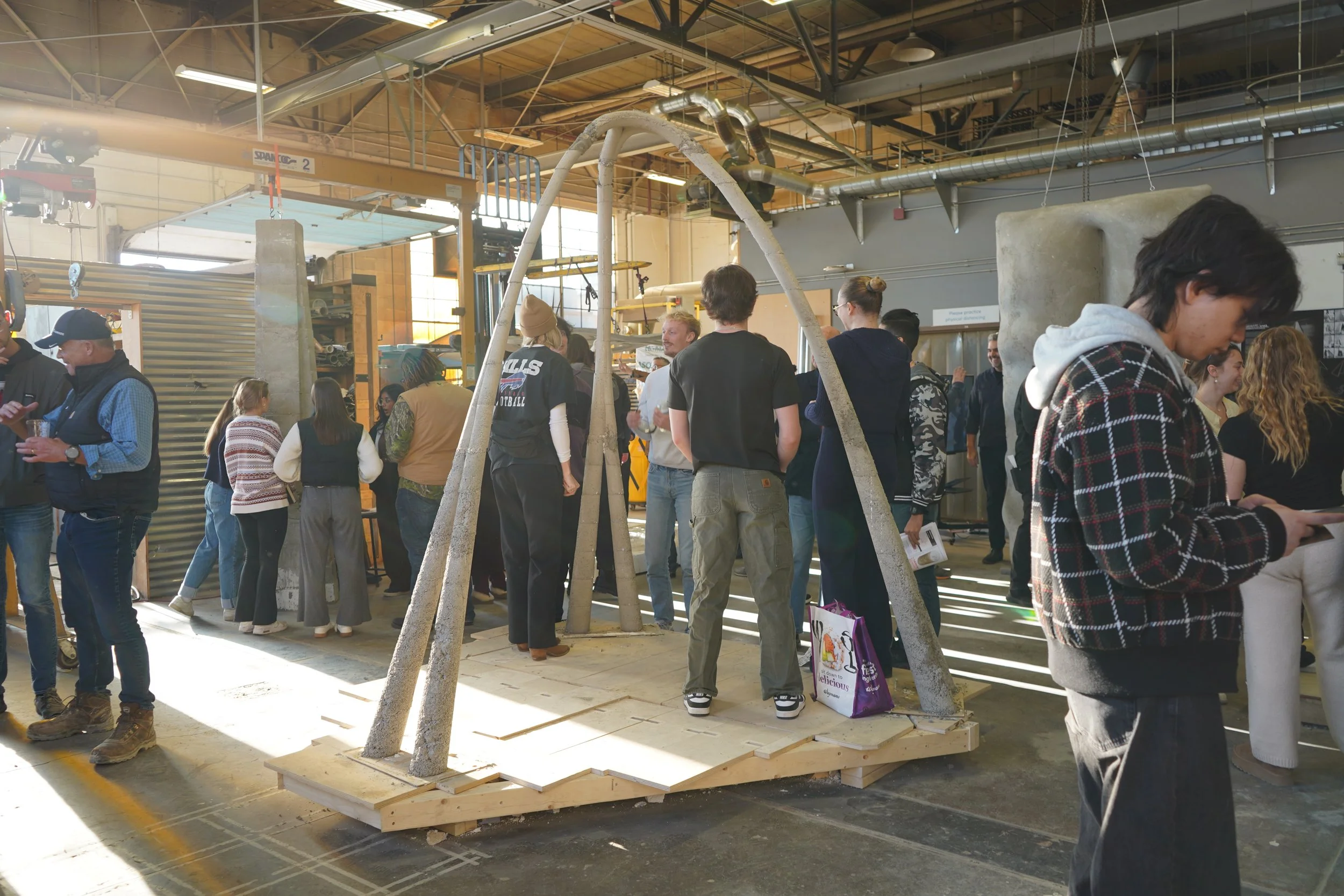
This project is a full-scale concrete prototype developed to explore efficient structural design and the use of mixed reality (MR) as a construction aid for formwork setup and alignment. The project centers on a three-legged concrete arch system designed to achieve stability, material efficiency, and constructability within strict weight and fabrication constraints.
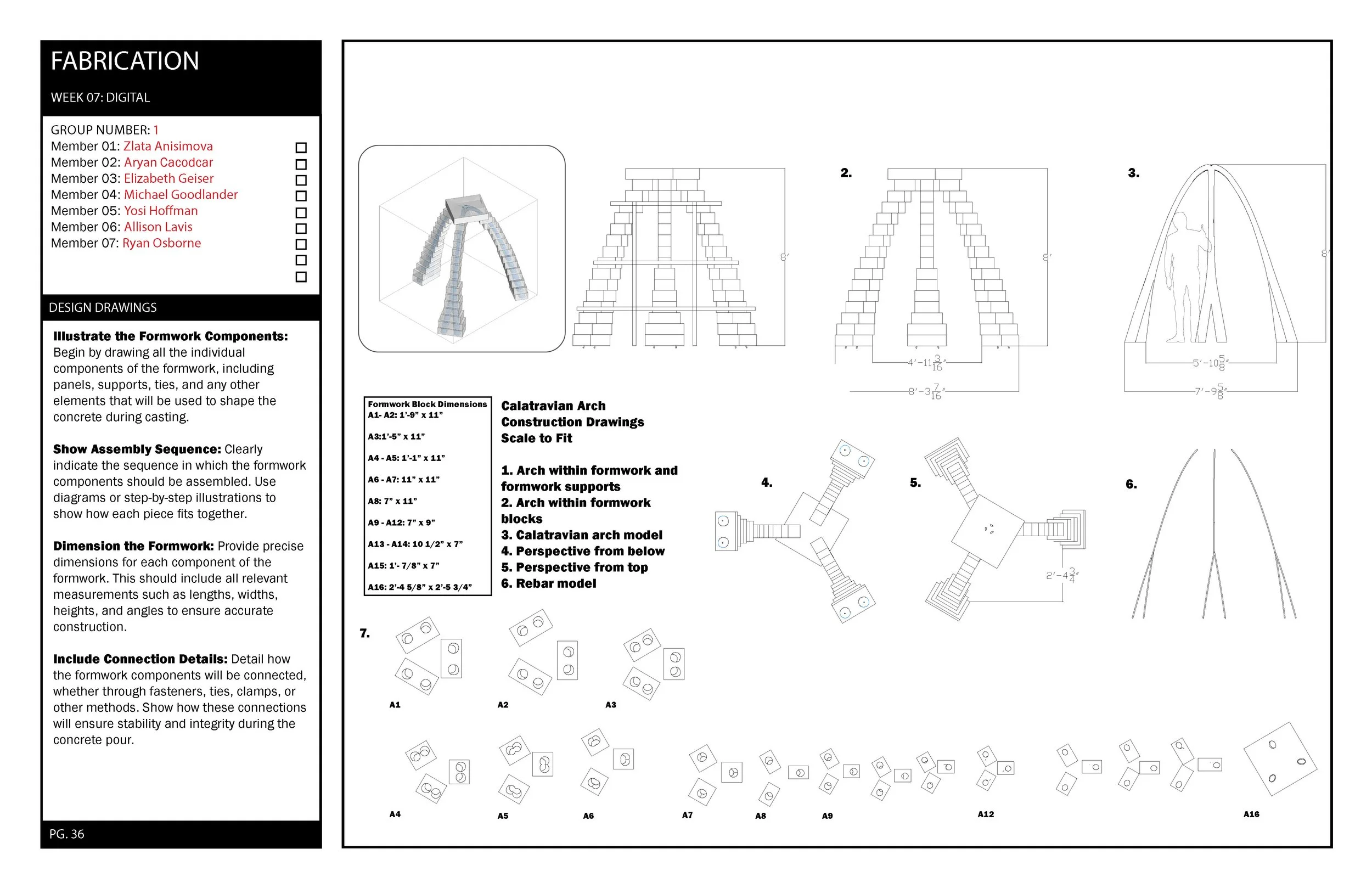
Students began by analyzing a precedent arch system and iteratively modifying its geometry to improve structural performance while reducing material volume. A tripod configuration was selected for inherent lateral stability, allowing the structure to bear loads directly to the ground without additional bracing. Uniform leg cross-sections were used to simplify fabrication and enable precise waterjet-cut foam formwork.
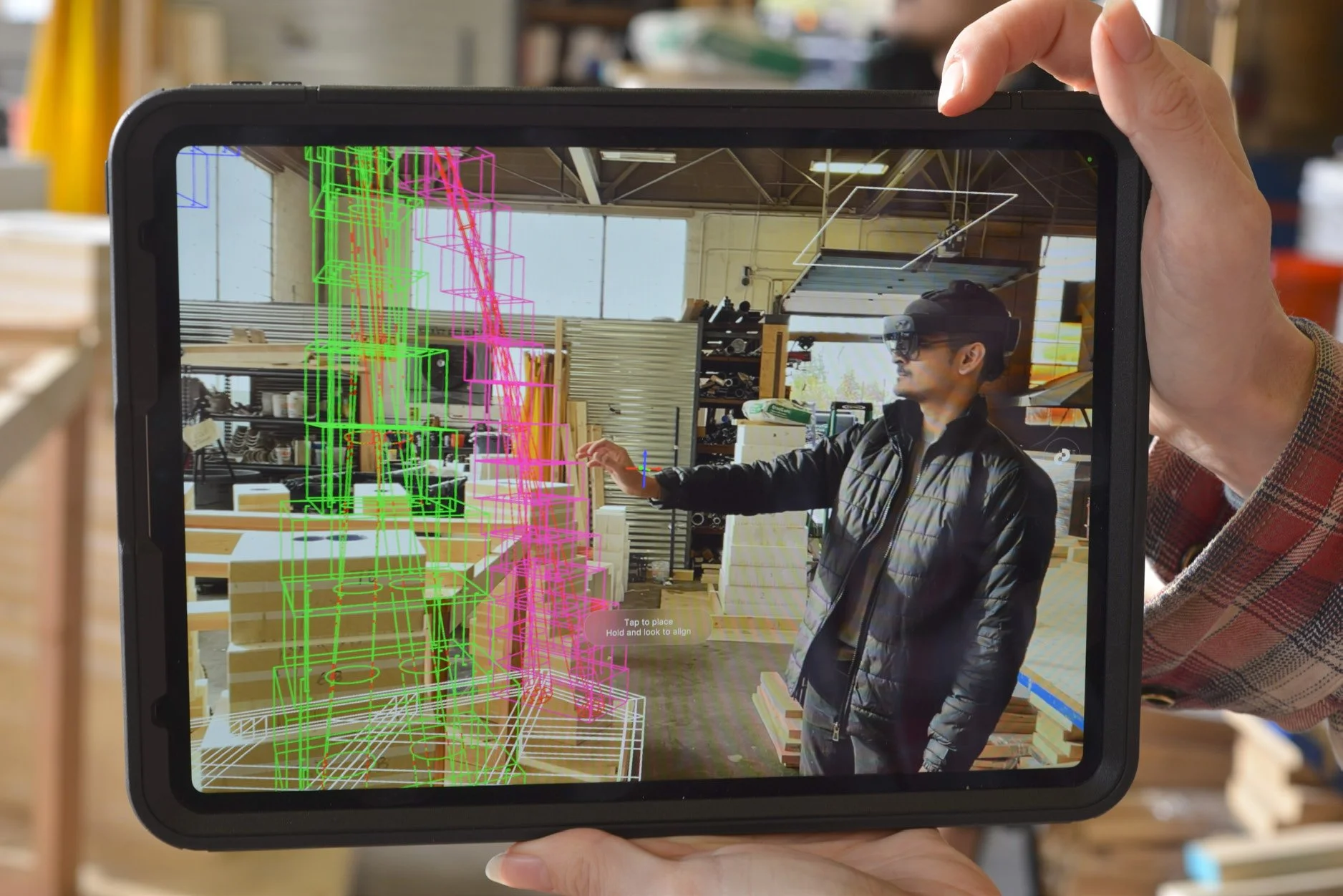
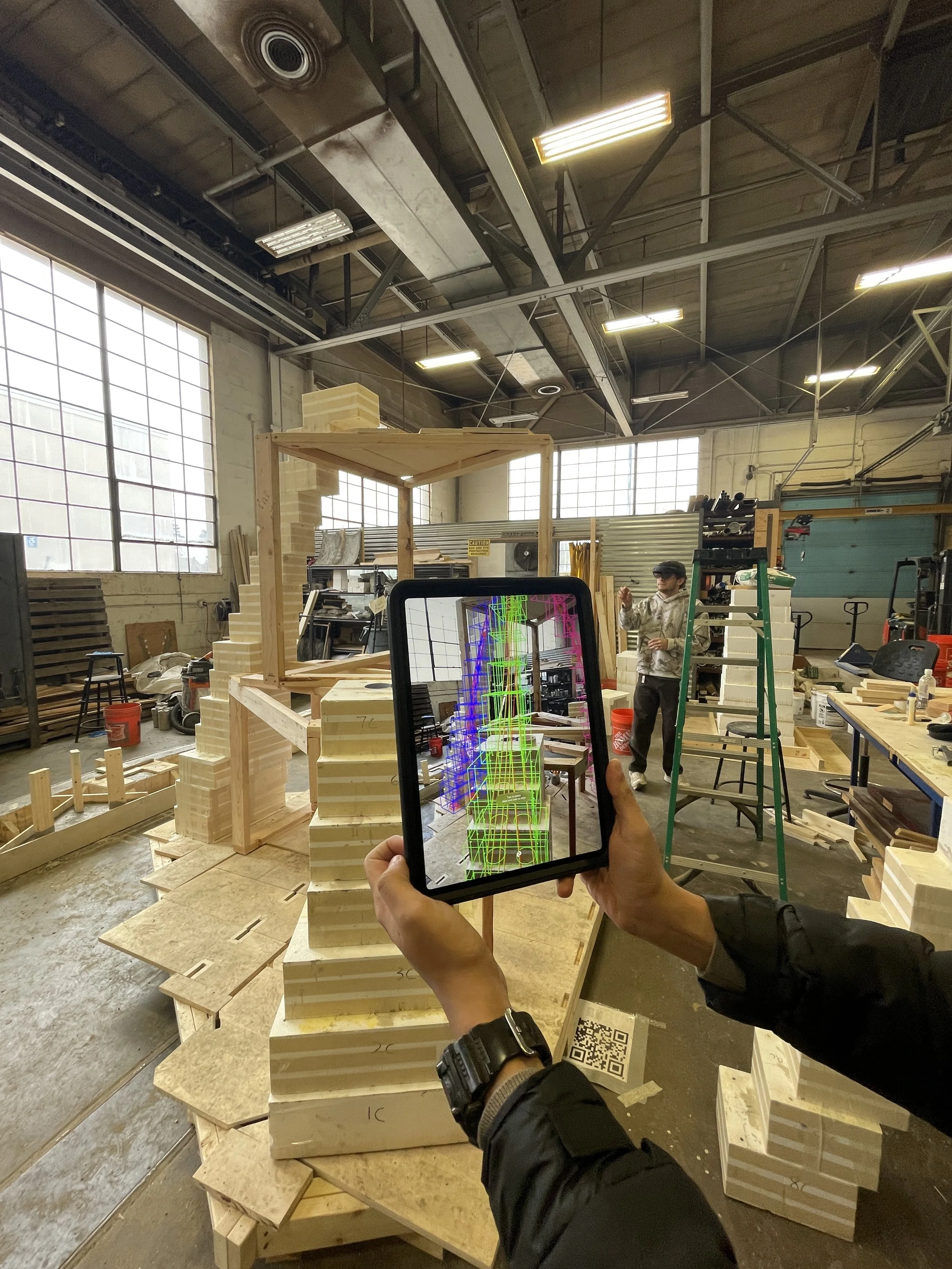
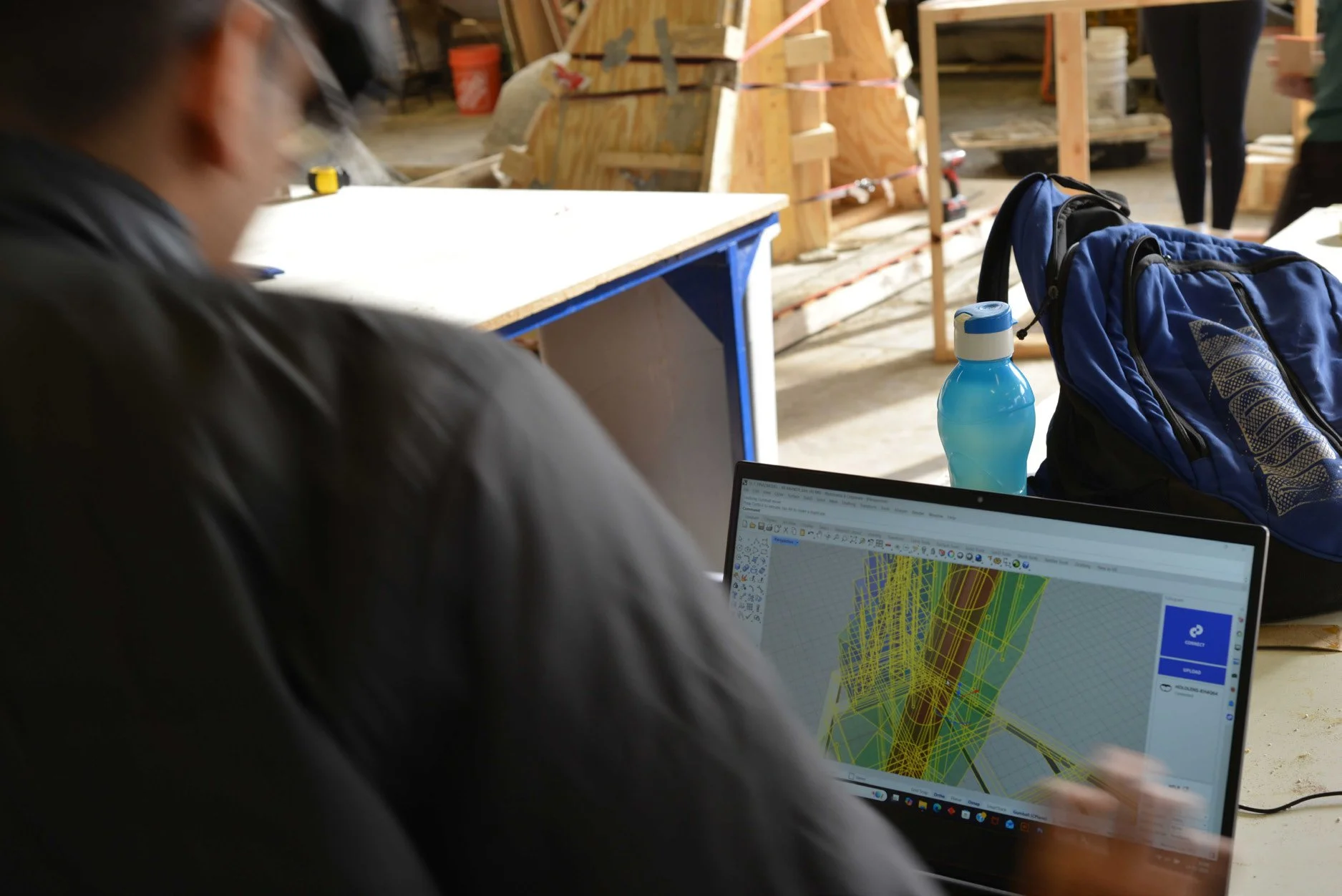
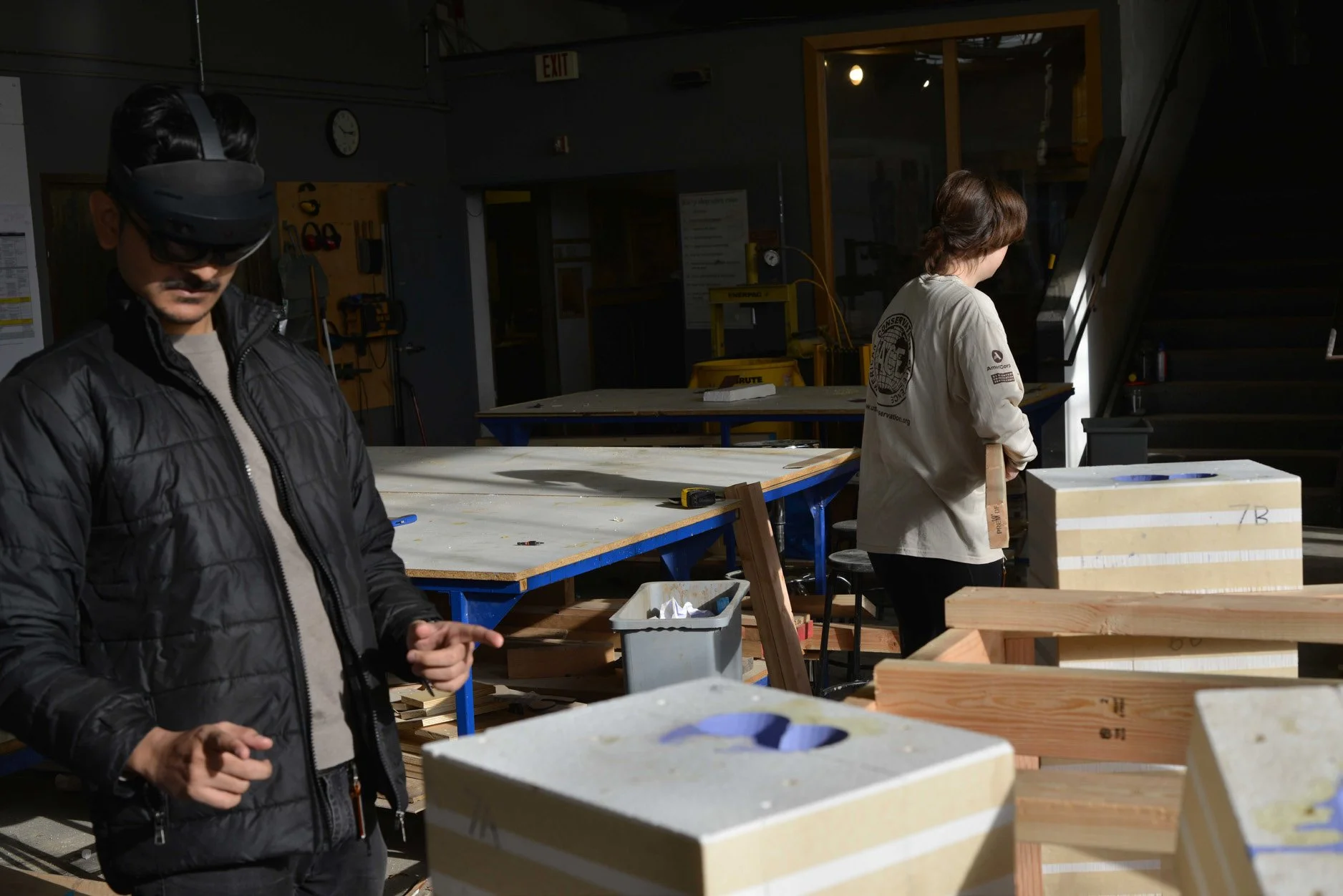
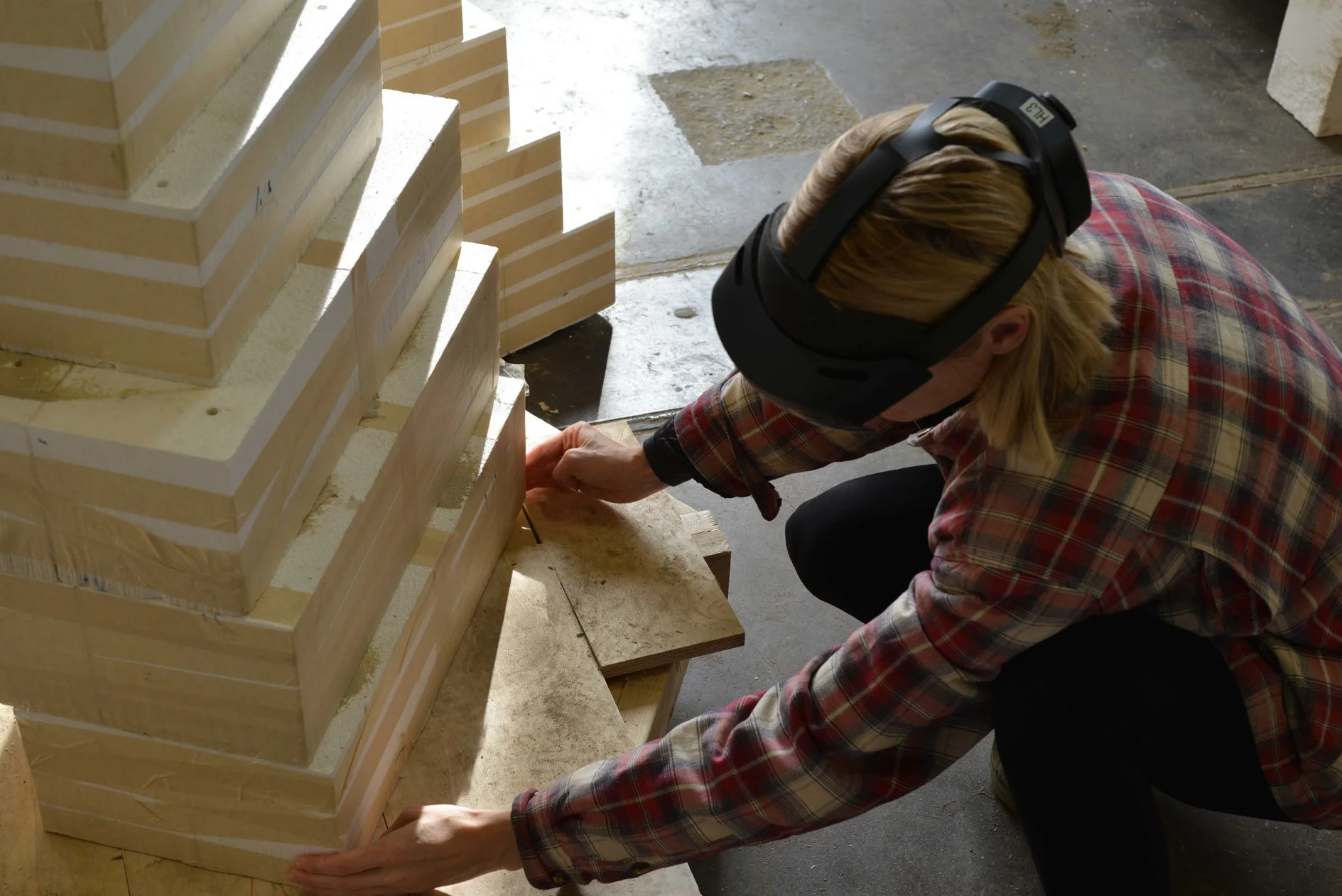
A key component of the project was the integration of mixed reality technology during fabrication. Using a Microsoft HoloLens headset synchronized with a Rhino 3D model, students overlaid digital geometry directly onto the physical workspace. This approach was used to guide the alignment of stacked foam formwork blocks and reduce dimensional errors commonly caused by manual layout methods. Mixed reality significantly minimized guesswork during assembly and improved consistency between the digital model and the final cast.
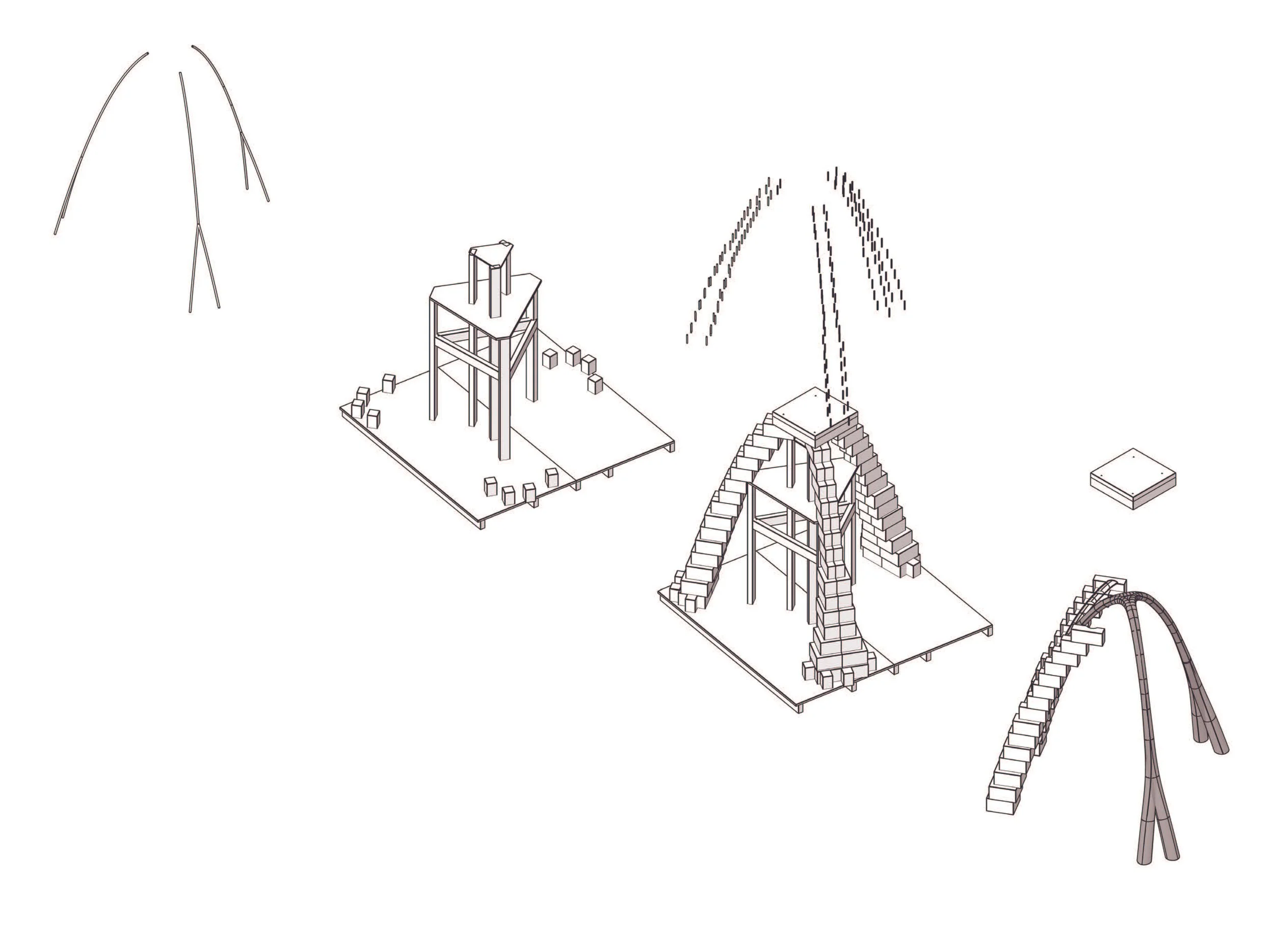
The prototype was cast using site-mixed concrete with internal steel reinforcement concentrated at critical structural zones. The final assembly weighed approximately 562 pounds, meeting material and budget constraints while maintaining structural integrity. The project required students to coordinate digital modeling, material testing, formwork fabrication, reinforcement detailing, and sequential assembly.
Deliverables included a fully resolved 3D model, architectural drawings (plans, sections, elevations), construction details, specifications, mix designs, and documentation of the mixed reality construction workflow. The project demonstrates how emerging digital tools can support accurate, efficient, and repeatable concrete construction processes in contemporary architectural practice.