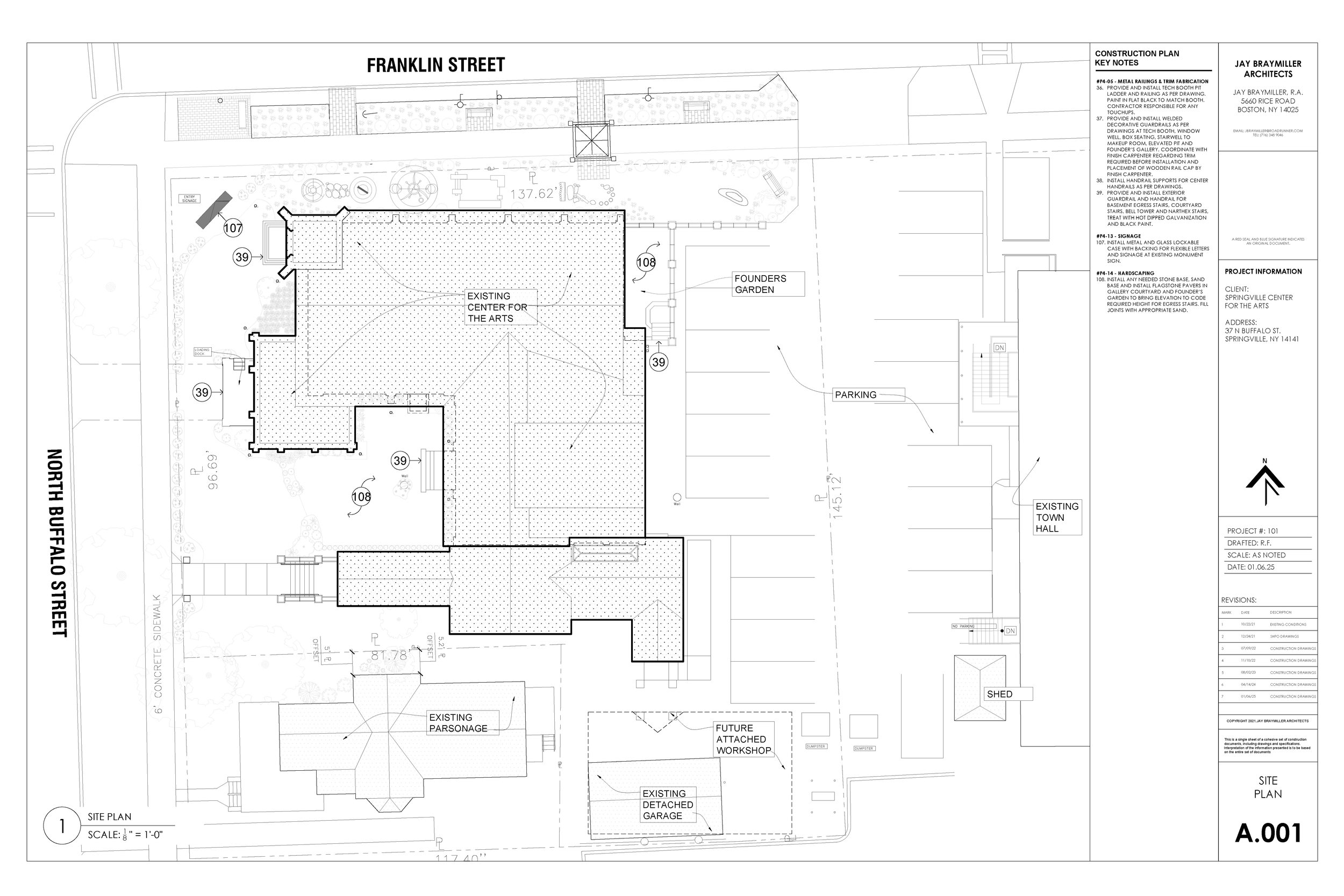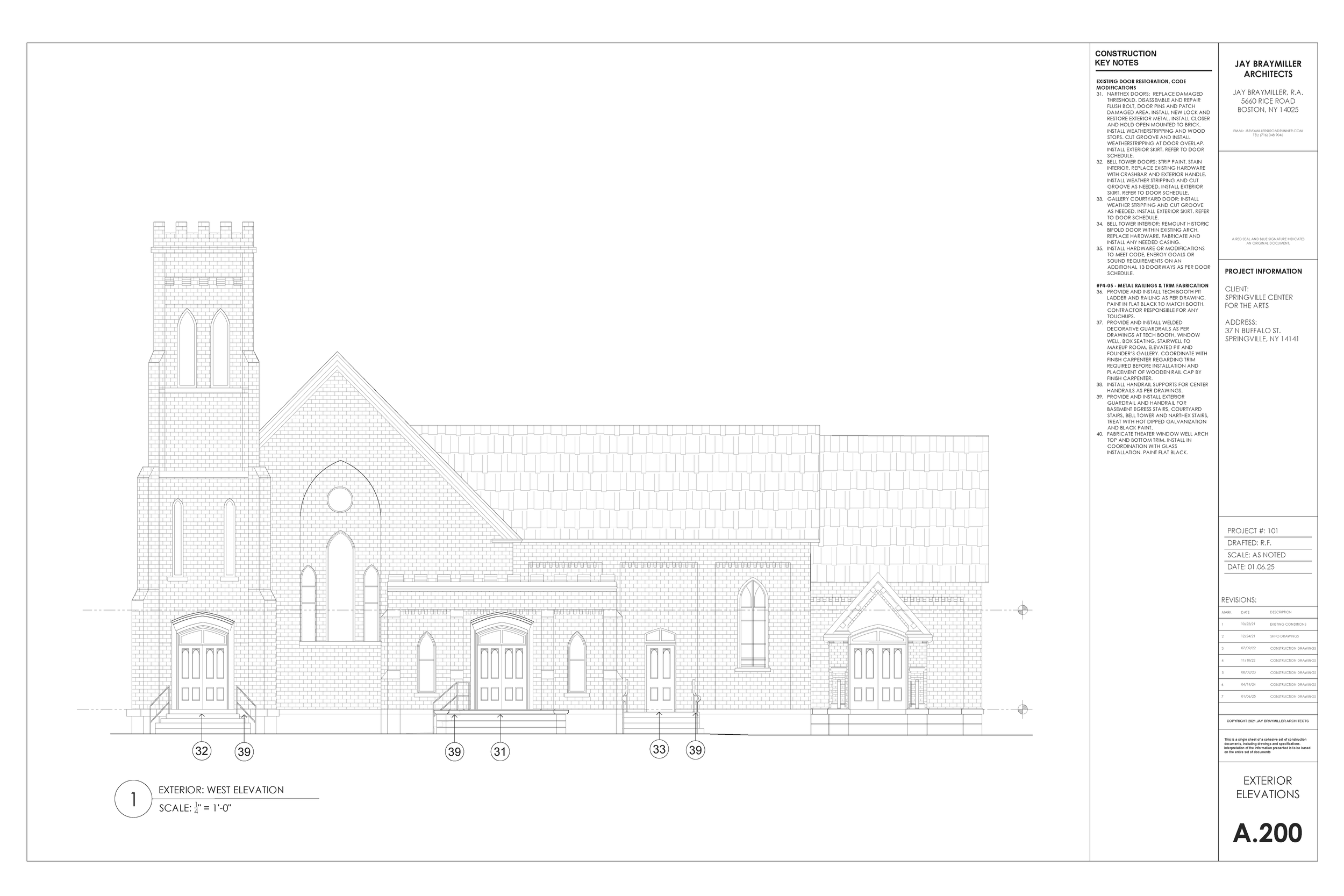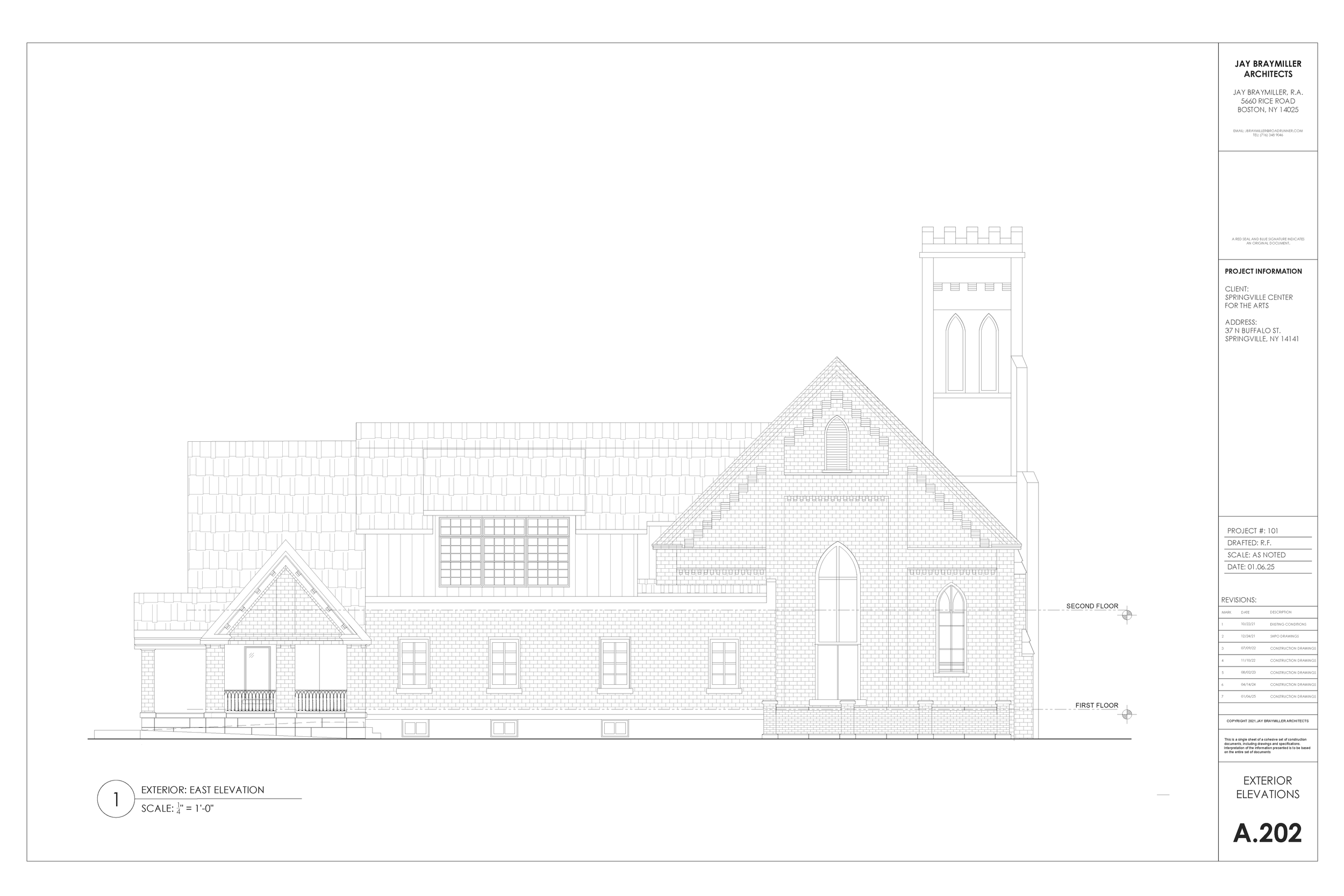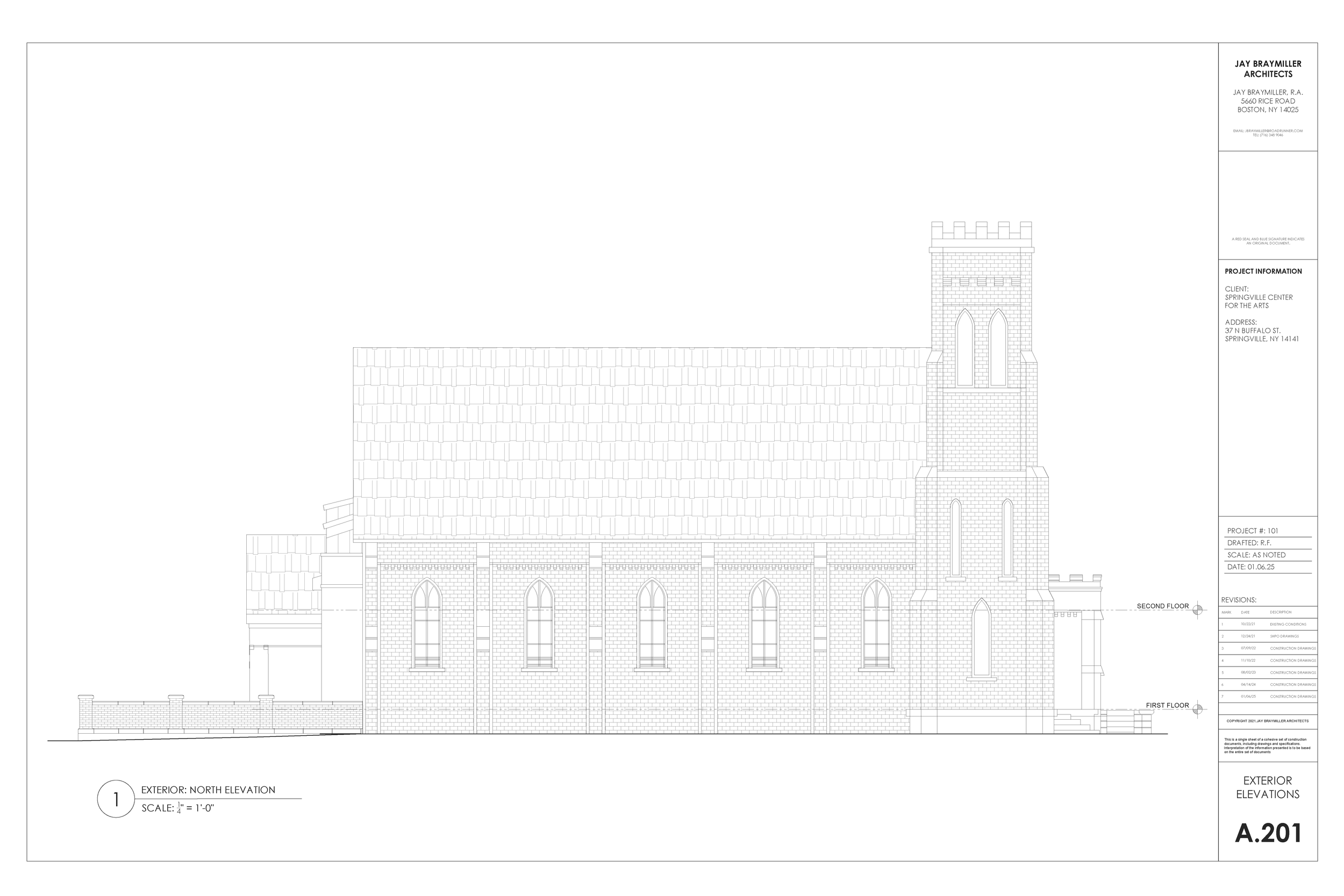
Renovating the Center for the Arts
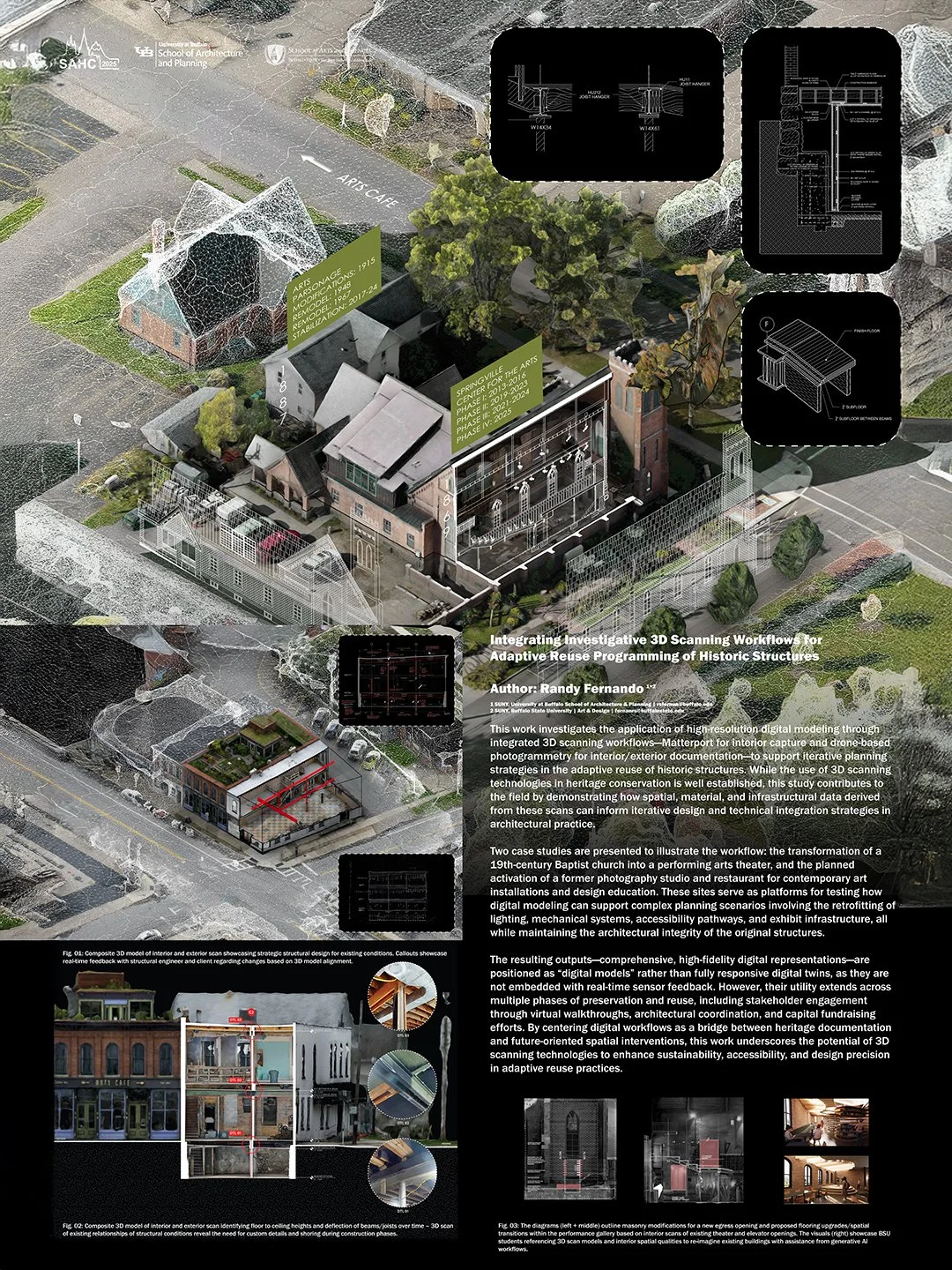
Integrating Investigative 3D Scanning Workflows for Adaptive Reuse Programming of Historic Structures Collaboration with Director, Seth WochenskyThe work is a research-driven design project that examines how high-resolution digital documentation can inform adaptive reuse strategies for historic buildings. The work focuses on integrating interior and exterior 3D scanning technologies, including Matterport capture and drone-based photogrammetry, to generate accurate spatial, material, and structural data sets that support informed architectural decision-making.
The project uses two case studies in Buffalo, New York: the conversion of a 19th-century Baptist church into a performing arts venue and the planned transformation of a former photography studio and restaurant into a contemporary arts and education space. These sites were selected to test how comprehensive digital models can assist in navigating complex retrofit conditions, including structural constraints, mechanical coordination, accessibility upgrades, lighting integration, and exhibit infrastructure, while preserving the architectural integrity of the original buildings.
The resulting digital models function as coordination tools across multiple phases of the adaptive reuse process. They support iterative design development, facilitate collaboration with engineers and consultants, and provide a shared reference for stakeholders. Beyond design and construction coordination, the models are also used for virtual walkthroughs, fundraising materials, and public engagement, extending their value beyond traditional documentation.
This project demonstrates how investigative 3D scanning workflows can bridge heritage documentation and contemporary architectural practice, improving accuracy, efficiency, and long-term sustainability in adaptive reuse projects while enabling informed, data-driven interventions in historic structures.
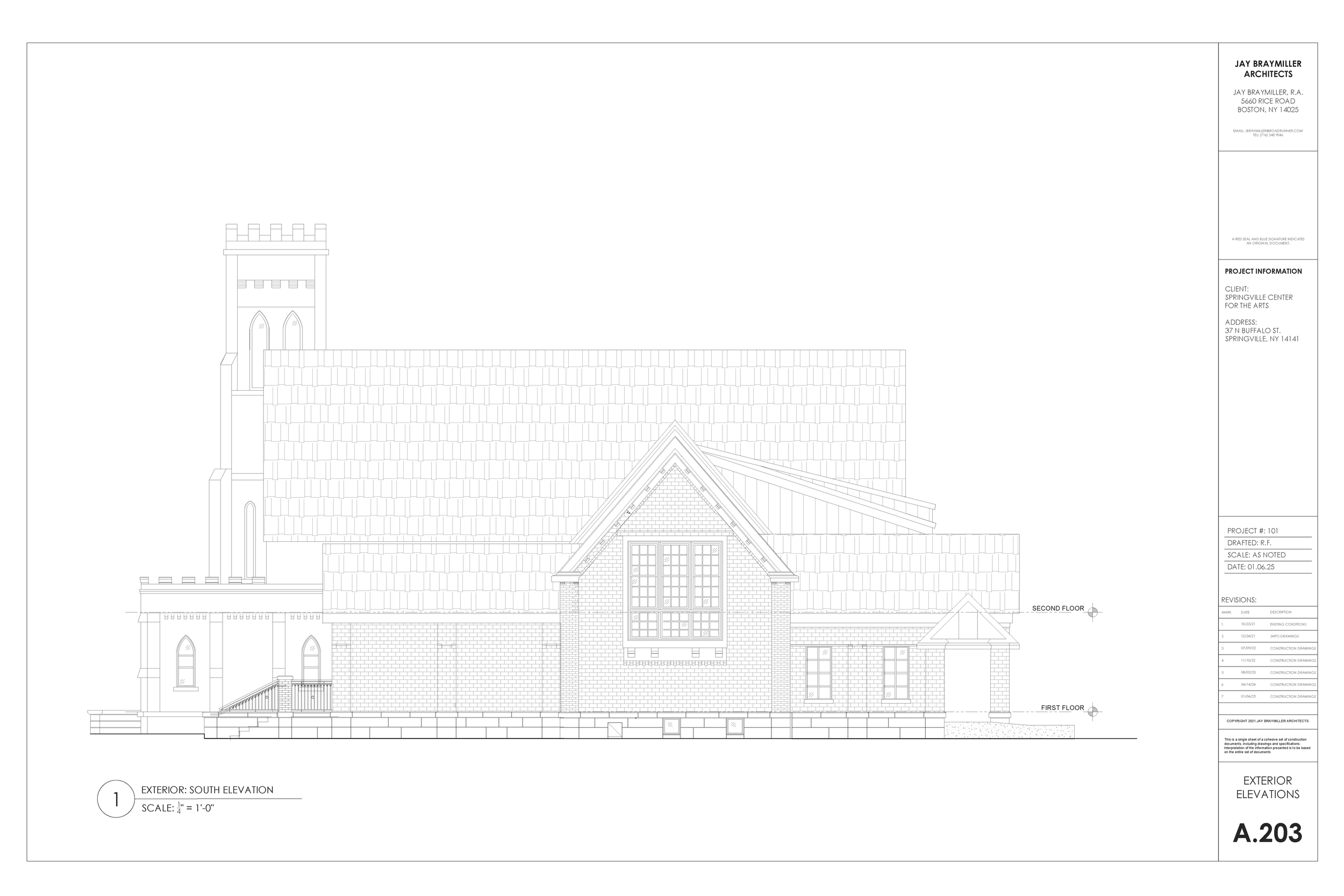
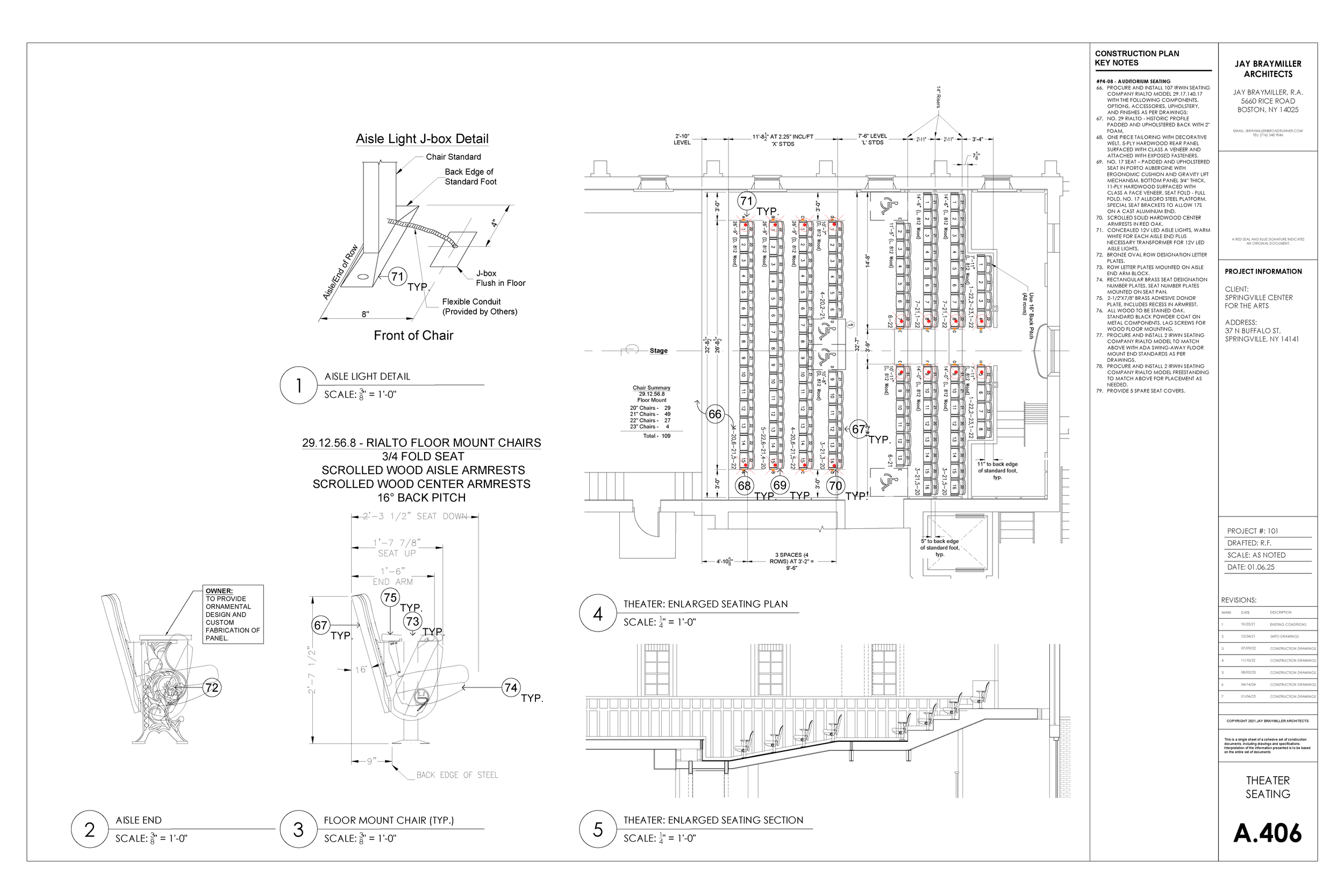
Additional professional work below performed under Jay Braymiller Architect