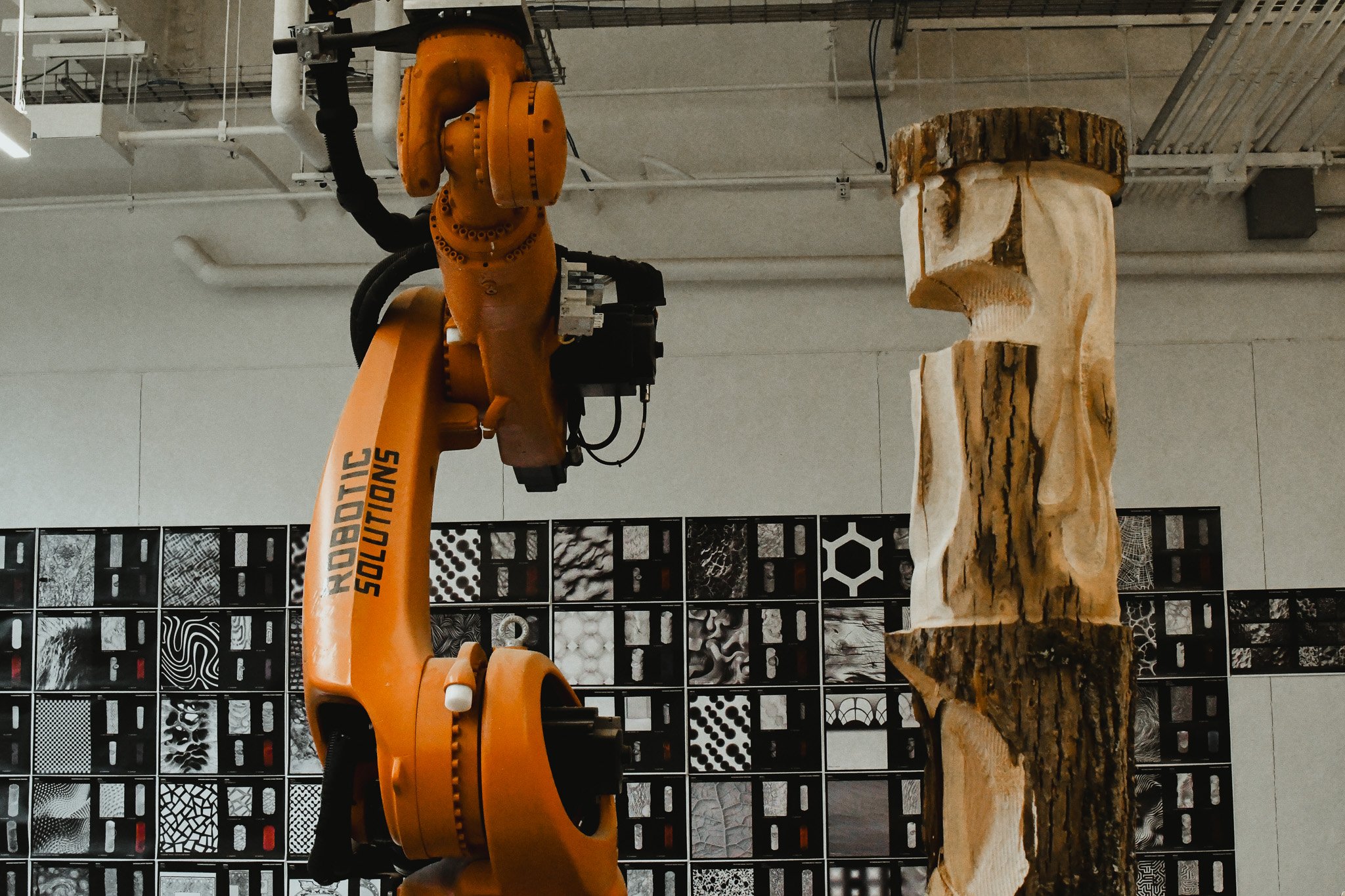
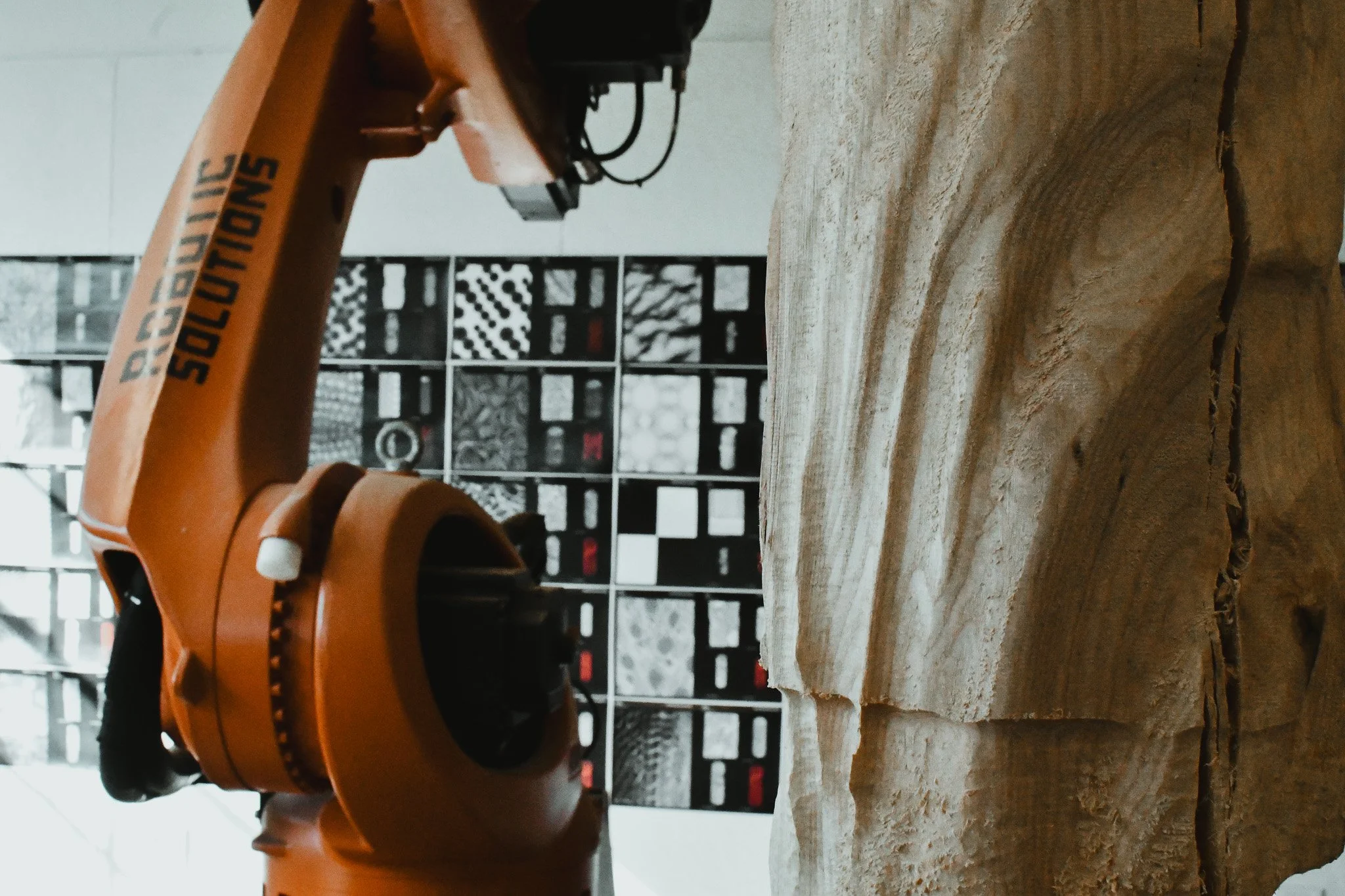
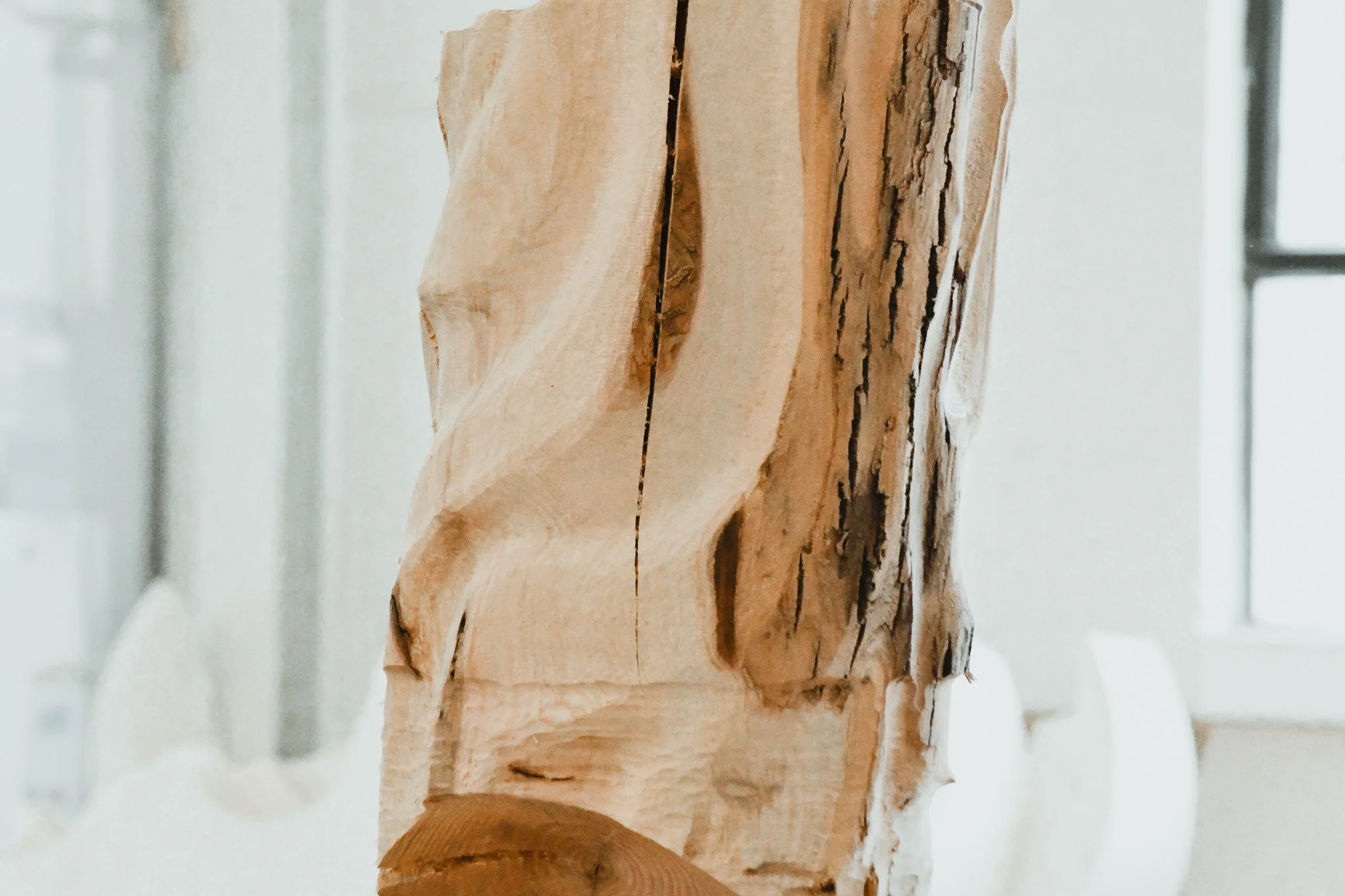
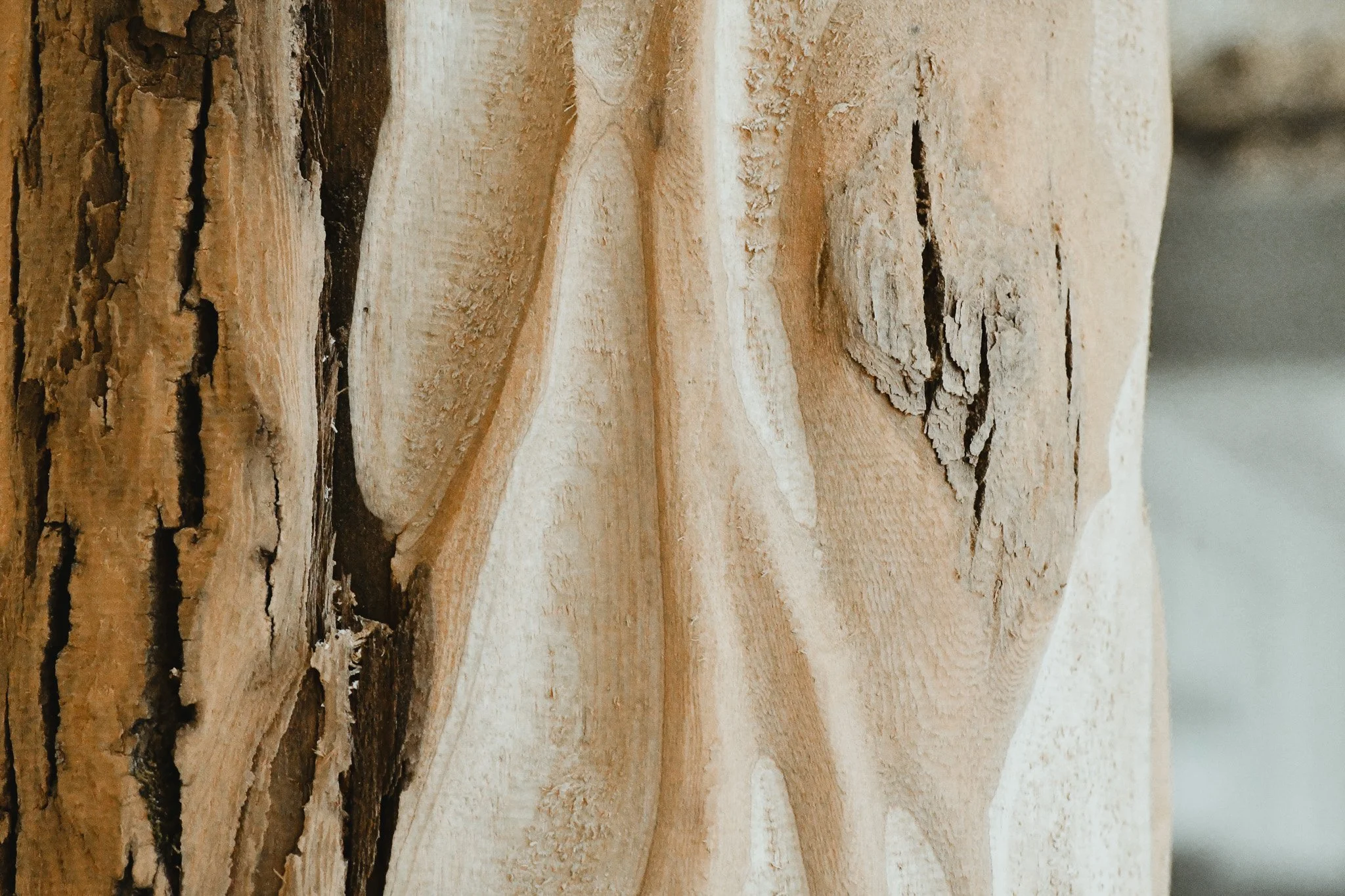
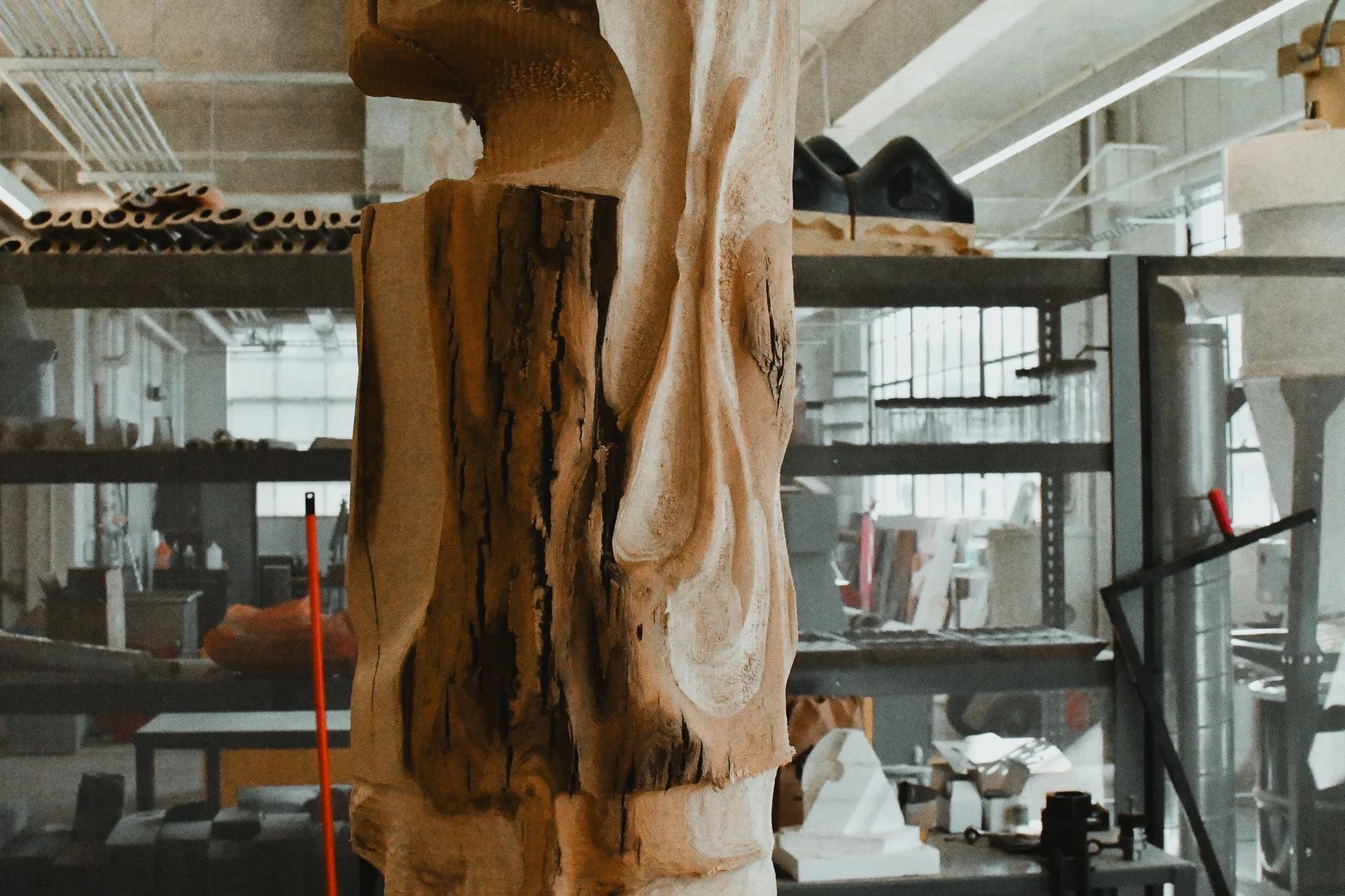
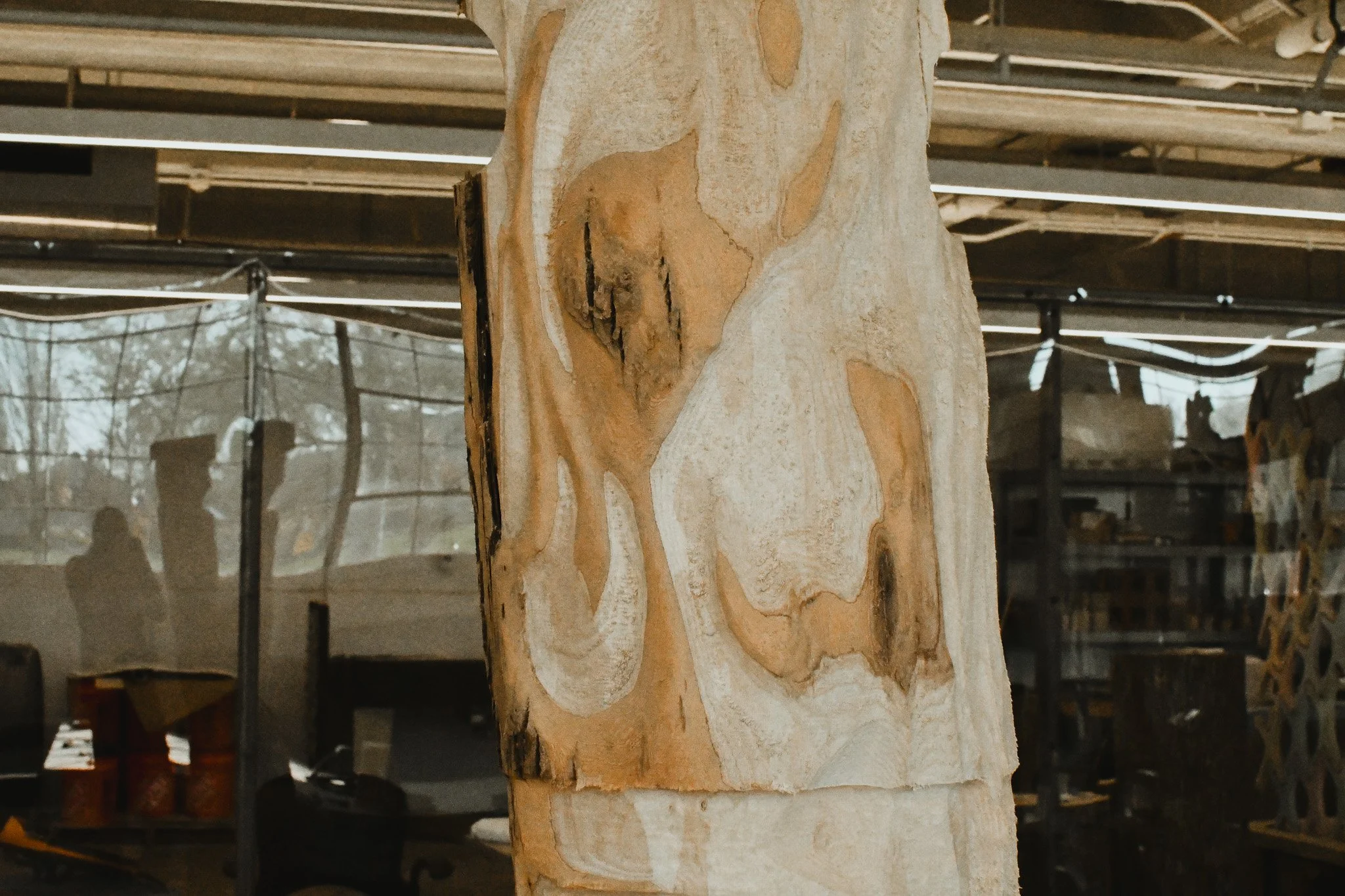
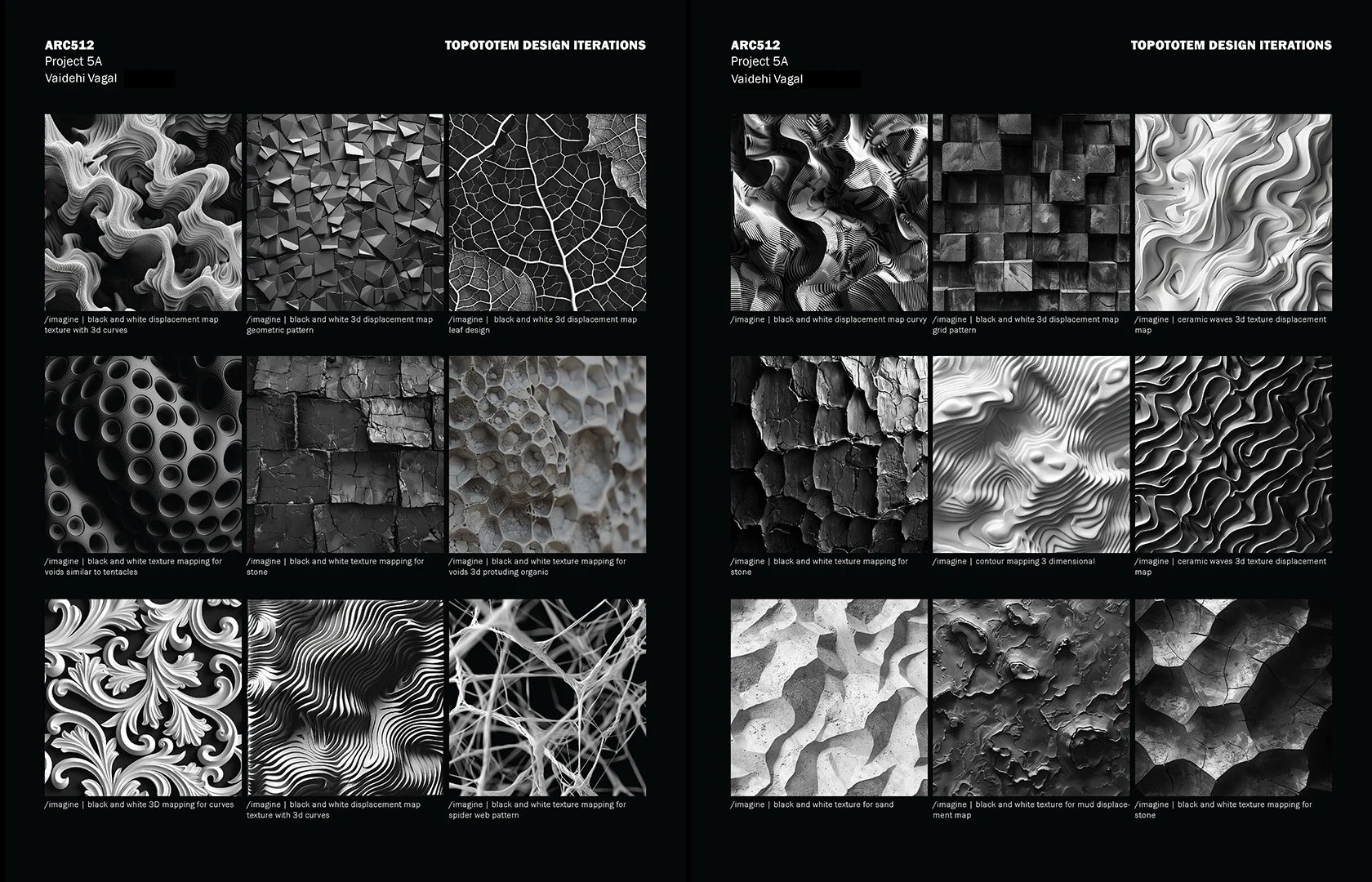
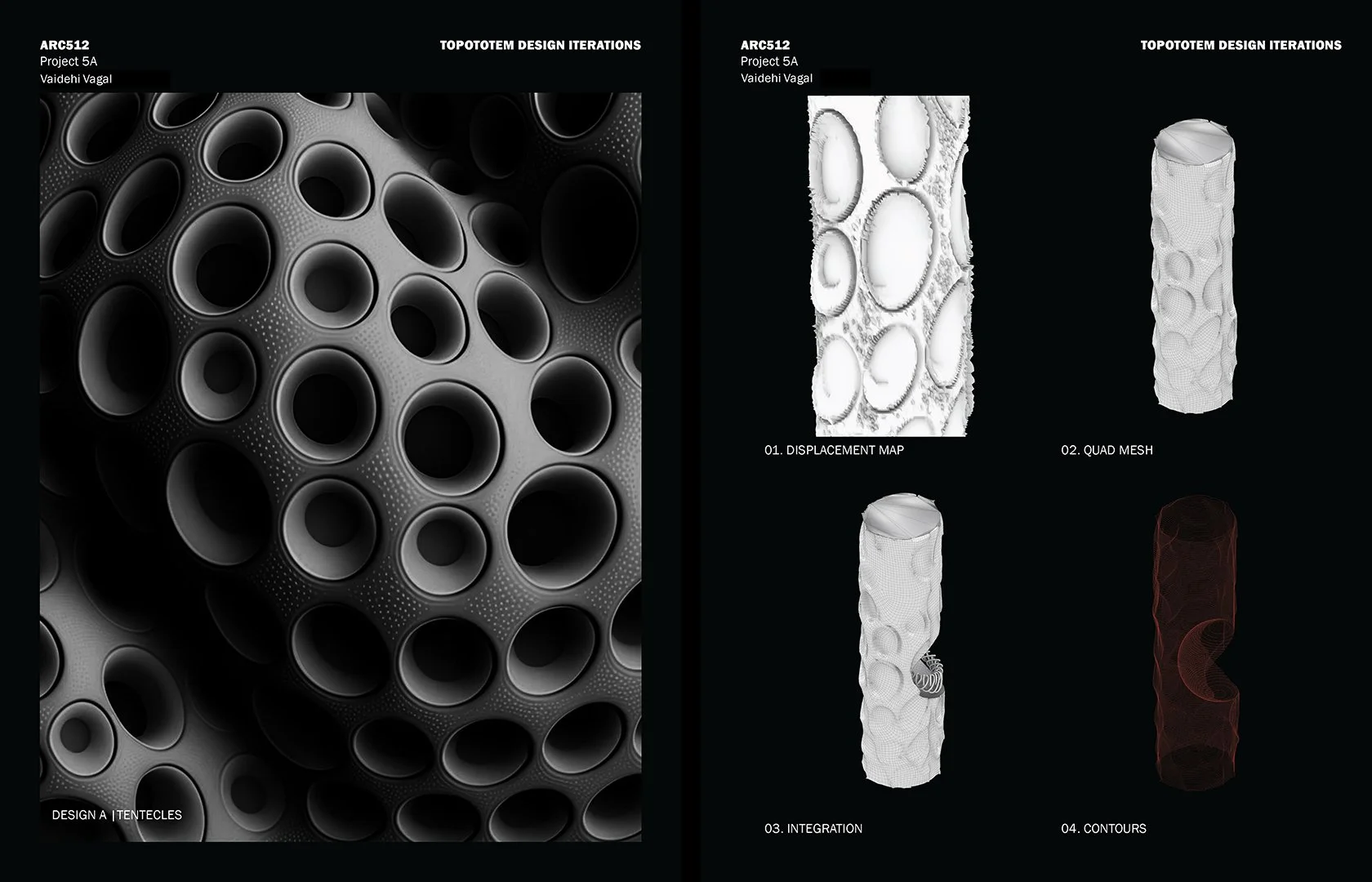
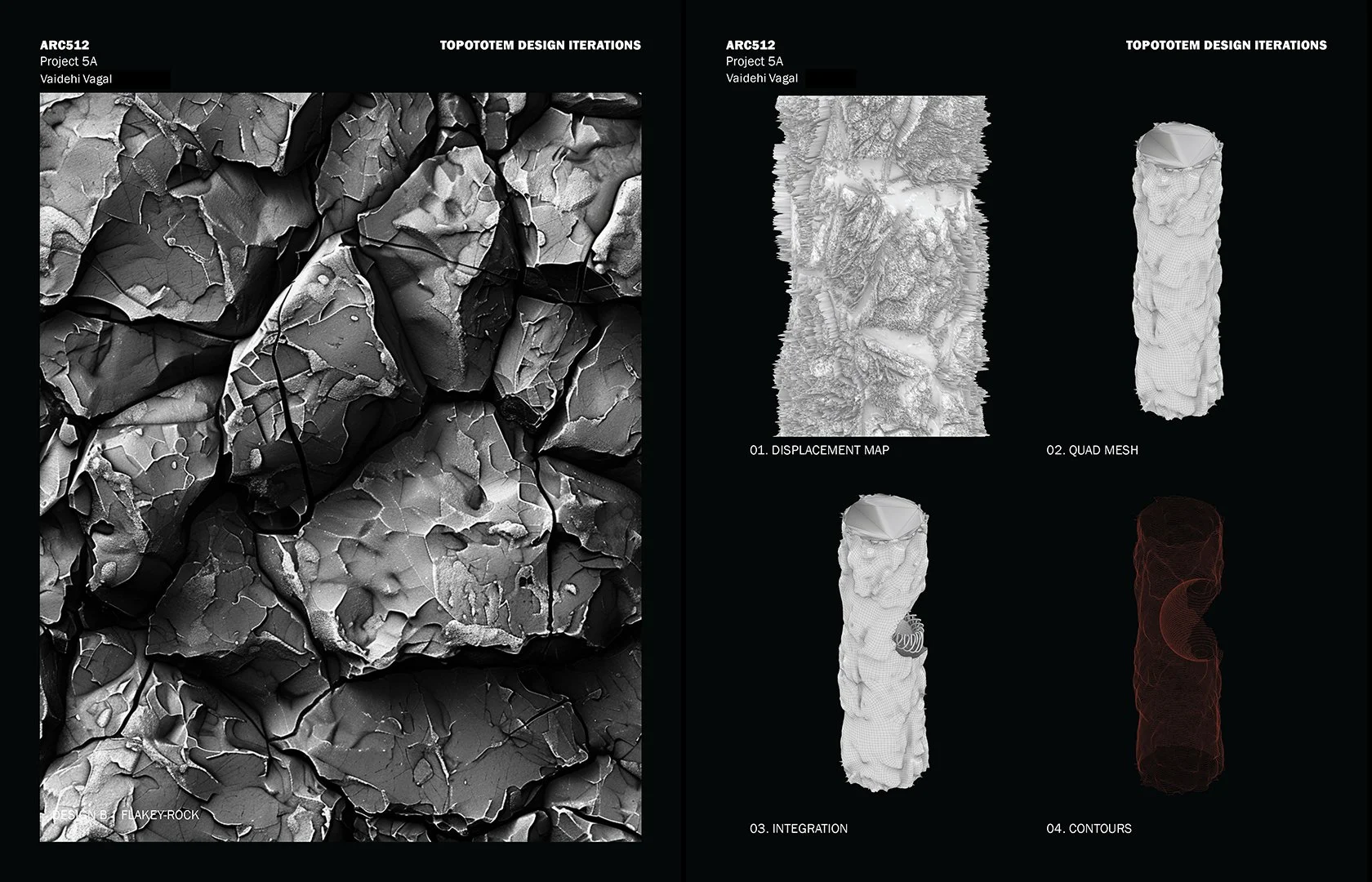
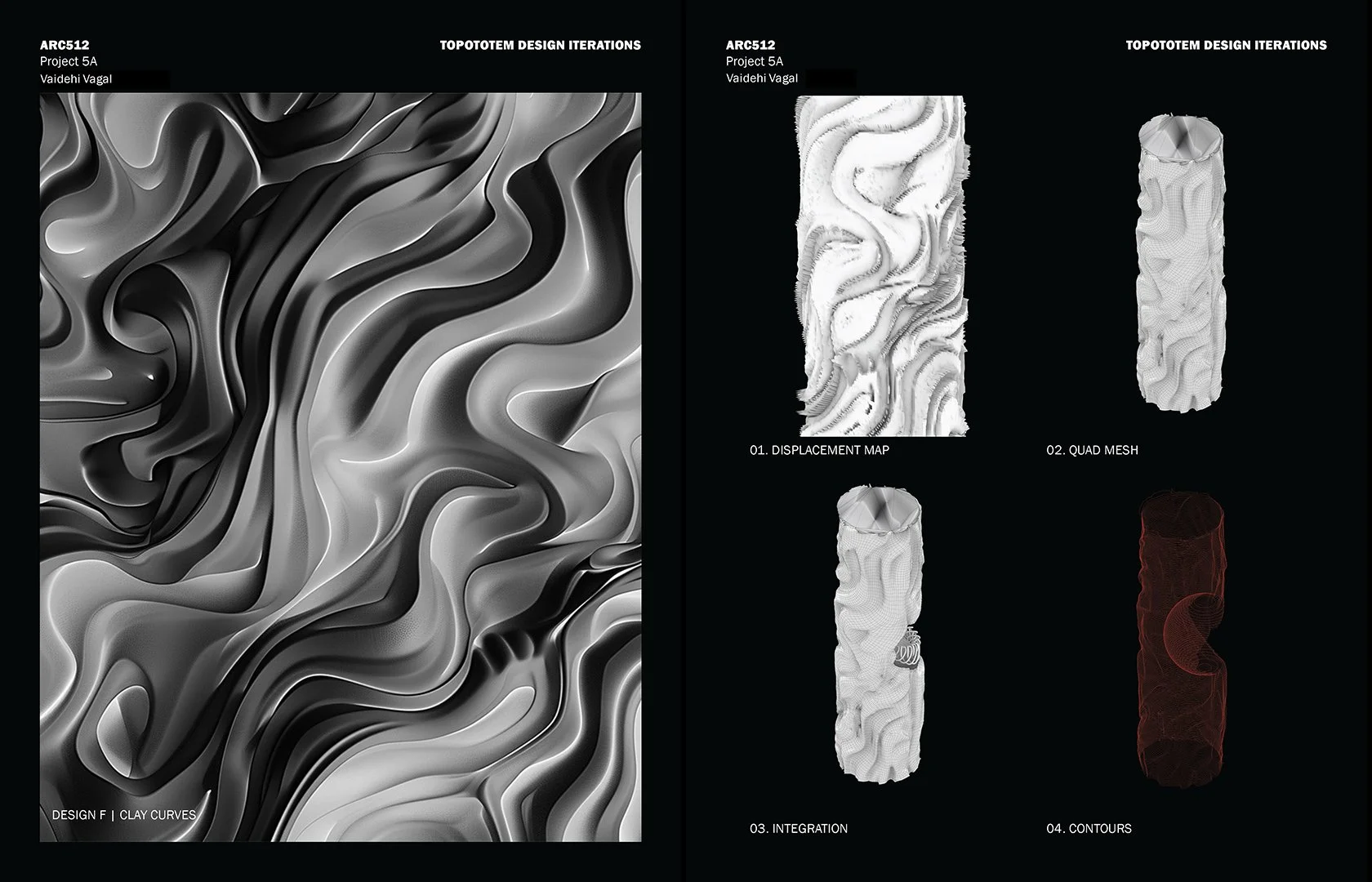
TopoTotem is a computational design and fabrication project that explores how generative imagery can be translated into materially precise, fabricated architectural artifacts. The project challenges students to move beyond image-making by using generative AI as a tool for surface logic and spatial speculation, and then rigorously converting those visual outputs into constructible geometries.
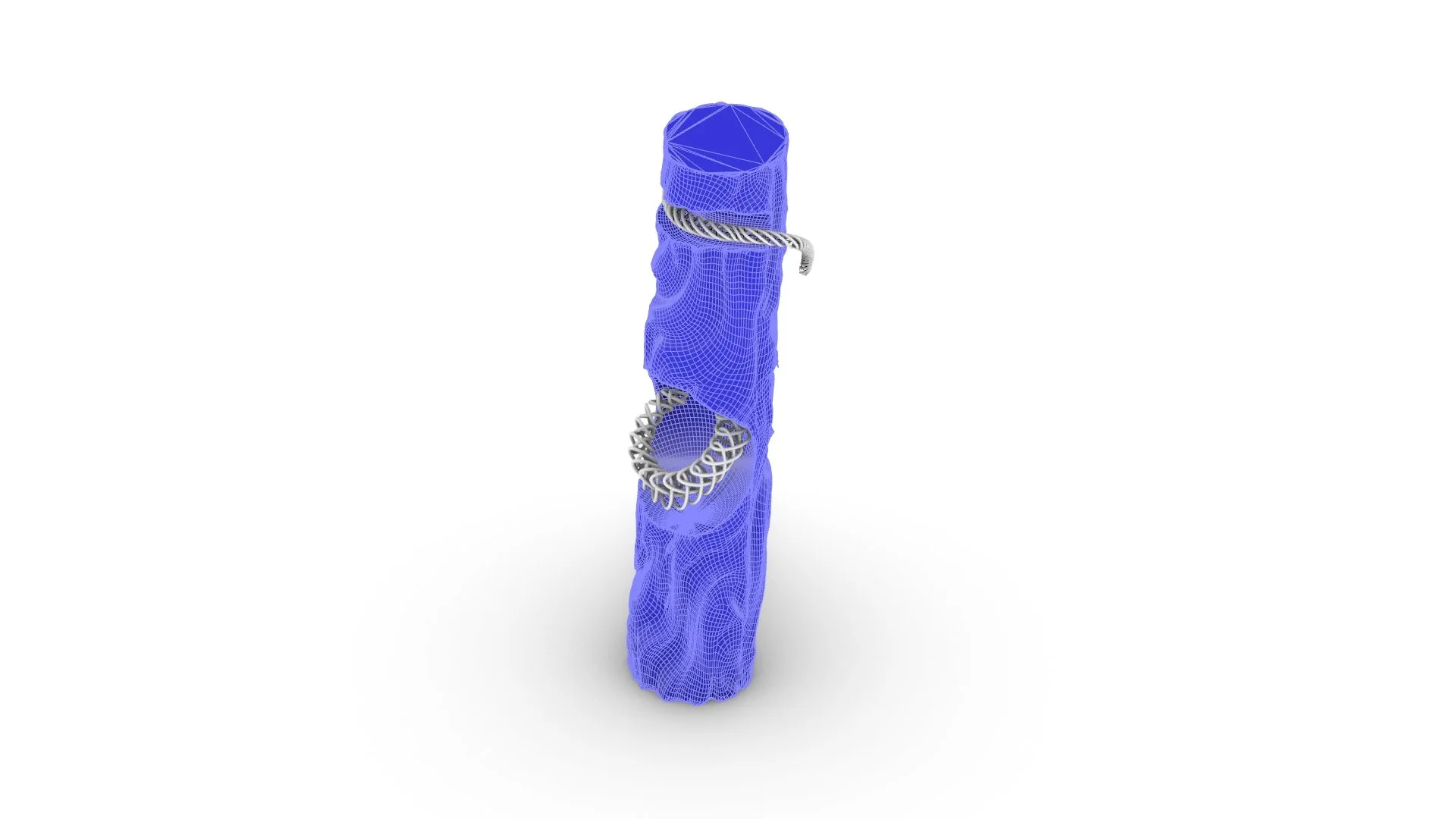
Students began by producing generative AI imagery focused on texture, displacement, and topographic variation. These images were treated not as representational end products, but as data sources—informing displacement maps and surface manipulation strategies within Rhino. Through advanced modeling techniques, students translated image-based depth, contour, and pattern into three-dimensional mesh geometries, carefully managing resolution, continuity, and edge conditions.
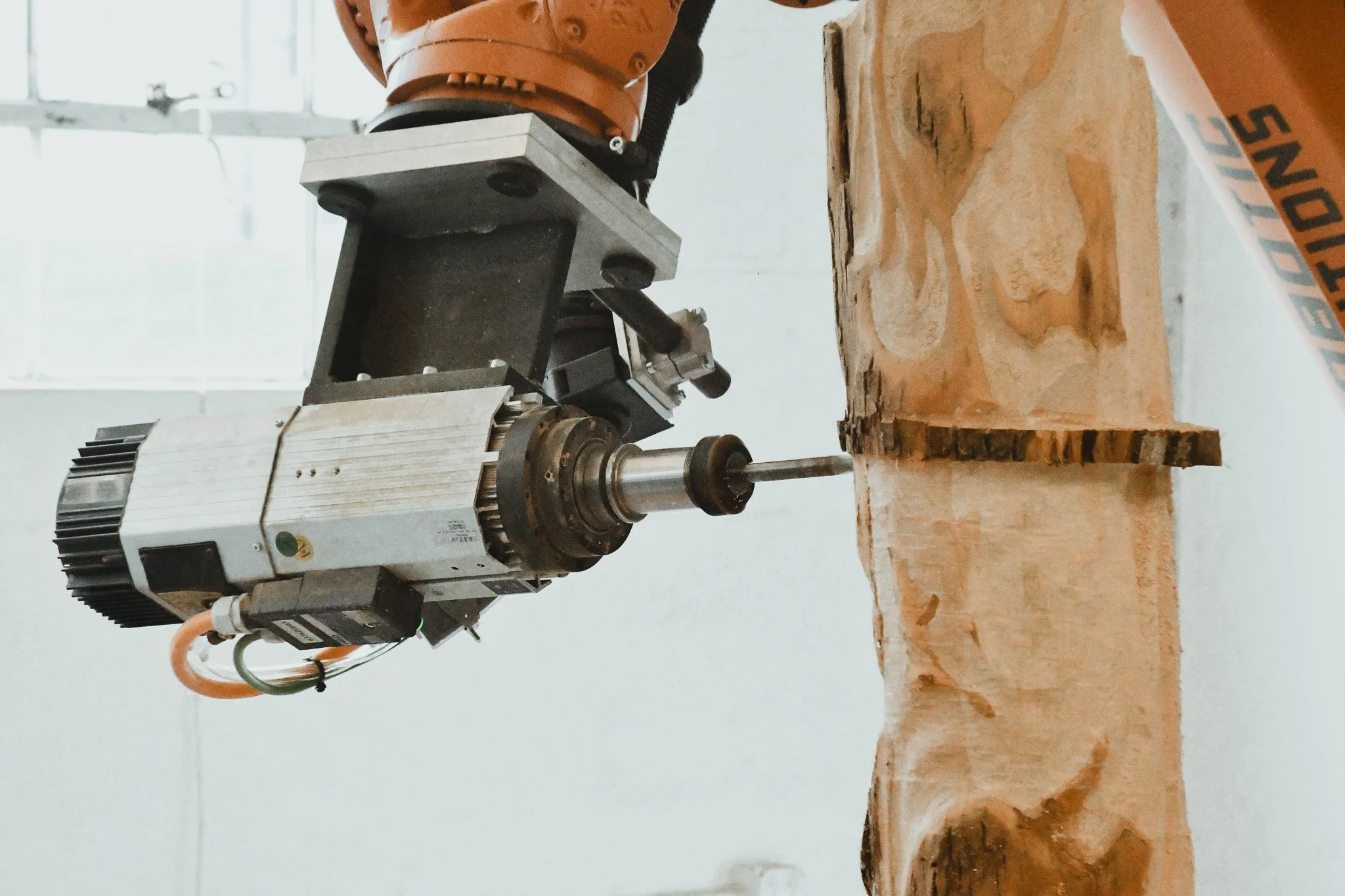
A critical component of the project involved transforming highly complex displacement meshes into fabrication-ready files. Students employed advanced Rhino workflows to clean, remesh, and rationalize geometry, ensuring the models could be successfully milled using a KUKA robotic arm. This process required close attention to toolpaths, surface smoothness, undercuts, and structural stability, reinforcing the relationship between digital design decisions and physical constraints.
The resulting totems function as material records of a hybrid workflow—where generative AI, parametric modeling, and robotic fabrication converge. Each TopoTotem embodies a layered translation: from image to surface, from mesh to toolpath, and from digital abstraction to physical form. The project emphasizes the role of the designer as both curator of generative systems and author of fabrication logic, positioning AI not as a replacement for design agency, but as a catalyst for new material and tectonic exploration.