
Students: Brian Nicpon, Christian Perrone, Damian Majkrzak
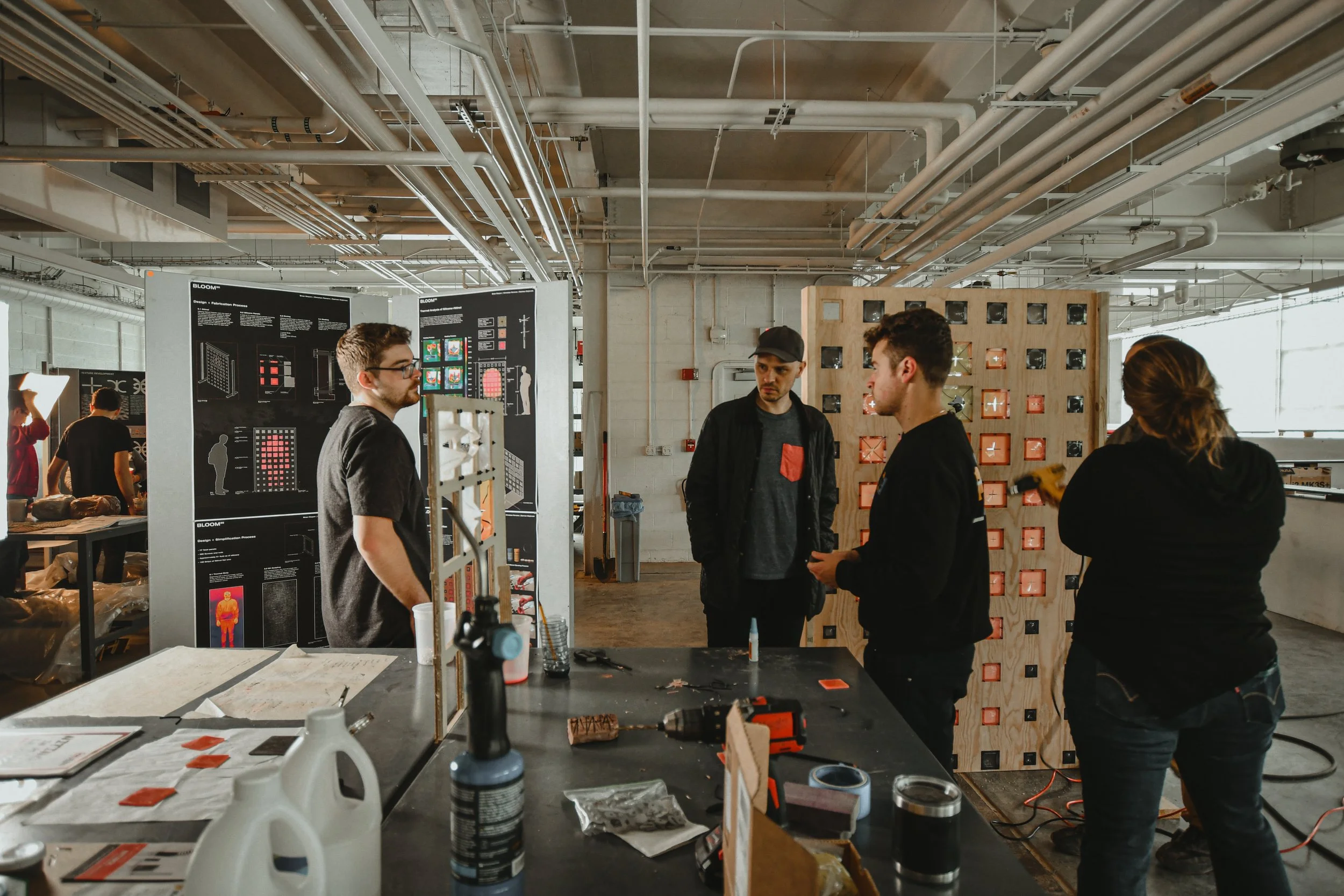
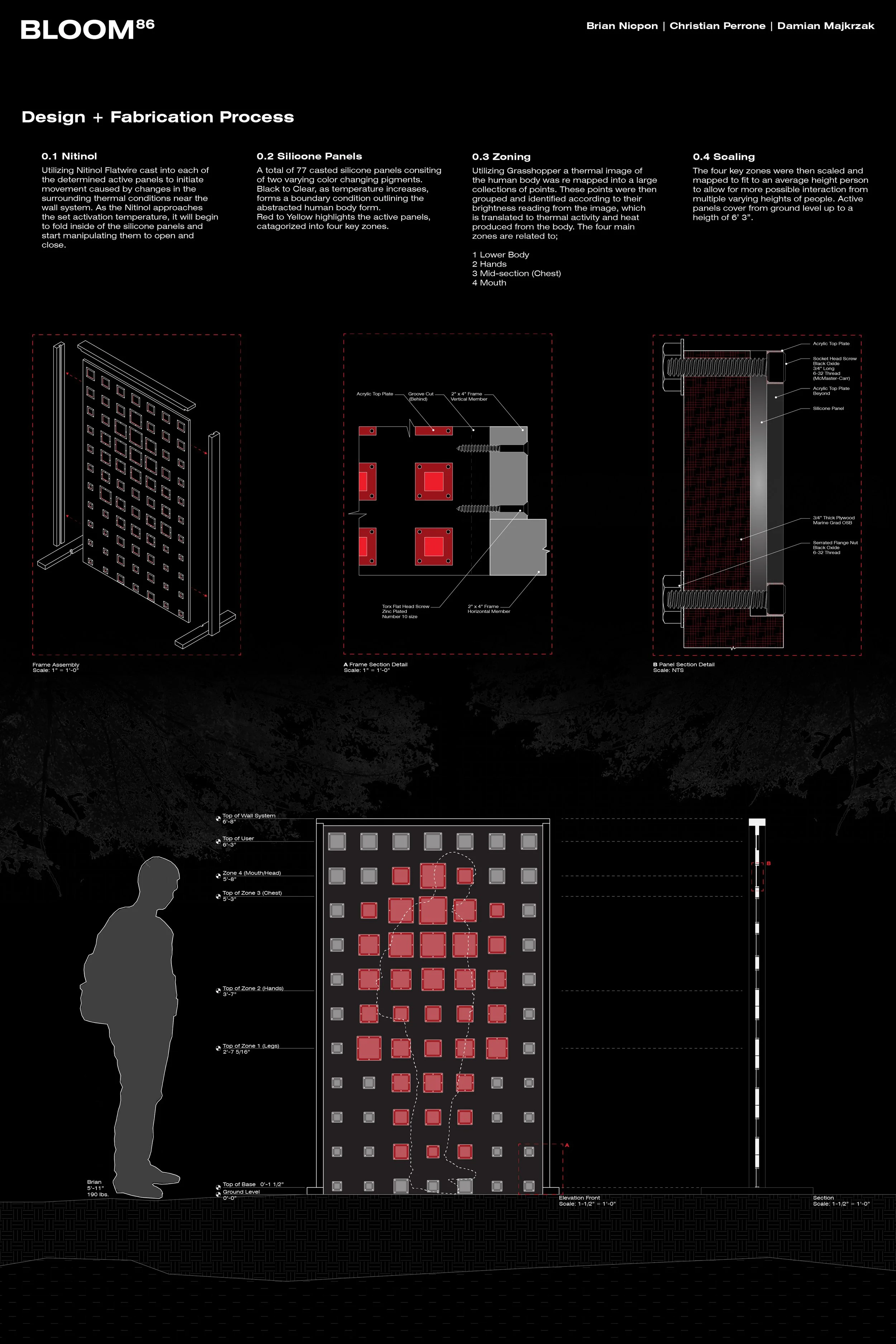
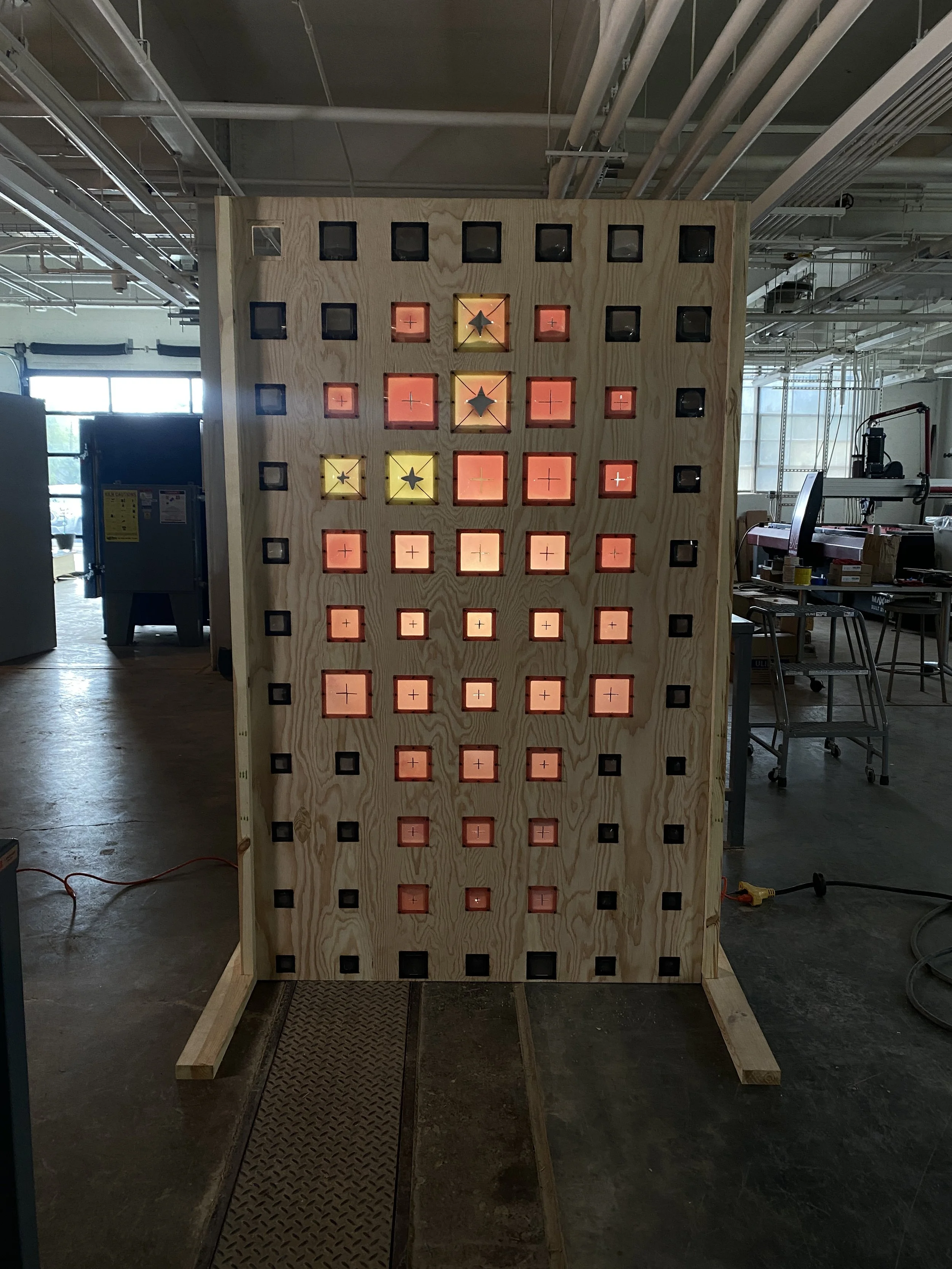
BLOOM⁸⁶ is a responsive architectural prototype that investigates how thermal data from the human body can directly activate spatial systems through material behavior. The project explores the integration of silicone panels and nitinol shape-memory wire to create a porous, adaptive wall system that reacts to body heat by opening and closing in real time. Nitinol elements are programmed to activate at specific temperature thresholds, triggering deformation within the silicone panels that modulates airflow and daylight. As heat increases, panels open to create breathable conditions; as temperatures drop, panels return to a closed state, regulating the environment without mechanical systems.
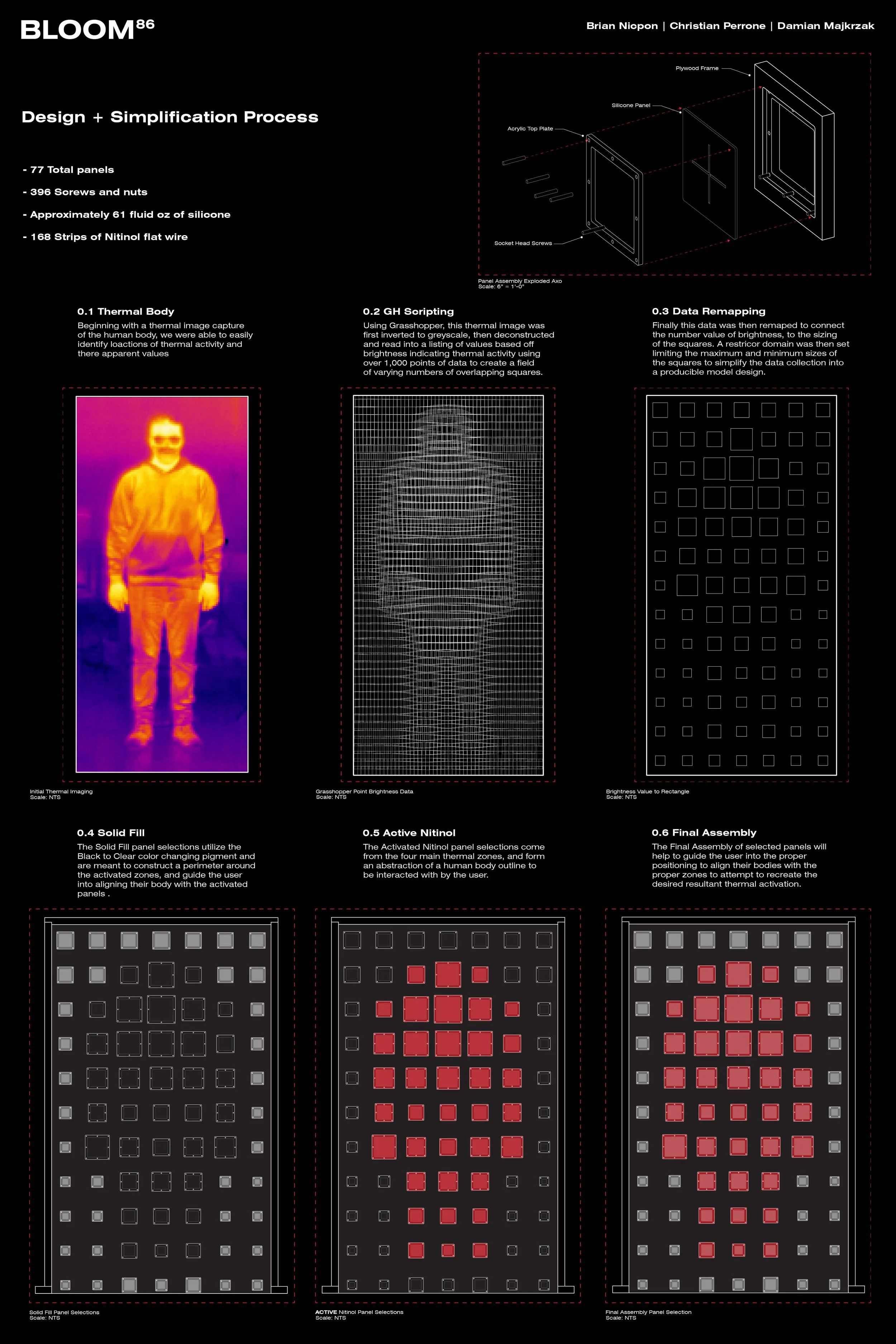
The design process begins with thermal imaging of the human body, capturing zones of higher and lower heat output. This data is translated computationally into a grid-based panel system, where variations in brightness and intensity inform panel sizing, activation zones, and material behavior. The wall is zoned vertically to correspond with human anatomy—feet, chest, and face/breathing zones—allowing environmental response to be tuned to how the body occupies space. Through parametric scripting, thermal information is remapped into a constructible logic that balances responsiveness with fabrication constraints.
Materially, BLOOM⁸⁶ emphasizes scalability and modularity. Individual panels can be produced at varying sizes and activation temperatures, enabling localized control over light and airflow across a larger architectural surface. When assembled, the system forms a dynamic enclosure that responds to proximity, presence, and thermal exchange, transforming the wall from a static boundary into an interactive interface between body and environment.
By coupling human thermal signatures with smart materials, BLOOM⁸⁶ proposes an alternative model for environmental control—one that is intuitive, passive, and biologically informed. The project positions architecture as a living system that responds to human presence through material intelligence, challenging conventional approaches to enclosure, comfort, and energy use.