
Students: Damian M. + Samantha
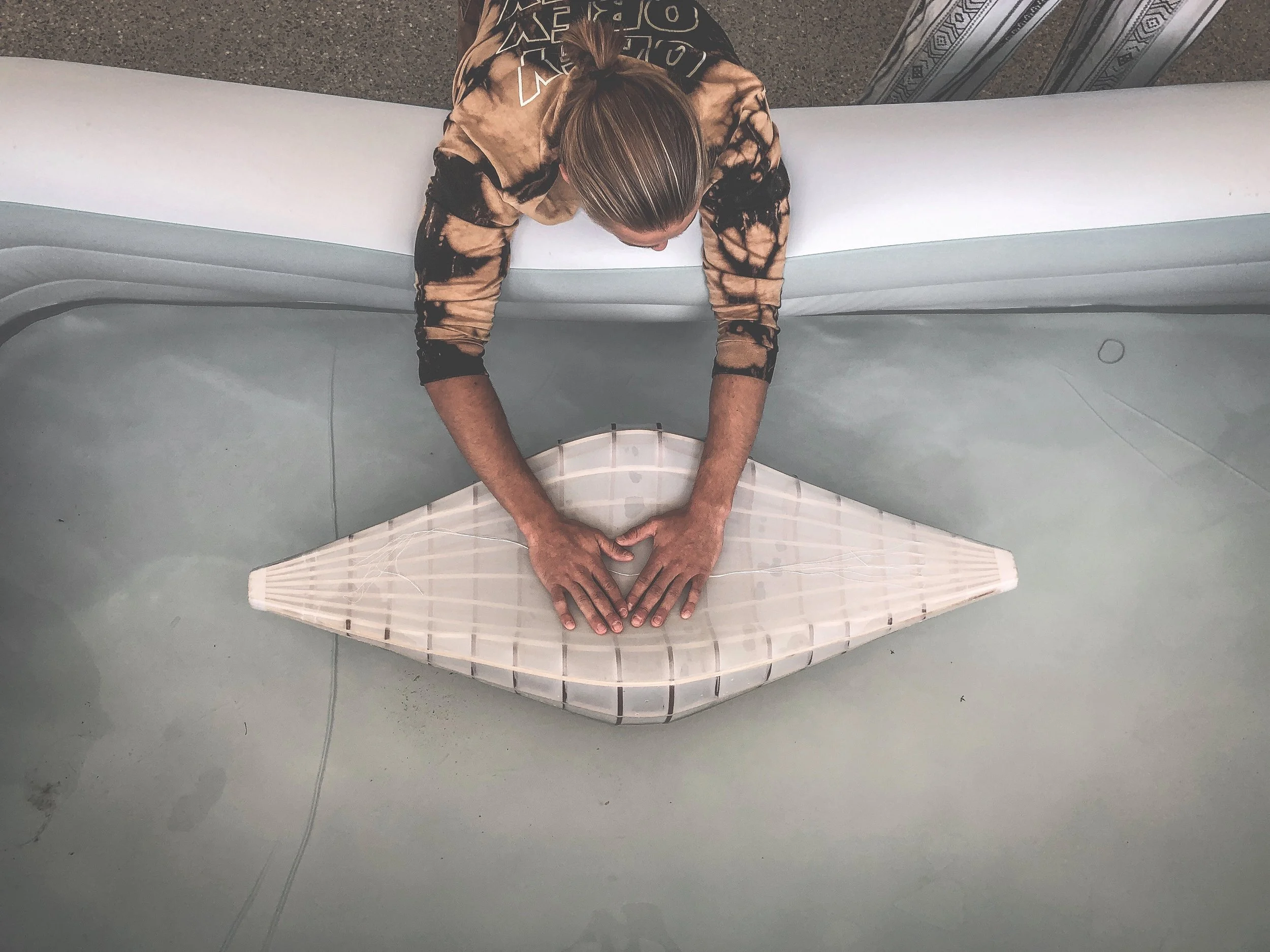
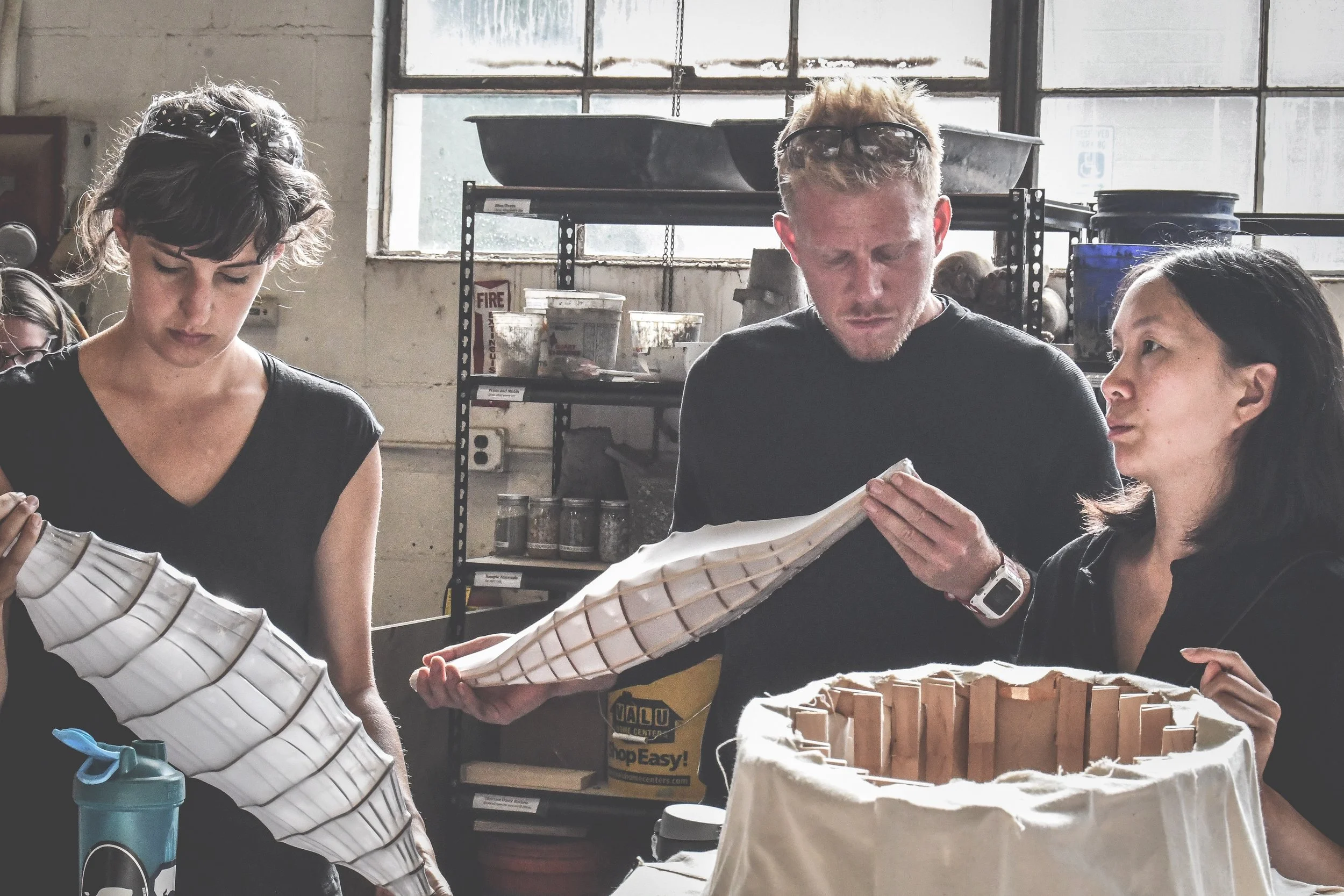
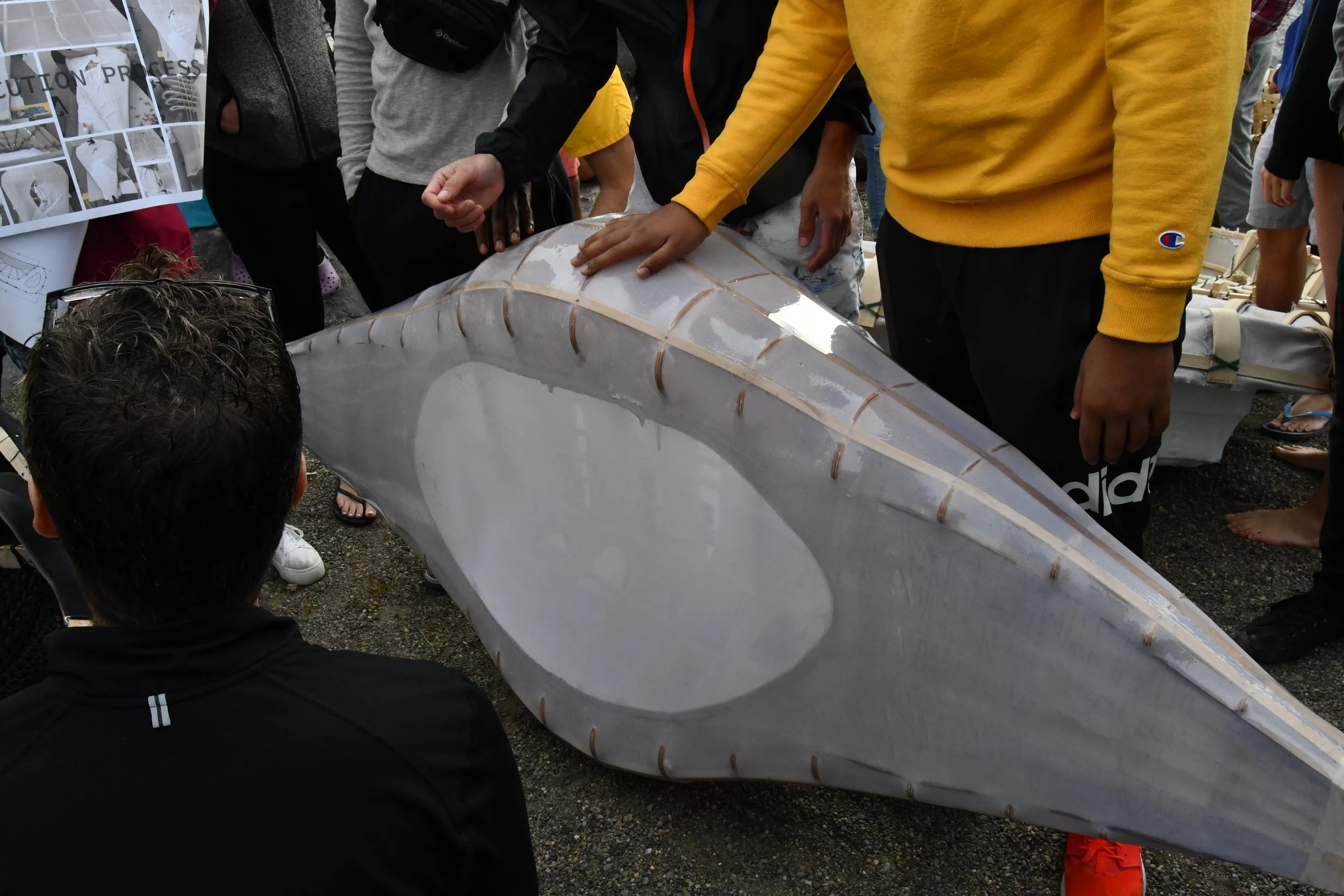
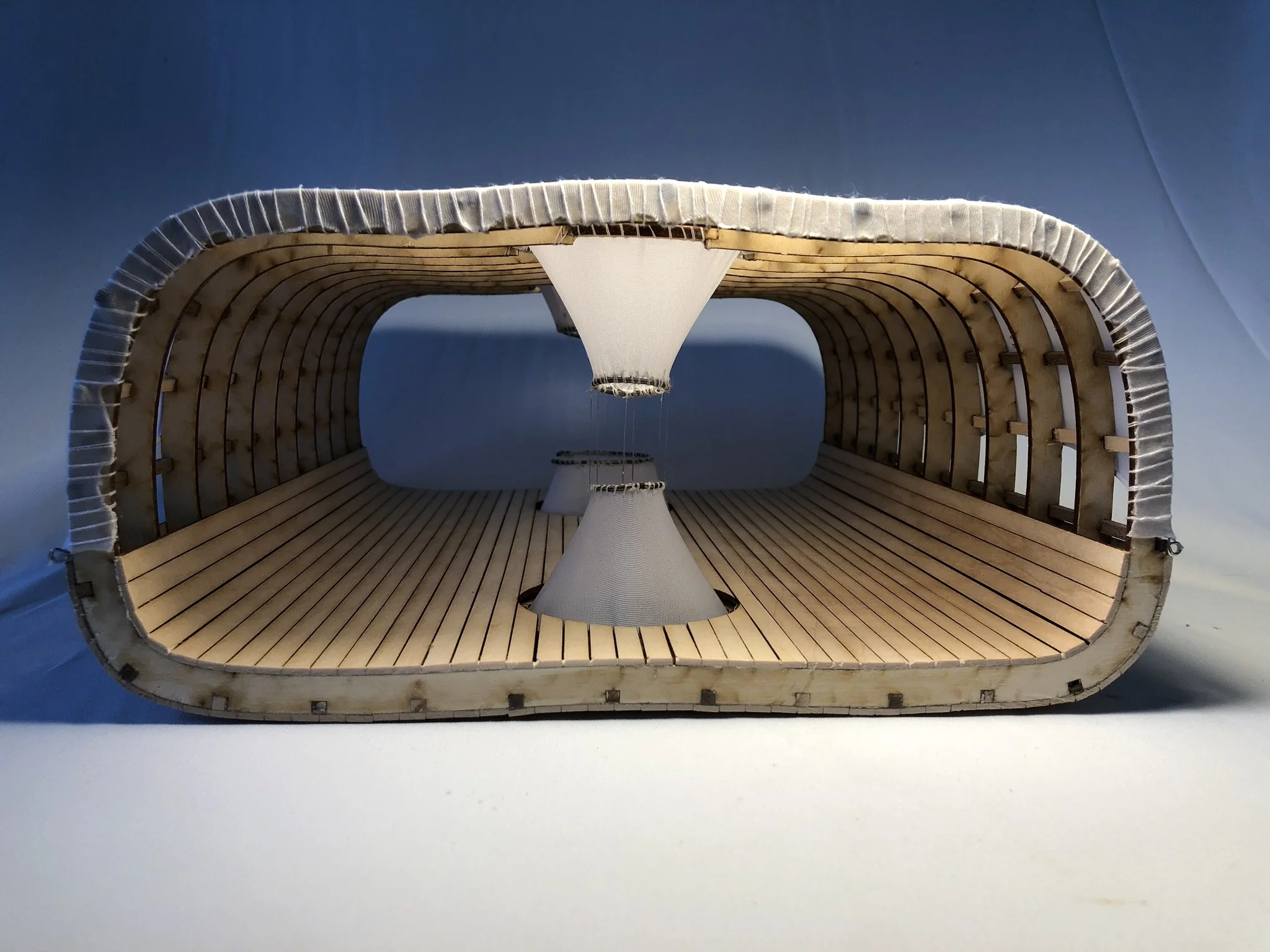
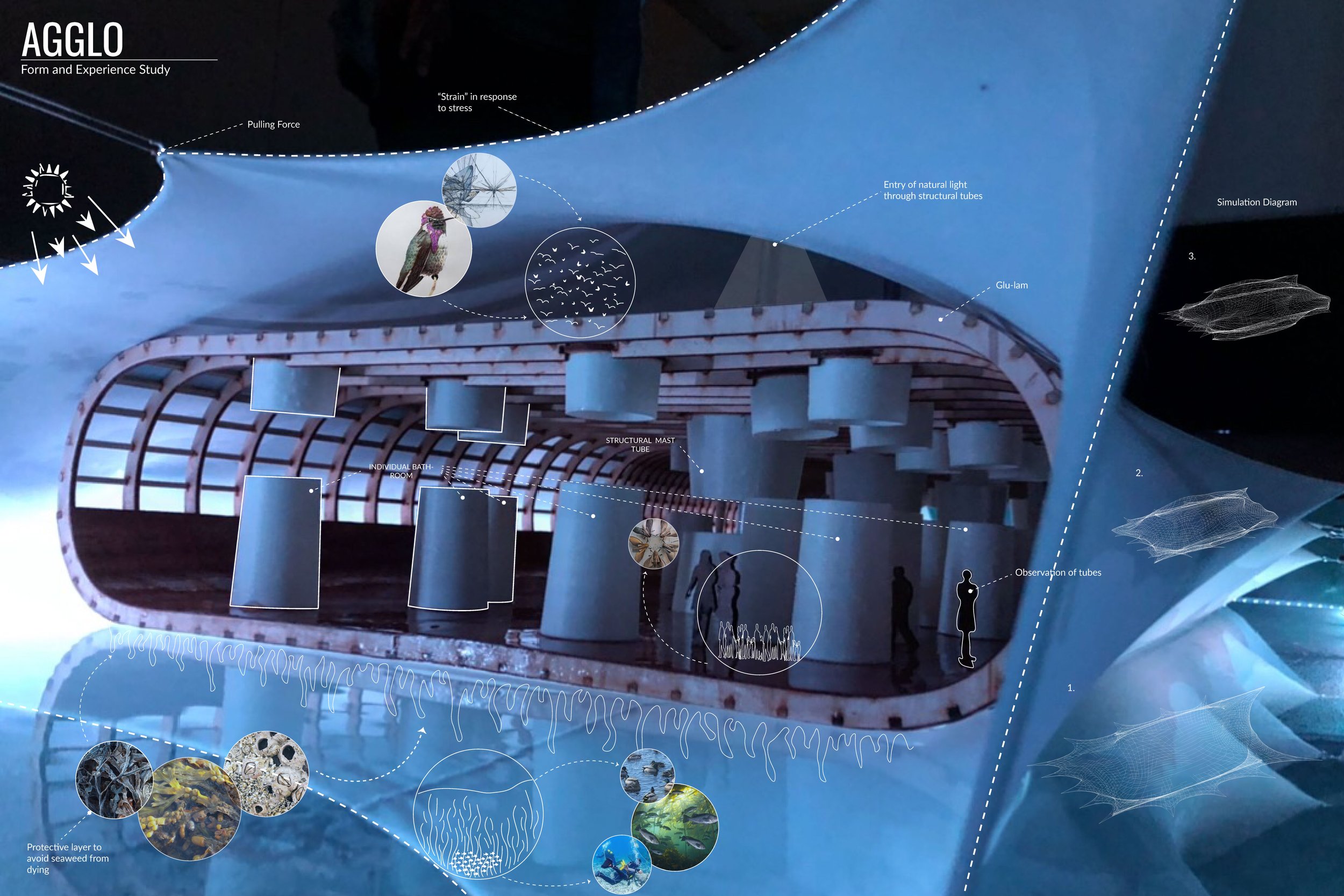
AGGLO is a speculative public research center situated on Lake Erie, emerging from an initial exploration of small-scale boat construction using CNC-fabricated frames and a tensioned fabric envelope. What began as an investigation into lightweight, adaptable marine structures evolved into a spatial and ecological system that negotiates between architecture, infrastructure, and living environmental processes.
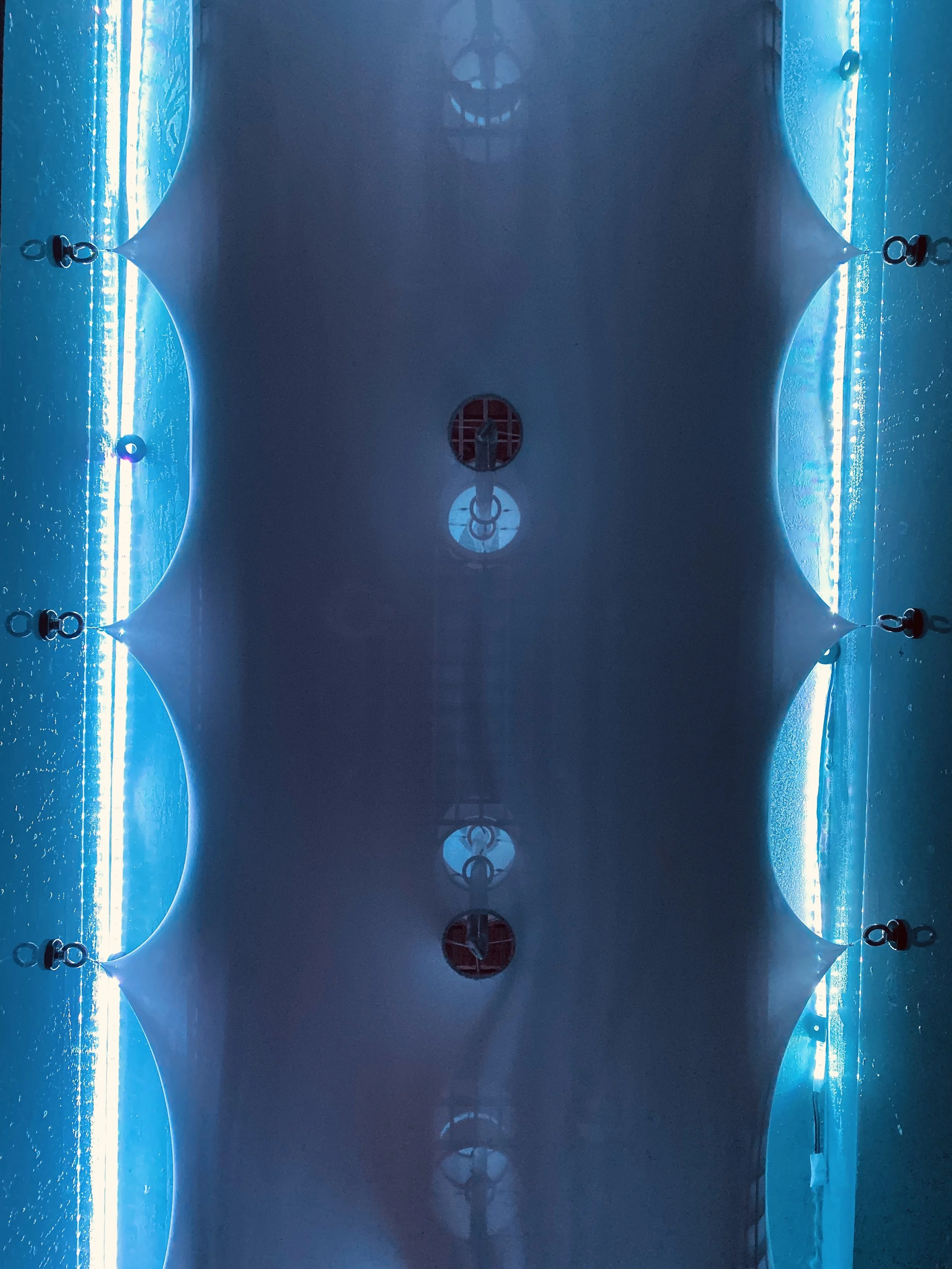
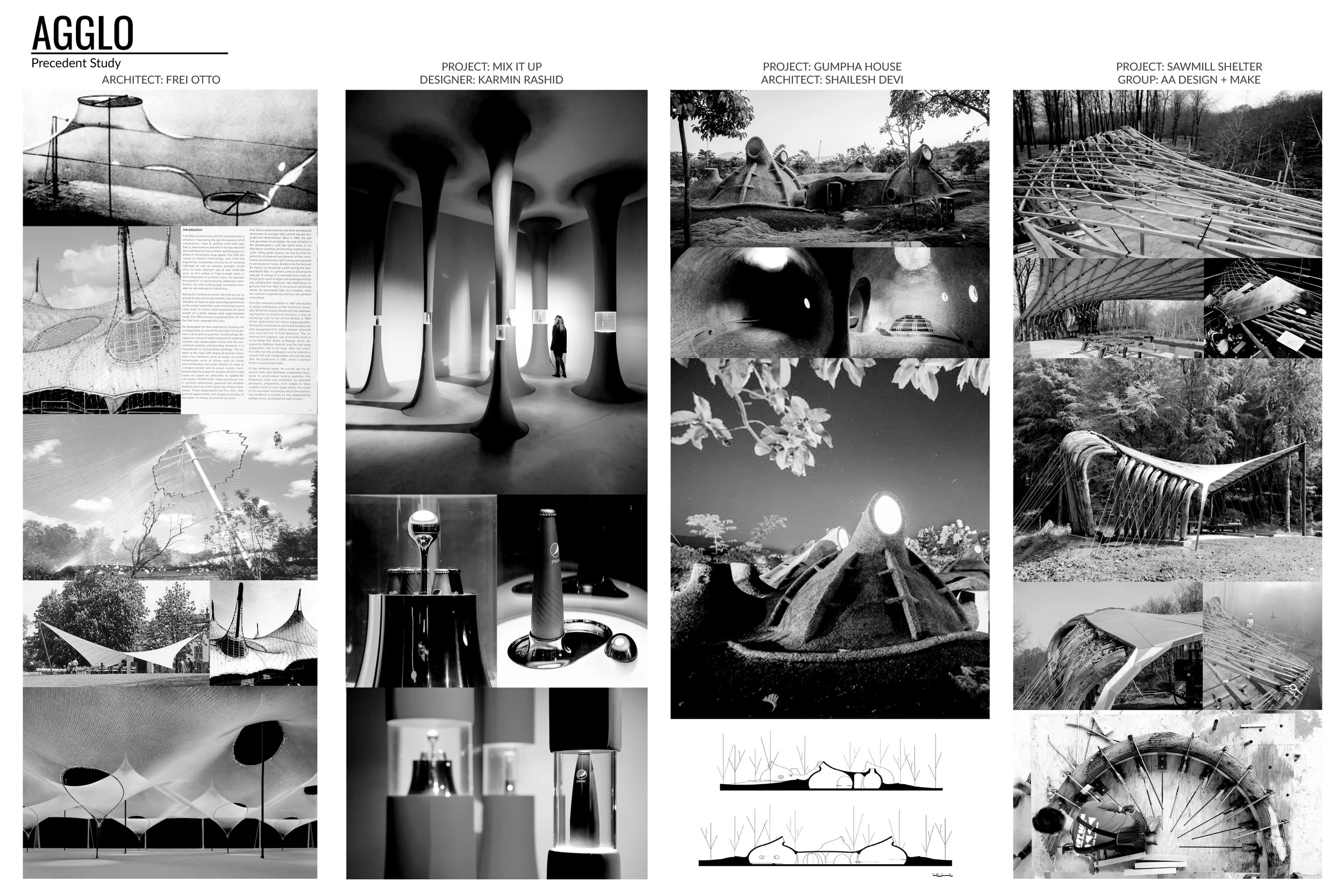
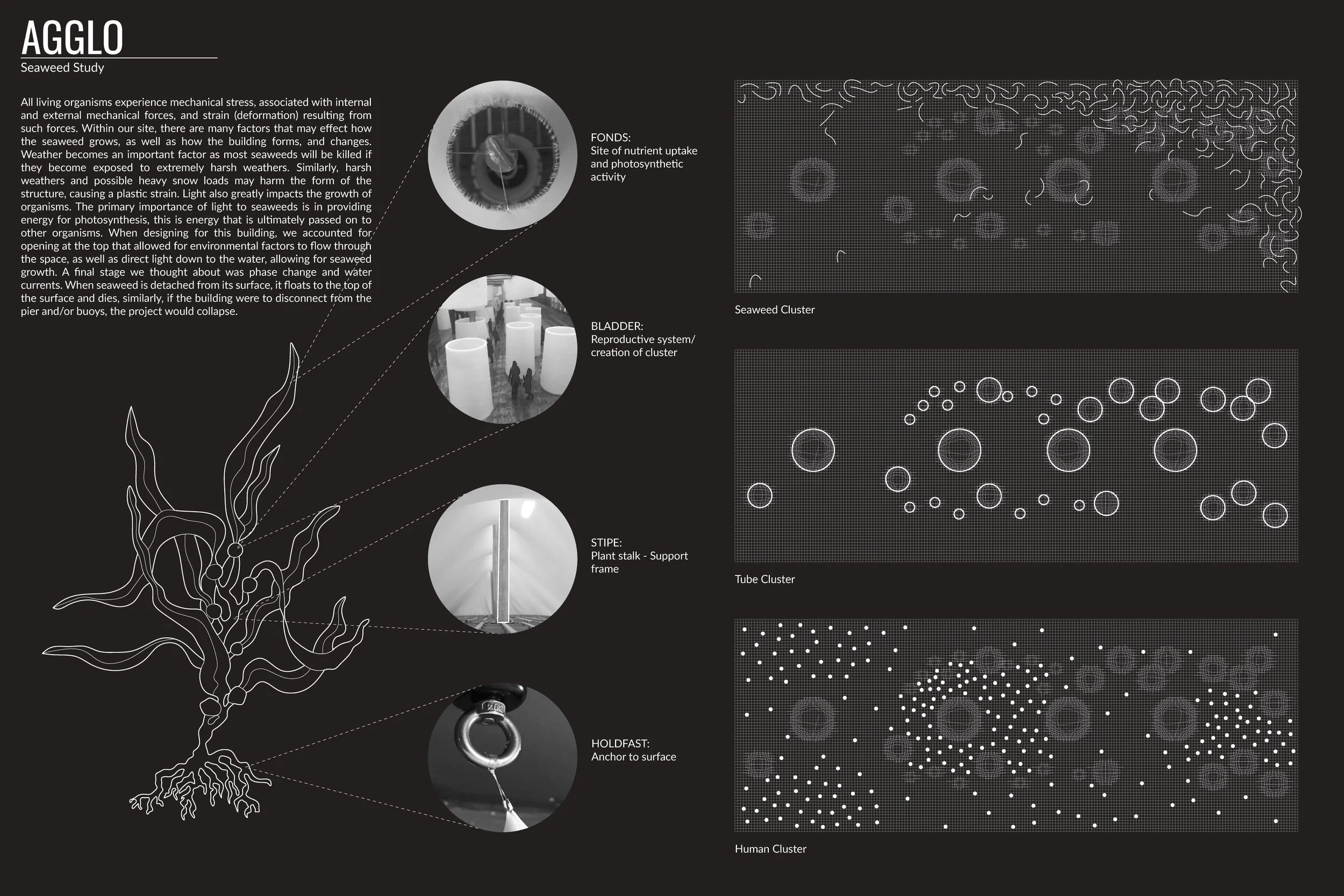
The project draws inspiration from aquatic organisms—particularly seaweed clusters—and their ability to adapt to constant mechanical stress, water currents, and seasonal change. These biological systems informed both the structural logic and spatial organization of AGGLO. Tension between masts, flexible cables, buoys, and anchor points generates a responsive skin that continuously shifts in form, registering the pushing and pulling forces of wind, waves, and water movement. Rather than resisting these forces, the architecture embraces them as drivers of form-finding and performance.
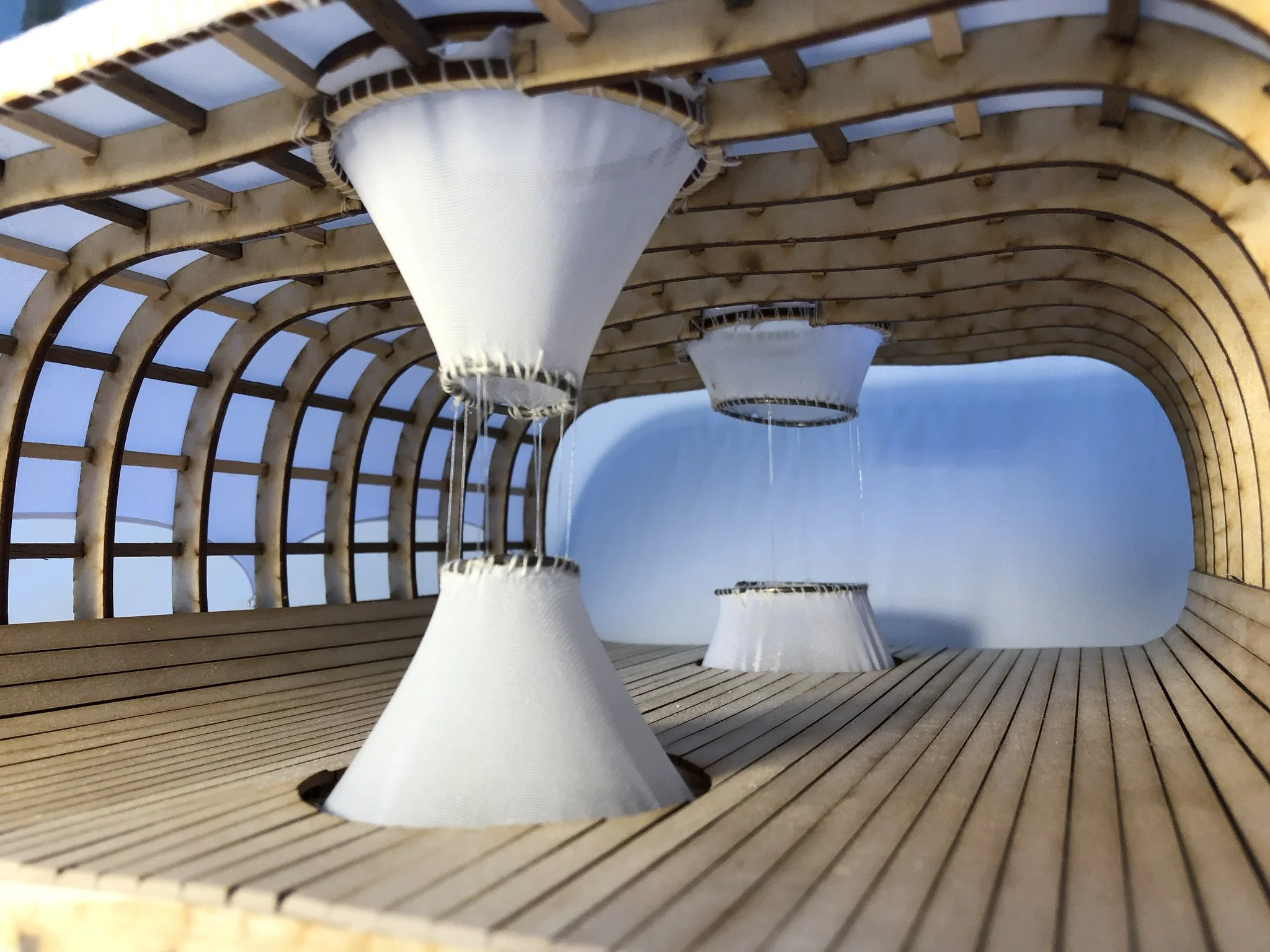
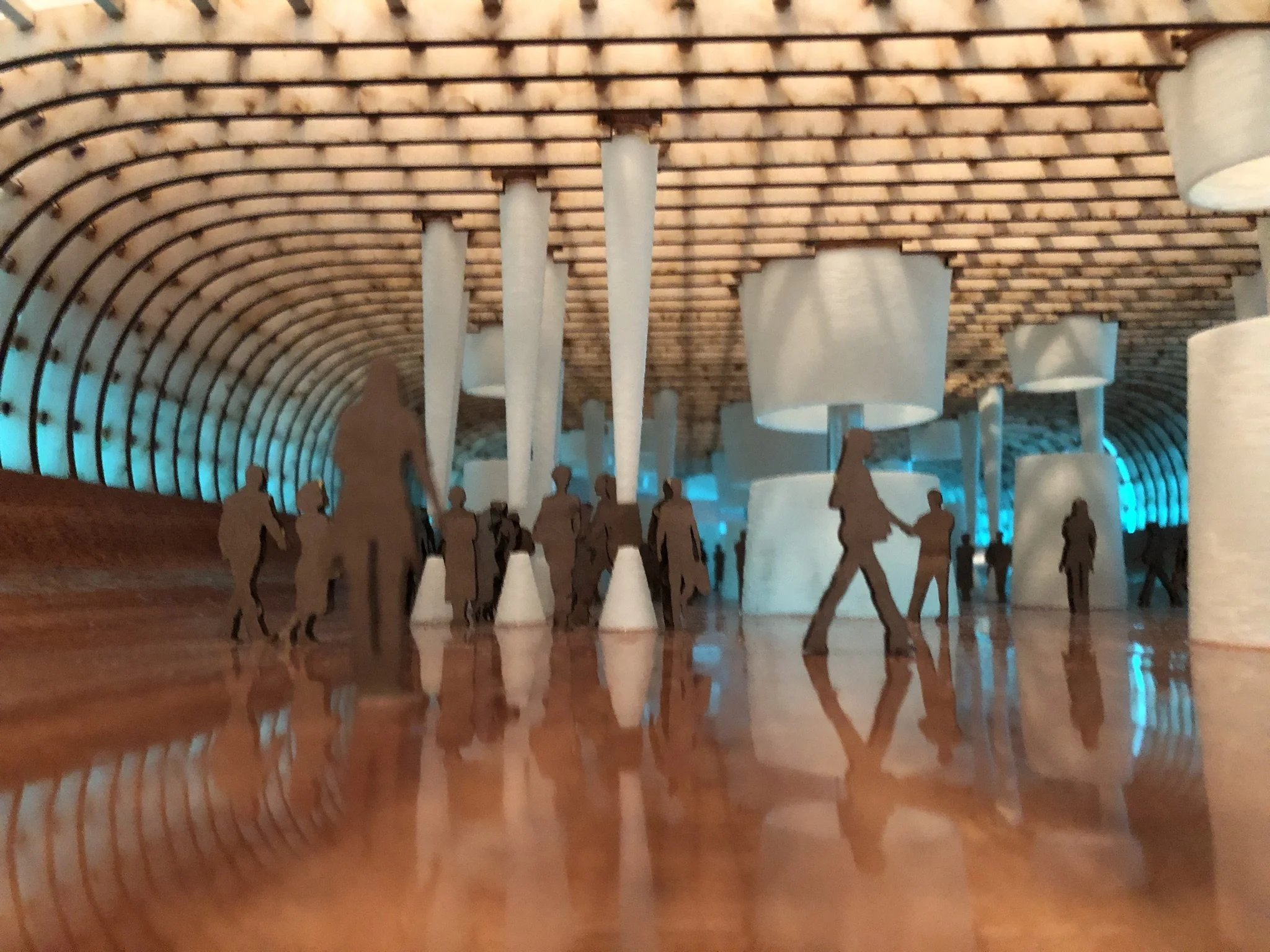
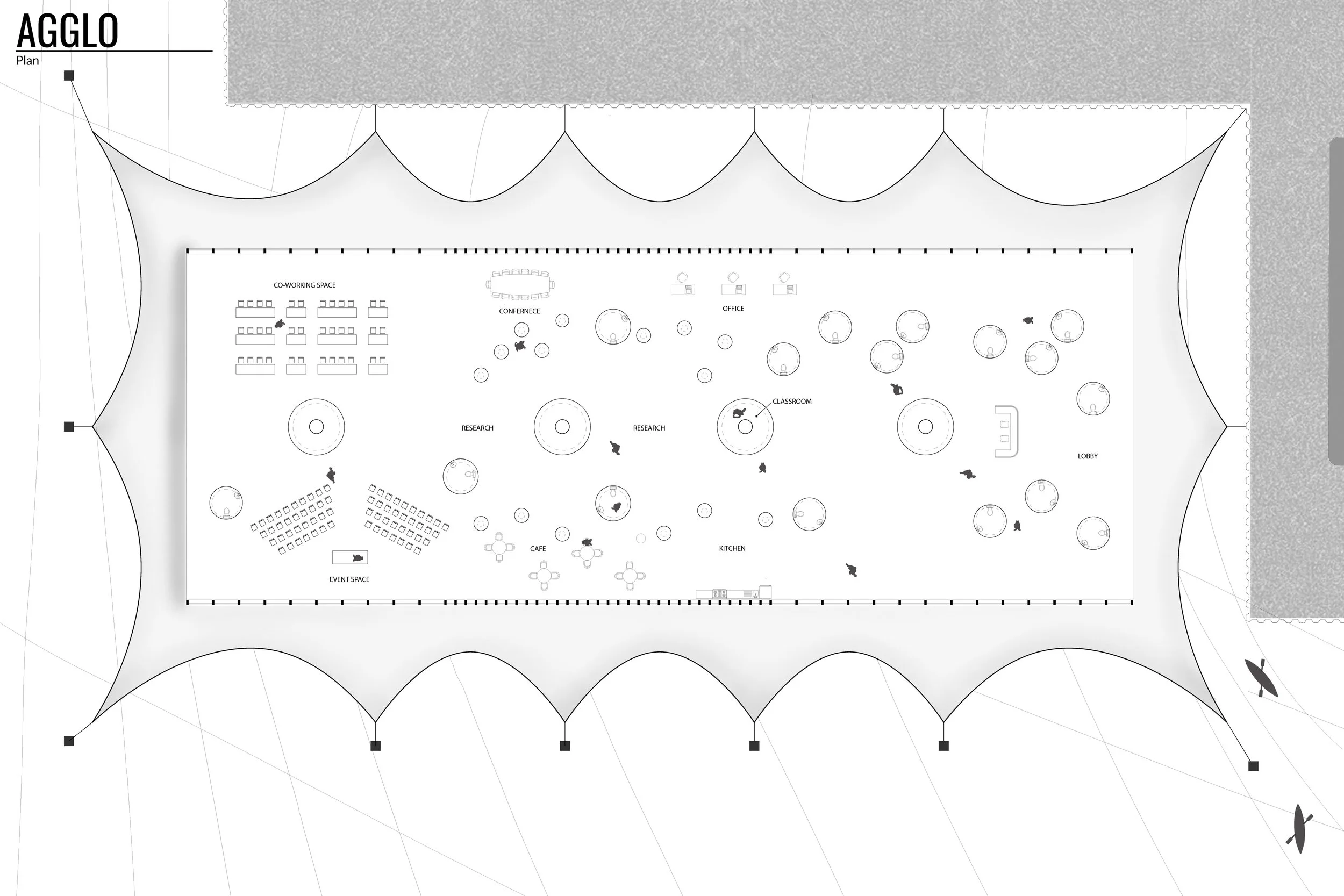
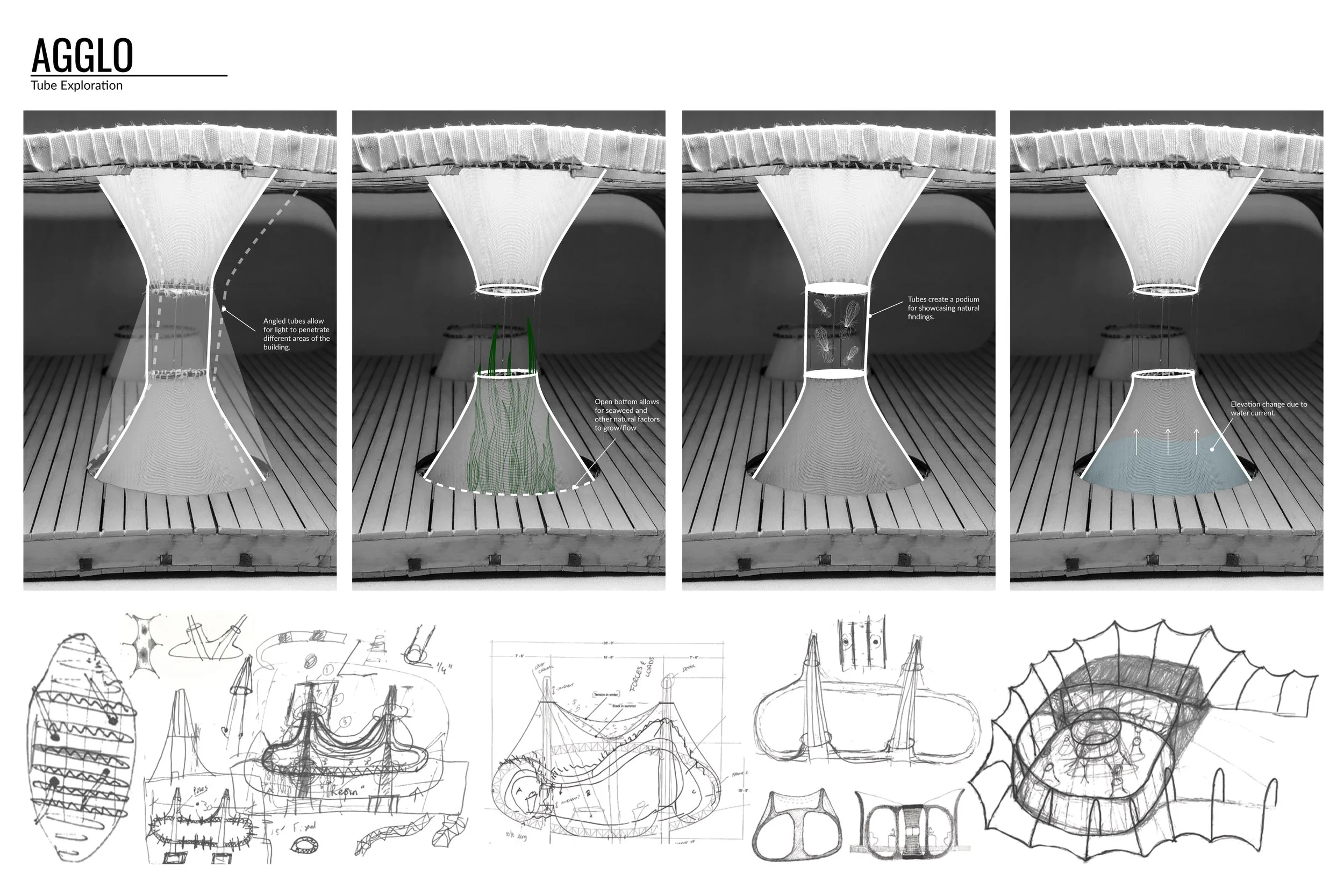
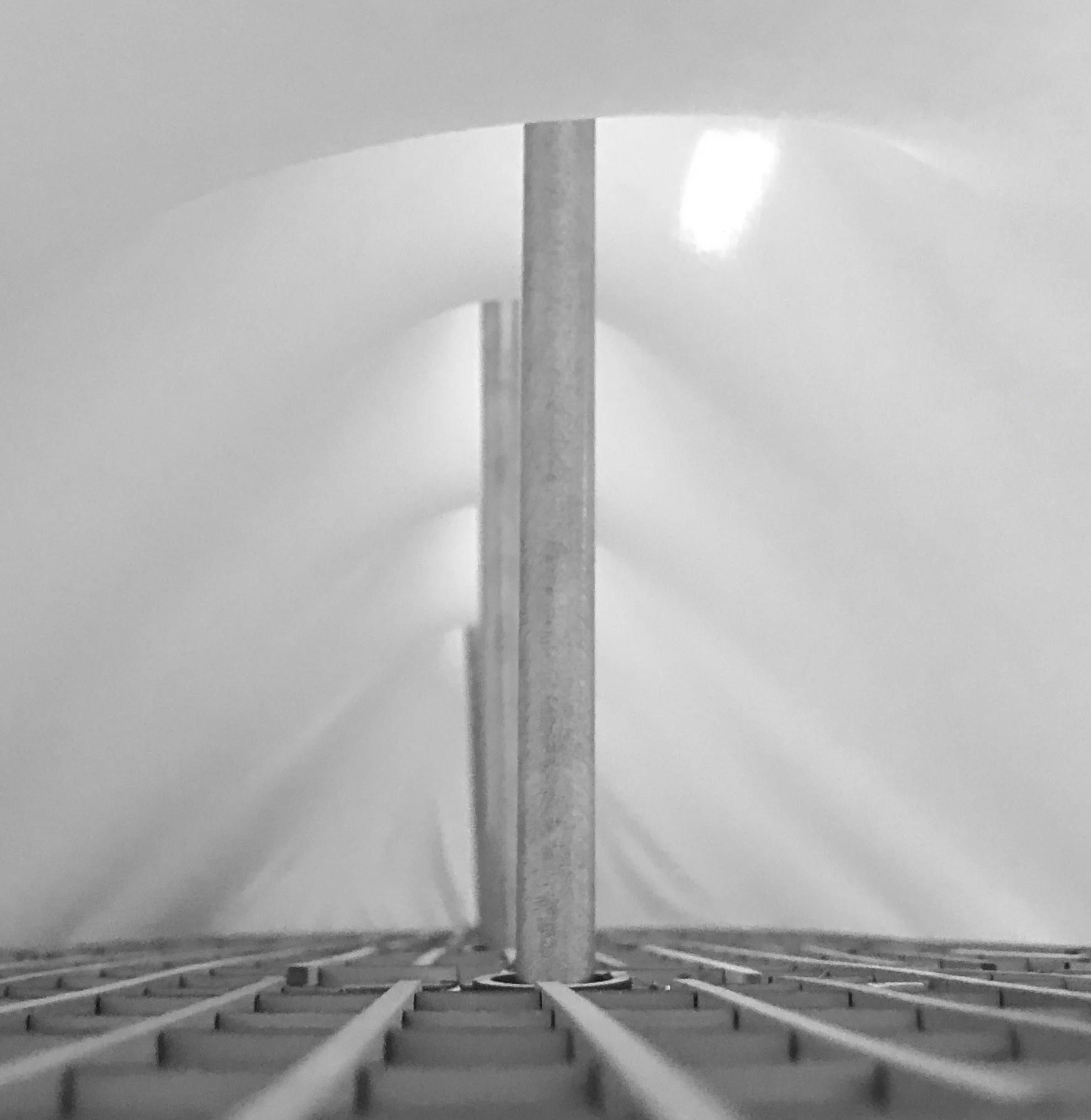
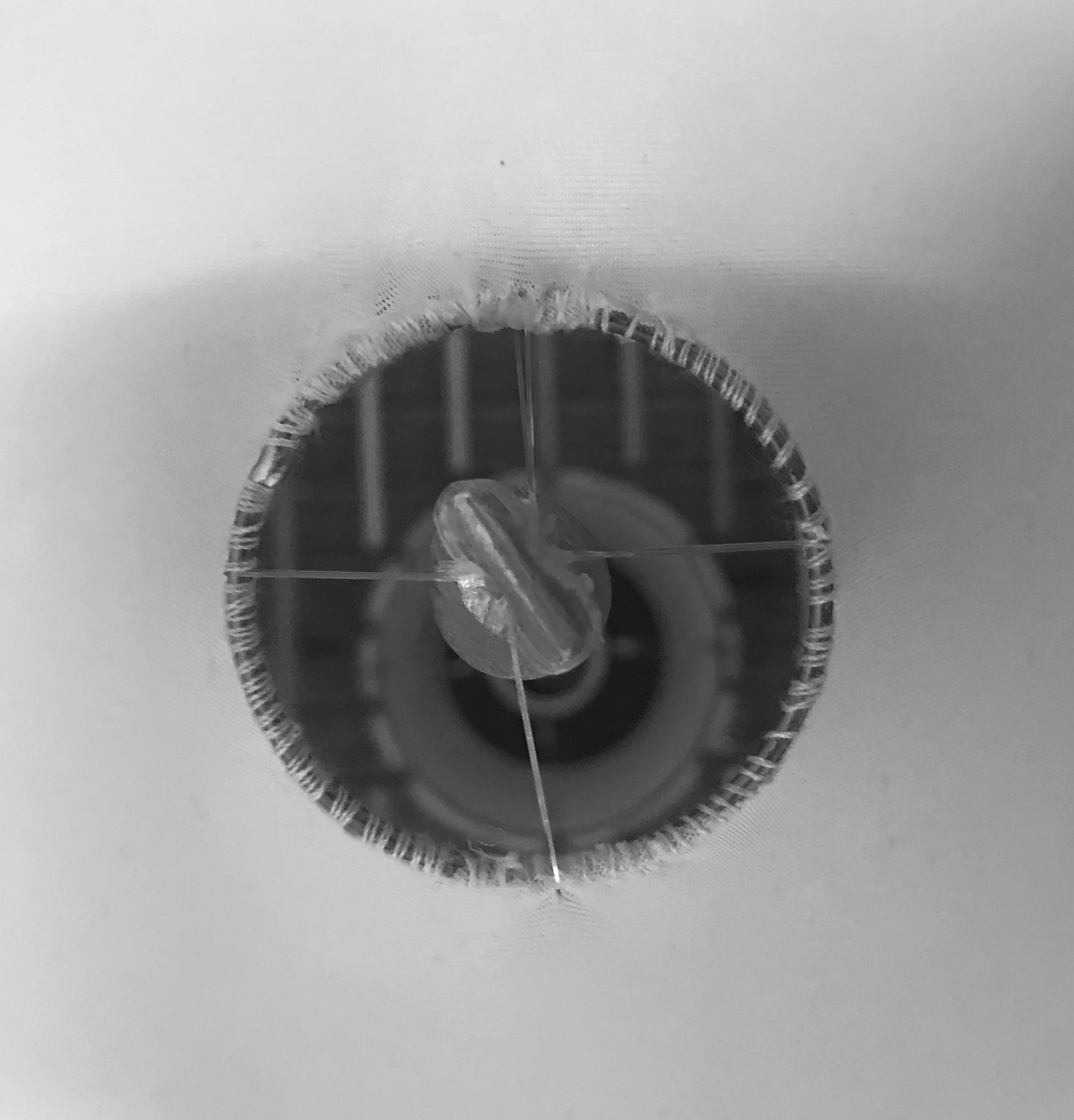
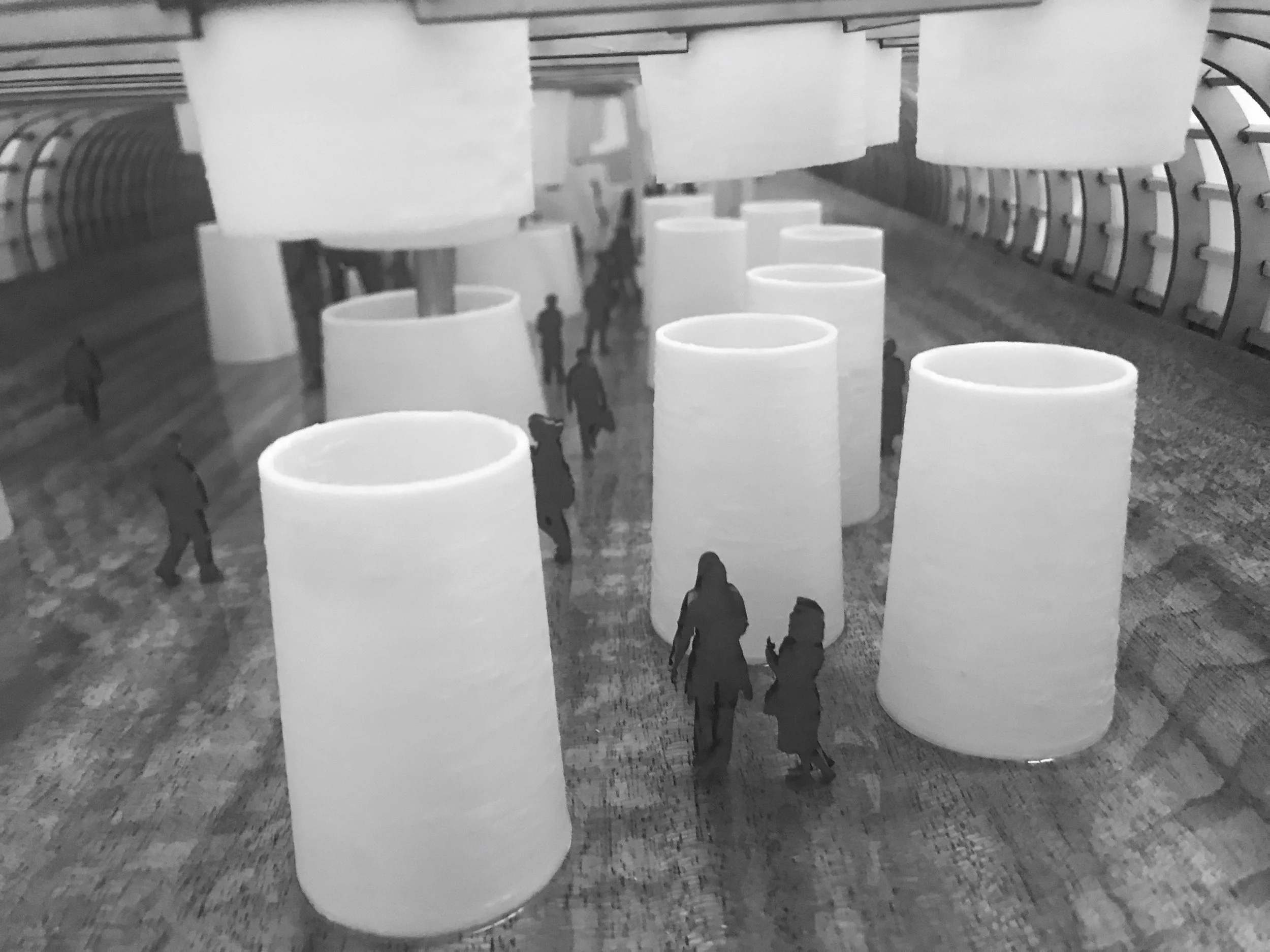
AGGLO is organized as a dense field of tubular volumes that descend from a tensile roof structure into the water below. These tubes serve multiple roles: structural supports, light wells, ventilation shafts, research pods, and public program elements. Their arrangement is governed by clustering logic derived from environmental and biological studies—varying density creates gradients of openness, privacy, and environmental exposure. Highly concentrated clusters produce enclosed, protected spaces for research, restrooms, and exhibitions, while looser arrangements allow light, air, and water to flow freely through public gathering and circulation zones.
Environmental performance is central to the project. Open-bottom tubes allow water, nutrients, and marine life to pass through the structure, supporting seaweed growth and aquatic ecosystems beneath the building. Light is filtered through the tensile skin and structural tubes, directing daylight deep into the interior and down into the water column to encourage photosynthetic activity. As seaweed detaches and floats to the surface, its life cycle becomes visible to visitors, reinforcing the building’s role as both habitat and educational instrument.
Programmatically, AGGLO functions as a hybrid civic and research space—housing laboratories, classrooms, exhibition areas, a café, and public observation zones. Visitors are invited to move through and among the tubes, experiencing changing spatial conditions shaped by water levels, light, and seasonal shifts. The architecture does not present a fixed form, but rather a continuously evolving system that makes environmental forces legible and experiential.